

























































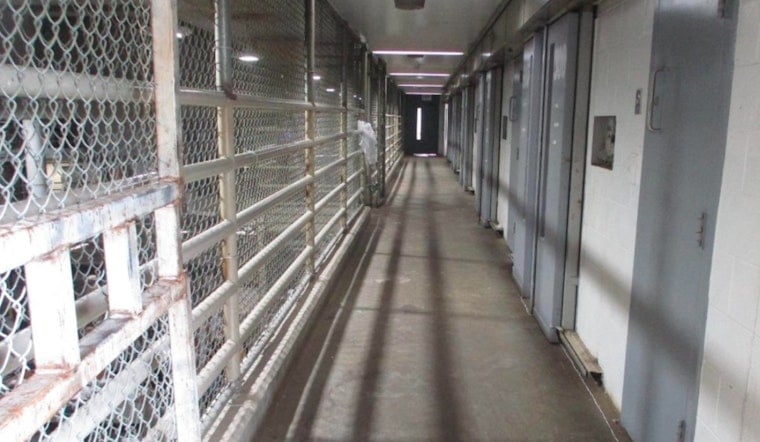
Assaults on New Jersey correctional staff climbed to 964 in fiscal year 2025, and the union representing the officers who absorbed those attacks now wants state lawmakers to loosen the very solitary confinement limits that civil rights advocates spent nearly a decade fighting to enact. William Sullivan, who heads the corrections officers' union, is urging legislators to introduce a bill this fall that would let prisons isolate certain inmates for longer stretches and expand daily confinement hours.
The proposal, first detailed by reporter Dana DiFilippo in the New Jersey Monitor, would raise the maximum solitary confinement window from 20 to 22 hours per day and remove restrictions on how many days a so-called repetitively violent inmate could remain in isolated confinement. Under the draft legislation, a repetitively violent inmate would be defined as someone believed to pose a substantial risk of serious harm to themselves or others, or someone who has already served two or more stints in solitary or close custody. The bill would also lower the minimum age for solitary eligibility from 21 to 20 and let officials place even legally protected vulnerable people in isolation if staff believe they pose a serious harm risk to officers, staffers, or themselves.
Sullivan has said the changes would prevent troublemakers from dodging punishment by falsely claiming vulnerable status, and the draft legislation would specifically require anyone claiming LGBTQ status to prove it through a medical or mental health examination or a judicial determination before qualifying for existing protections. Those protections currently shield pregnant or postpartum people, people diagnosed with serious medical conditions, young or elderly people, developmentally disabled people, mentally ill people, LGBTQ people, and people who are significantly visually or hearing impaired from solitary placement under the 2019 Isolated Confinement Restriction Act. The draft would still let vulnerable inmates request solitary voluntarily, but only with informed, written consent.
The Law Guards' Union Wants to Rewrite
New Jersey's current isolation limits trace back to the 2019 Isolated Confinement Restriction Act, which caps solitary confinement at 20 consecutive days or 30 days within a 60-day period and bars the practice entirely for vulnerable populations, according to the ACLU of New Jersey. Governor Phil Murphy signed that measure into law after former Governor Chris Christie vetoed an earlier version in December 2016, dismissing solitary confinement as “a problem that does not exist in New Jersey” and arguing administrative segregation was necessary to keep order. The 2019 law placed New Jersey among the national leaders in restricting the practice, capping non-solitary restrictive housing at 20 hours of confinement per day for most people.
Yet the state's own oversight body has repeatedly found the corrections system falling short of those standards well before this new push began. An October 2023 investigation by the Office of the Corrections Ombudsperson found that on any given day, roughly 750 people were living in Restorative Housing Units, per the watchdog's report, routinely receiving less than one hour of daily out-of-cell time despite a legal requirement of at least four hours. A companion survey that same month found only 4 percent of people in restricted housing actually received the required four hours, while more than 75 percent got less than one hour a day, according to New Jersey Legislature budget documents.
Officer Safety Concerns Behind the Push
The union's case rests heavily on the numbers. Assaults on correctional staff rose from 200 in 2021 to 424 in 2022, and by fiscal year 2025 that total had reached 964, per state budget documents, with officials projecting roughly 650 assaults for fiscal year 2026, which ended June 30. Nearly half of those attacks on staff involved bodily fluids — a tactic known inside prisons as “splashing” — and more than 10 percent of union members were out on leave in 2024 because of assaults, according to the union's figures cited in the same reporting.
One case became a rallying point for the union's push. In May 2024, a correctional police officer at New Jersey State Prison in Trenton was stabbed repeatedly in the shoulders, neck, and face by an inmate wielding a 7-inch makeshift weapon, according to New Jersey 101.5, prompting Sullivan to publicly call for amending the solitary confinement law. Lawmakers have already responded on the penalty side: Murphy signed S3201 into law in November 2024, upgrading criminal penalties for assaults on corrections personnel and mandating communicable disease testing for anyone who throws bodily fluids at officers.
The Department of Corrections says it has taken its own steps in response to the assault numbers, installing new food ports designed to prevent splashings, removing items from restricted housing units that could be weaponized, bolstering efforts to intercept illicit substances, and creating incentives tied to good behavior. The department reported that 87 people were held in solitary confinement at six of its nine adult prisons as of June 30, and that 690 isolated confinement placements were made across all nine prisons between April 1 and June 30 — even as the department says it has cut the population in disciplinary housing. Department spokesman Chris Greeder did not respond to a request for comment on the union's proposal.
According to a New Jersey Legislature budget document, the department closed four correctional facilities from FY 2020 through FY 2023 following a steady decline in the number of inmates.
Watchdog and Advocates Urge Caution
Corrections Ombudsperson Terry Schuster, who reported the roughly 750-person isolation figure from the 2023 watchdog findings, is urging lawmakers to hold off on rewriting the law. In January 2026 legislative testimony, Schuster connected the assault problem to severe staffing shortages across New Jersey prisons that have forced mandatory overtime, canceled inmate programming, and heightened volatility on housing units, as reported by the Asbury Park Press. Schuster said more time is needed to determine whether the department's new initiatives can reduce assaults without revising the 2019 law at all.
J. Amos Caley opposes expanding solitary confinement outright, arguing that prolonged isolation harms mental and physical health and does not actually improve prison safety. Caley said officials should instead address crumbling prison conditions, staffing shortages, lockdowns, and inadequate access to programming and treatment. Caley also argued that ending the reincarceration of technical parole violators — people who skip curfew, miss check-ins, or otherwise violate parole conditions without committing new crimes — would free officers to focus on the most dangerous people already in custody.
That parole reform effort has its own troubled history. Murphy unsuccessfully pushed to end reincarceration of technical parole violators in 2025, and several legislators reintroduced a version of that plan in July 2026. A September 2025 watchdog report separately called for closing the West Compound of New Jersey State Prison, describing Restorative Housing Unit cells so cramped, at just 4 by 7 feet, that inmates can touch both side walls and the ceiling at the same time, according to Truthout. PBA Local 105, which represents more than 6,500 active state corrections, juvenile justice, and parole officers according to its own figures, counts roughly 4,500 members within the broader union structure advocating for the proposed changes.





