

























































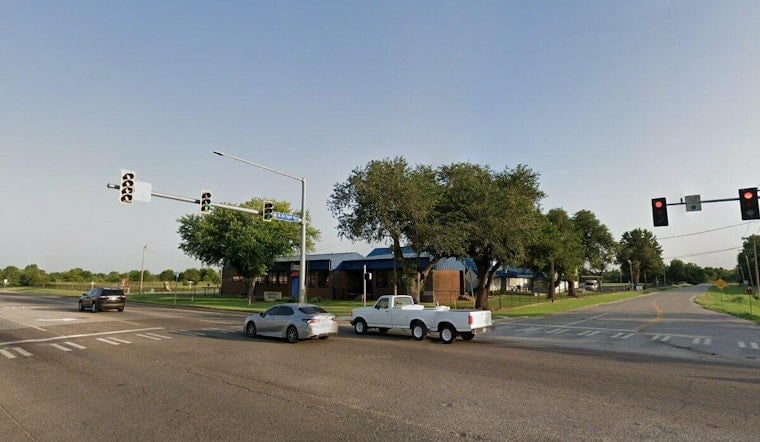
A nearly 200-foot cell tower proposed for a residential stretch of Northeast Oklahoma City has been stopped in its tracks, after the city's Board of Adjustment voted to deny the special exception the project needed to move forward. Neighbors near North Air Depot Boulevard and Wilshire Boulevard had shown up to fight it, and this week they got the outcome they wanted.
The tower needed a special exception because it would have stood too close to a home on the same property where it was proposed, according to KFOR. The city's zoning code includes special-exception procedures for telecommunications towers, per Zoneomics. Phil Jackson, who has lived in the area since the 1980s, was among the neighbors who addressed the board this week, voicing concerns about the tower's aesthetics, potential health issues, and the possibility that it could drag down nearby property values, the station reports.
Neighbors told KFOR that the property owners had approved the tower because no one actually lives at that address. Scotia Moore, who opposed the project, pointed out the disconnect: the dwelling on the tower's proposed site sits empty while the people who would have to look at a 200-foot structure every day live right next door.
The Case for the Tower Fell Short
Denise Cardinal spoke on behalf of the proposed tower and told the board she'd experienced a significant coverage gap in the area, saying she'd had many dropped calls using both an AT&T phone and a Verizon phone. But board members pushed back, questioning whether the company had sufficiently justified the special exception and raising the possibility that the tower could simply be built somewhere else, according to the same account from the station.
That skepticism came as the board reviewed a specific special-exception request. Oklahoma City's Board of Adjustment is made up of five members appointed by the mayor to three-year terms, and denying or approving a special exception takes a concurring vote of at least three of them, per the City of Oklahoma City. The Oklahoma Bar Association notes that boards like this one are required to weigh evidence against strict statutory criteria, which is why the vote hinged on setback and justification questions.
What Residents Could and Couldn't Argue
Notably, health concerns like the ones Jackson raised legally couldn't have been the deciding factor even if the board had wanted them to be. Federal law under Section 332(c)(7)(B)(iv) of the Telecommunications Act of 1996 bars state and local boards from denying cell tower applications based on the health effects of radiofrequency emissions, so long as a facility meets FCC emission standards, according to Justia Law. What can hold up in a legal challenge is evidence tied to visual impact and property values; federal court decisions have distinguished between illegal health-based objections and legally valid aesthetics or property-value arguments for towers in the 150- to 200-foot range, per Preserve Orlando's Neighborhoods.
That distinction matters because the same federal law requires any denial to be backed by substantial evidence in a written record, according to Justia Law. Oklahoma City's Board of Adjustment can grant special exceptions under the city's municipal code. For now, though, this project has neither an approval nor a clock running against it.
Part of a Broader Pattern in Northeast OKC
The pushback fits into a longer history in Northeast Oklahoma City, where community development debates have included concerns about exclusion and gentrification, prompting groups like NEOKC Renaissance to push for ethical development and more community input in zoning decisions, according to the Oklahoma Gazette. It also raises questions about how large infrastructure projects fit near residential neighborhoods.
For Moore, the vote was proof that a neighborhood pushing back against a corporation doesn't have to be a losing fight. She told KFOR that local residents can voice opposition even against large corporations and be heard. Cardinal's coverage complaint was part of the debate, but with the special exception denied, the tower as proposed cannot move forward at that site.





