

























































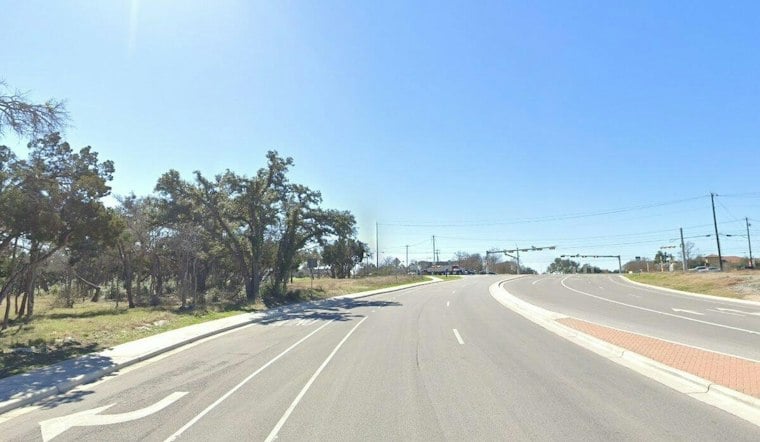
Construction is well underway on a sprawling former 3M research campus in Northwest Austin, and neighbors say they still cannot get a straight answer about what exactly is being built there. The 107-acre site at 6801 River Place Blvd. — now called the Cosmos Technology Campus — was pitched to the community as an office and engineering lab for semiconductor firm Graphcore. But federal securities filings describe something far bigger: a data center campus capable of drawing up to 50 megawatts of critical IT capacity at peak use.
That gap between what residents were told and what regulators were shown is at the center of growing frustration in the River Place and Four Points neighborhoods, according to the Austin Free Press. Linda Bailey, who has lived about a mile from the campus for 26 years, said SB Energy previously told the community the site would not become a data center. When she and other community members met with SB Energy representatives on September 8, the outlet reports that company representatives would not say the words data center, though they did acknowledge there had been a gap in communication.
SEC Filings Describe a Billion-Dollar Buildout
The scale of the project is laid out in corporate paperwork far removed from any town hall. SB Energy subsidiary SE Cosmos LLC closed a $999 million offering of 8.875% senior secured notes due 2031 in May to finance construction of what the deal documents explicitly call a high-performance computing data center in Austin, according to Cahill Gordon & Reindel LLP, the law firm that represented the initial purchasers of the notes.
A August 31 SEC filing went further, disclosing that SoftBank affiliate Silver Bands 3 (US) Corp. has signed a 15-year lease at the Cosmos campus, a deal expected to generate an estimated $2.5 billion in rent over its initial term, according to Hill Country News. The same filing shows SE Cosmos leased space primarily for data centers and office buildings, per the Austin Free Press's review of the document. Graphcore, the UK-based AI chip developer that SoftBank acquired in July 2024 for roughly $600 million and topped up with more than $450 million in fresh capital this past April, is still positioned as the campus's first tenant, using the site for research, development, and engineering tied to advanced AI compute technologies, according to the project's own fact sheet.
A Site With a Long Industrial History
The property was built in the 1980s, sold in 2018, and ultimately acquired by SE Cosmos in March 2026. The site was originally zoned and approved for research and development, and it now holds all the necessary building permits for the current buildout, the Austin Free Press reports.
Because the campus operates under a legacy 1980s Site Development Agreement between 3M and the City of Austin, city officials have limited room to intervene after the fact. District 7 Council Member Mike Siegel said the city could not pass retroactive zoning requiring SB Energy to dismantle the data center, per the Austin Free Press. That old agreement still carries binding noise performance standards for mechanical yards, according to a local account from Heather Tankersley. A city representative maintained that the site is intended as a technology research and development center, not a large-scale data center — a framing that has not settled the dispute for neighbors like Marc Duchen, who said the ambiguity surrounding the ultimate scope of the plan is disturbing, according to the Austin Free Press.
Power and Water Numbers Fuel Local Worry
The technical specifications help explain why residents are alarmed. The campus's 50-megawatt IT power load is designed to support rack development halls, silicon bench spaces, and high-density laboratory halls, according to an S&P Global credit rating evaluation dated August 27. That draw is enough to run roughly 40,000 households, per the Austin Free Press, with Austin Energy separately working to complete substation and transmission upgrades that Cosmos requested. The facility carries significantly higher power density than a traditional office or laboratory would, the outlet notes, and it will have an additional 25 megawatts available for office uses beyond its IT load.
Water use is drawing similar scrutiny. A typical 50-megawatt data center uses around 265,000 gallons of water per day, roughly equivalent to the daily use of almost 900 U.S. households, according to the Austin Free Press's reporting. SB Energy's own fact sheet claims Cosmos will not consume more water than the site's previous tenant, and the company says it will use closed-loop cooling systems while connecting to reclaimed water lines and developing an onsite water reuse system. Austin Water is currently reviewing SB Energy's service request, though the utility is generally obligated to serve any request within its service area, just as Austin Energy must approve interconnection requests within its territory regardless of demand, without requiring customers to disclose how they intend to use the power.
State Regulators Move on Data Centers Statewide
The Austin dispute is unfolding against a much larger statewide reckoning. Governor Greg Abbott directed ERCOT and the Public Utility Commission of Texas on August 3 to conduct a comprehensive audit of all data centers seeking grid connections, with proposed data centers consuming more than 25 megawatts to be postponed during the review, according to the Office of the Texas Governor. The audit examines their power and water needs, per the Austin Free Press. State officials have not clarified whether that mandate applies to facilities already under construction, like Cosmos.
The scale of demand behind that order is striking: ERCOT is reviewing more than 474 gigawatts in interconnection requests statewide, over five times Texas's record peak electricity demand, with data center projects accounting for roughly 90 percent of that volume as of August, per the governor's office. Just this week, on September 14, Abbott directed the Texas Water Development Board to enforce reporting mandates on major water consumers, including data centers, and to pursue civil or criminal penalties for reporting failures, the governor's office announced. A separate Public Utility Commission survey in 2025 identified 258 data center proposals across Texas, though only 17 percent of them responded to the survey, according to the Austin Free Press.
Austin Weighs Its Own Rules
City leaders are also trying to catch up. The Austin City Council adopted a resolution on August 27 directing staff to create a data center zoning category and new regulations meant to mitigate impacts on local power, water resources, and surrounding neighborhoods, per the Austin Free Press. City staff are expected to deliver the first update on those proposed regulations in December.
For now, the first phase of construction at Cosmos is expected to wrap up in spring 2027, though the outlet notes the dedicated data center construction phase itself had not yet formally commenced as of June 30. Residents in River Place and Four Points say they simply want transparency from SB Energy going forward. Bailey, who has watched the debate unfold from a mile away for over two decades, said residents want to know what will be built at the site — concerns she and her neighbors are worried about, from noise and light to air pollution affecting nearby homes and schools. A community town hall on the Cosmos development is scheduled for Thursday, September 17, from 6:30 to 8 p.m. at Four Points Middle School, 9700 McNeil Drive.
The Cosmos project also fits into a much larger footprint SoftBank-linked entities are building across Central Texas. SB Energy is separately constructing an $18 billion, 1.2-gigawatt data center complex in Milam County as part of SoftBank and OpenAI's Stargate initiative, a project Hoodline detailed in May alongside SB Energy's broader IPO plans.




