

























































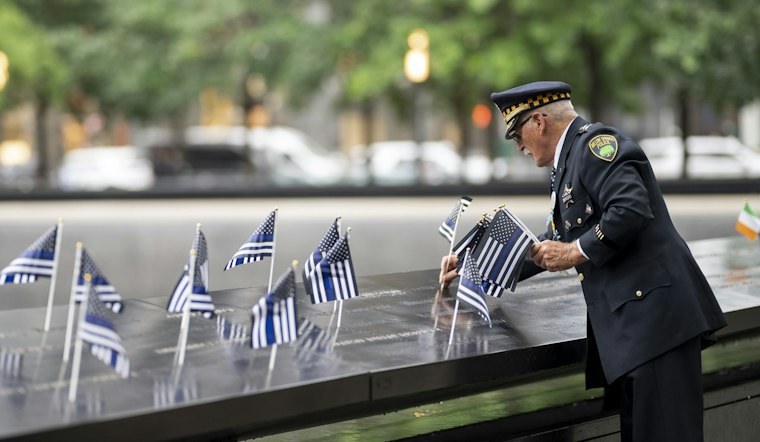
Chief of Transit Joseph Gulotta, who leads the NYPD bureau responsible for protecting millions of daily subway riders, has been diagnosed with cancer tied to his response at the World Trade Center on September 11, 2001. He is one of thousands of responders and survivors now confronting a wave of illness that has emerged decades after the towers fell, according to a statement shared by NYPD News. Gulotta says that despite the diagnosis, he does not regret answering the call when his city needed him most.
The chief's story was shared in a post from NYPD News
, the official X account of the New York City Police Department, which described Gulotta as someone who will never forget responding to the World Trade Center on 9/11. Before rising to lead the Transit Bureau, which oversees the safety of 5.6 million daily subway passengers across 472 stations.
The Staten Island Advance
also reported on Gulotta.
A Health Crisis That Keeps Growing, Decades Later
Gulotta's diagnosis lands amid what health officials describe as an accelerating surge in 9/11-related cancer cases. The number of 9/11 survivors receiving federal aid for cancer treatment through the World Trade Center Health Program roughly tripled over five years, climbing to 27,300 survivors in 2026, with 57,044 members with certified cancer among 145,275 currently enrolled, according to an analysis by The Washington Post.
More than 57,000 cumulative cancer cases have now been documented among participants in the World Trade Center Health Program, which monitors roughly 145,000 enrolled responders and survivors nationwide, per a Northwell Health press release reported by Morningstar. Gulotta's case is part of a pattern that has quietly reshaped how the city remembers the attack: not only as a single day of loss, but as a slow-moving public health emergency still claiming lives a quarter century later.
Toll Has Long Since Surpassed the Day of the Attack
The scale of that toll among law enforcement is stark. While 23 NYPD officers died in the line of duty during the initial attack response on September 11, 2001, more than 240 NYPD officers have since died from illnesses linked to toxic Ground Zero exposure, according to NYPD historical figures reported by Business Insider. The pattern holds across agencies — later figures for FDNY deaths from 9/11-related illnesses exceed 600.
That reality was formally acknowledged at the 25th-anniversary commemoration at Ground Zero, where organizers added a dedicated bell tolling specifically to honor those who died from post-9/11 illnesses, as reported by Newsday. The city has added 469 names to an NYPD headquarters memorial.
Federal Program Still Processing Claims Decades Later
The mechanism supporting sickened responders and survivors is part of federal 9/11 health legislation.
The Never Forget the Heroes Act permanently authorizes the September 11th Victim Compensation Fund, while separately extending the World Trade Center Health Program through October 1, 2090. As of August 31, 2026, the September 11th Victim Compensation Fund had received more than 112,000 cumulative claims and awarded more than $18.56 billion, according to the U.S. Department of Justice. The World Trade Center Health Program continues to monitor enrolled responders and survivors as diagnoses climb.
Gulotta's disclosure follows other recent losses within the first-responder community. Retired FDNY firefighter Thomas del Pino died of Ground Zero-related cancer on September 14, 2025, nearly a year before Hoodline's report, after honoring fallen brothers at a recent ceremony, Hoodline reported in a story from earlier this month. Gulotta, who also drew attention this year for his leadership during a subway security shakeup following an incident at Grand Central, said through NYPD News that he does not regret his response to the World Trade Center, even knowing what it eventually cost his health.





