

























































Oakland Unified School District board member VanCedric Williams has spent more than a year on the California Teachers Association payroll while voting on school board matters affecting teacher pay and benefits — including a $105 million contract he helped push through in June. Williams denied being paid by the union at all. He was.
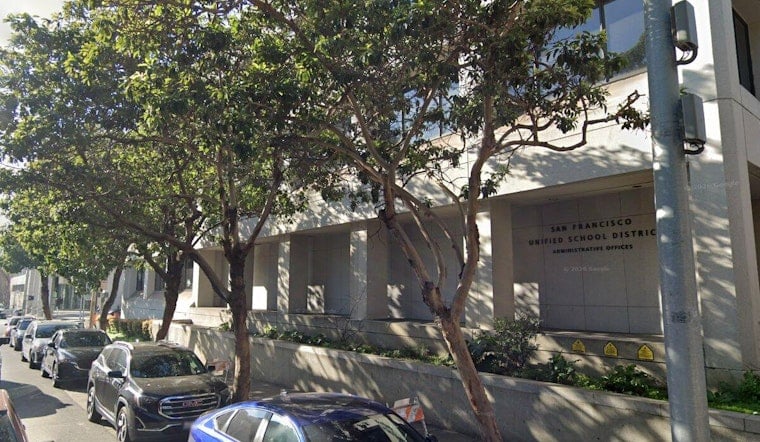
According to the San Francisco Chronicle, Williams has been on paid release since the 2025-2026 school year to work full-time as a CTA state director, and is expected to remain in that arrangement through the 2026-2027 school year and the one after that. The California Teachers Association reimburses San Francisco Unified School District for his salary and benefits, even though Williams represents District 3 on the Oakland school board, a seat he was reelected to on November 5, 2024, according to Ballotpedia. His current term expires in 2029.
Williams was first elected to the Oakland board in 2021 and was separately elected to the CTA Board of Directors in 2022, a body that oversees the union's policies, budget and fiscal health across its 23 directors. Before any of that, per the California Teachers Association, he spent 23 years as a social and ethnic studies teacher in San Francisco Unified and was a member of the United Educators of San Francisco.
A Vote With Money on Both Sides
On June 24, 2026, Williams voted to approve Oakland's $105 million teachers contract, according to the Chronicle's reporting. He declined to recuse himself from that vote despite his ongoing CTA role, and the paper notes he has voted on other teachers' union agreements over the years as well. Fellow board member Mike Hutchinson has said Williams should have stepped aside under conflict-of-interest laws, and Hutchinson has publicly claimed that Williams urged the board in closed session to offer the union the $105 million deal — a characterization attributed to Hutchinson in the Chronicle's account.
At a board meeting at La Escuelita Middle School in Oakland on May 14, 2026, Hutchinson questioned whether Williams's paid CTA work amounted to a conflict of interest. Williams has said the claims about his CTA pay were misinformation and misleading, and separately told the Chronicle that CTA does not pay him a salary — and the outlet's reporting documents that San Francisco Unified pays his salary while CTA reimburses the district.
What California Law Says About Conflicts Like This
Under California Government Code Section 1090, public officials are strictly barred from having a financial interest in any contract their board approves, and a violation can render the entire contract void — not just trigger a fine against the individual member, according to the Fair Political Practices Commission. That statute applies broadly to state and local elected bodies, and courts have interpreted it strictly: per Brown White & Osborn LLP, officials do not need corrupt intent to violate Section 1090, and courts have rejected the “advice of counsel” defense when an official participates in contract talks while aware of a financial stake. The statute requires knowing intent, and violations may carry felony exposure. According to California Department of Justice Opinion No. 03-508, a school district governing board may not avoid Government Code section 1090 conflict-of-interest provisions by adopting a policy.
That broad reach isn't new. The California Supreme Court's ruling in People v. Superior Court (Sahlolbei) established that Section 1090's conflict-of-interest prohibitions extend to public employees and advisory representatives who participate in contract formation, not just those who cast a final vote, according to BBK Law. Separately, the Chronicle's reporting notes that the Political Reform Act — enforced by the Fair Political Practices Commission — prohibits public officials from making or influencing decisions in which they have a financial interest, and violations of that act can carry felony prosecution, civil penalties, and even a lifetime ban from holding public office. FPPC official Jenine Lindsay said Williams's claim that CTA doesn't pay him was relevant to whether a conflict of interest exists, though she offered no further guidance on the underlying question, per the Chronicle. Williams may be subject to both the Political Reform Act and common-law restrictions on self-dealing, according to the same reporting.
A District Already Stretched Thin
The timing compounds the risk. OUSD faced tens of millions of dollars in cuts, according to CBS News. The district had previously issued “qualified” budget certifications reflecting uncertainty about meeting future obligations. In April 2026, Alameda County Superintendent of Schools Alysse Castro warned OUSD that it could return to state receivership less than a year after regaining local control — a district that lost its own governance in 2003 after taking a $100 million state bailout loan, according to CBS News.
By August 2026, OUSD had already disbursed millions of dollars in retroactive salary increases under the labor agreement Williams voted to approve, the Chronicle reported — a detail that underscores how disruptive it would be if a court later found the contract void under Section 1090. More than 40 OUSD principals signed a joint letter in April 2026 criticizing district governance and executive turnover, the same CBS News report notes, while the district operated under interim superintendent Dr. Denise Saddler, who stepped in after the board suspended its permanent superintendent search.
The Union Campaign Behind the Contract
The $105 million deal traces back to the California Teachers Association's We Can't Wait campaign, launched in February 2025 and reportedly coordinating contract negotiations across 32 school districts, including Oakland. The campaign focused on smaller class sizes, opposition to school closures and layoffs, and better pay and benefits for teachers, according to the Chronicle. Oakland teachers ultimately approved the $105 million contract, achieving most of the campaign's goals. Local teachers unions, which represent 310,000 members across California, pay dues into the CTA's coffers — the same organization that has kept Williams on paid release while he sits on Oakland's board.
Hutchinson, who has led the public push for Williams's recusal, has his own regulatory history: the Oakland Public Ethics Commission cited him in October 2025 with 19 ethics violations tied to unfiled campaign disclosures from 2016, carrying potential penalties up to $95,000, according to The Oaklandside. Williams, for his part, has continued to serve on both the CTA board and the Oakland school board, and the Chronicle's reporting frames his competing fiduciary duties — as a CTA director and as an elected Oakland trustee — as the crux of the unresolved conflict-of-interest question now hanging over the district's largest labor agreement.





