

























































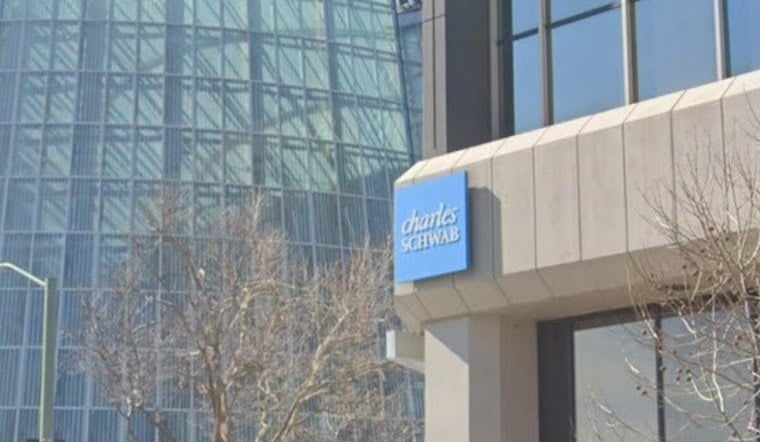
An Oakland woman who lost her life savings to a phone scammer posing as a Charles Schwab security representative is now taking her fight over the missing money to arbitration, after the brokerage denied her claim and pointed the finger back at her. Jazz Powell-Loggins says a wire transfer drained $12,145 from her account on July 13, money she says she desperately needs as she cares for a husband battling cancer and manages her own mounting medical bills while on disability following an on-the-job injury at a warehouse store.
Powell-Loggins told ABC7 Bay Area she answered an unrecognized call that day, and the person on the line claimed to be from Schwab security, warning her that someone was trying to sell off money from her account. She says she stayed on the line for about two minutes before hanging up to take a call from her doctor — a brief window she believes the scammers used to raid her account while distracting her attention. Google Chrome security project lead Jasika Bawa told the outlet that kind of split-second diversion is a common scammer tactic, allowing criminals to work behind the scenes while a victim's focus is pulled elsewhere.
The report notes that a transaction record shows the money was routed to a bank in Ohio. Powell-Loggins insists she never handed over any personal information to the caller, but Schwab told the station its own investigation found she had provided a verification code to a third party — a determination she says amounts to Schwab blaming her for the incident, calling the loss devastating.
Schwab's Security Guarantee Comes With a Catch
Schwab's Security Guarantee, as described in the company's own materials, promises full coverage for unauthorized account activity. Schwab determined Powell-Loggins had shared a verification code. Schwab did not answer ABC7's emailed follow-up questions and declined to provide anyone for an on-camera interview, though the company took five weeks to send Powell-Loggins a written response.
In its statement to the station, Schwab said Powell-Loggins's experience was an example of growing imposter fraud nationwide, and advised clients broadly to be cautious, stay vigilant, and protect their personal information. The company's language echoes federal data on the scale of the problem: the Federal Trade Commission reported more than 1 million imposter scam complaints in 2025 alone, totaling $3.5 billion in losses and making imposter fraud the FTC's most-reported category, according to the Federal Trade Commission. According to the Federal Deposit Insurance Corporation, consumers reported losing $12.5 billion to fraud in 2024, with imposter scams ranking as the second-highest category of reported losses.
A National Surge in Fake Bank Security Calls
The FBI's Internet Crime Complaint Center has tracked a specific version of this scheme — criminals impersonating financial institution support staff to trigger account takeovers. Between January and late 2025, the bureau received more than 5,100 such reports nationally, with losses exceeding $262 million, according to the Federal Bureau of Investigation. Older adults have borne an outsized share of the damage: the FBI's 2025 IC3 report found cybercrime victims over 60 reported $7.7 billion in losses, a 37% increase from the year before.
Security experts cited in the ABC7 report point to how vulnerable basic verification methods can be. Many account PINs are just four digits, and attackers can brute-force short codes by guessing repeatedly, while bank account numbers, routing numbers and PINs are also available for purchase on the dark web. Bank alerts can flag when money moves between accounts, but by the time such alerts trigger, scammers relying on wire transfers have often already moved the funds beyond easy reach.
Why Wire Transfers Are Harder to Recover
That legal gap is central to why Powell-Loggins faces such a steep climb. Ordinary electronic fund transfers carry consumer protections under the Electronic Fund Transfer Act's Regulation E, but wire transfers have traditionally fallen under a different legal framework, UCC Article 4A, which does not guarantee reimbursement once a bank's security protocols are technically followed, according to the Consumer Financial Protection Bureau. That leaves wire fraud victims like Powell-Loggins with far fewer automatic protections than victims of debit card or ACH fraud. FINRA has described account-takeover scenarios in which perpetrators direct victims to transfer money via a first-party wire from a securities account to the perpetrator's personal account.
According to a State Bar of California fraud alert, scammers have gained access to emailed wiring instructions and replaced them with fraudulent instructions, causing significant financial loss.
Having contacted both local police and the FBI, Powell-Loggins is now pursuing arbitration against Schwab rather than a lawsuit — the standard path for brokerage disputes under FINRA Rule 12200, which generally forces customers into binding arbitration instead of civil court when their account paperwork includes a pre-dispute arbitration clause. The Financial Industry Regulatory Authority closed 3,607 customer arbitration and mediation cases in 2024, with 84% ending in a settlement or damage award.
Schwab's Bay Area Footprint and Recent Crackdown
Schwab's tightening stance on shared credentials isn't new. In November 2025, the brokerage forced certain clients to reset login credentials after determining they had shared account access with third-party vendors, warning that credential sharing could void the Security Guarantee altogether. The firm continues to expand its physical presence in the Bay Area even after moving its headquarters to Texas in 2021 — Schwab keeps big Bay Area footprint, with nearly 1,000 employees still in the region and a new San Francisco branch planned for 2026.
In a separate case, the U.S. Department of Justice said Kalien Frazier, 29, of Oakland, California, was charged on Apr 30, 2024, with six counts of wire fraud and one count of aggravated identity theft. The FBI also reported that Alonzo Lamar Holloway, 44, of Oakland, California, was named in a Dec 23, 2009, indictment charging bank fraud, wire fraud, and aggravated identity theft.
Powell-Loggins's ordeal centers on a phone-driven wire scam. As Powell-Loggins waits out the arbitration process, her case adds to a growing list of Bay Area residents caught in schemes where a single phone call, and a matter of minutes, was enough to empty an account.





