

























































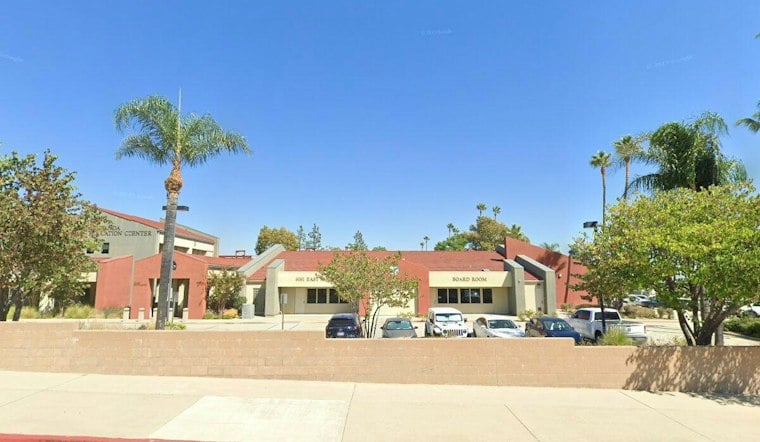
The U.S. Department of Education’s Office for Civil Rights opened an investigation Sept. 10 into whether the Etiwanda School District failed to protect a Jewish seventh grader from alleged antisemitic harassment, according to the Anti-Defamation League. The investigation follows a complaint filed by the Louis D. Brandeis Center for Human Rights Under Law, the ADL and StandWithUs.
District response
Superintendent Laura Rowland told the Daily Bulletin that the district was notified by OCR on Aug. 31. She said the district and its staff “do not tolerate antisemitism or racism in any form” and described policies for investigating reports of hostile acts and taking appropriate action. The district, based in Rancho Cucamonga in western San Bernardino County, has 13 elementary schools and four middle schools serving about 13,000 students.
What the complaint alleges
The complaint alleges that a student at Etiwanda Intermediate School physically attacked the Jewish seventh grader, including with a stick and bare hands, pinned her against a table and choked her for several seconds. It also alleges that the student used an antisemitic insult during the incident. The advocacy organizations further allege that the student encountered Nazi gestures, swastika drawings, praise for Adolf Hitler and the Nazi Party, Holocaust-related taunts and anti-Jewish slurs, according to the ADL.
The complaint also alleges that the district did not adequately address earlier reports and that hostile conduct continued. Joel Taubman, a Brandeis Center staff attorney, told the Daily Bulletin that the family’s initial report did not lead to an effective response. The Brandeis Center is asking OCR to require reforms aimed at preventing similar treatment of Jewish students.
Federal civil rights review
The complaint invokes Title VI of the Civil Rights Act of 1964. The Department of Education says Title VI protects students of any religion from harassment based on actual or perceived shared ancestry or ethnic characteristics, including Jewish ancestry. The agency also cautions that listing an institution under investigation means OCR has initiated a case, not that it has found discrimination occurred. Its explanation is available through the Department of Education.
What an OCR review can lead to
OCR’s opening of a Title VI investigation does not establish that discrimination occurred. The specific steps, if any, that OCR may require from Etiwanda will depend on the agency’s review of the complaint and the district’s response.
In a separate case involving New York’s Vestal Central School District, the district disputed the allegations but entered a resolution agreement requiring responses to harassment complaints involving Jewish ancestry or ethnicity and steps to prevent recurrence, without admitting liability or wrongdoing, according to the Department of Education. Separately, EdSource reported that California’s Sequoia Union High School District in Redwood City settled a 2024 lawsuit by Jewish families on May 26, agreeing to antisemitism training and procedures for addressing classroom materials and alleged incidents.
California context
Statewide hate-crime figures provide broader context but do not measure school harassment directly. According to the California Department of Justice, reported anti-Jewish hate-crime events rose from 289 in 2023 to 310 in 2024. Those figures alone do not show how anti-Jewish incidents compared with other religious-bias incidents. California’s student-protection rules separately address conduct in schools. The California Department of Education says state law prohibits discrimination against and harassment of students and staff based on religion, as well as several other listed characteristics. That legal standard is broader than the statewide hate-crime figures and does not, by itself, provide a complete count of school harassment incidents.
The outcome and timing of the Etiwanda investigation remain unclear. The student accounts and allegations described in the complaint have not been independently verified, and the investigation’s opening does not resolve whether the district violated Title VI.





