

























































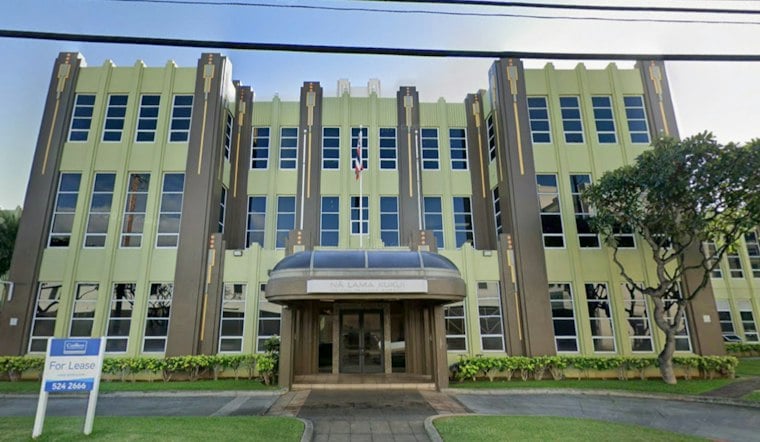
The Office of Hawaiian Affairs has authorized up to $362,800 in emergency disaster assistance for Native Hawaiian families reeling from Hurricane Lowell, a storm that knocked out power to roughly 90% of Kauai and left rural communities isolated for days. The OHA Board of Trustees approved the package during an emergency meeting, directing money toward direct household grants, community resource hubs, and immediate grocery assistance for residents of Kauai, Niihau, and West Oahu.
Hurricane Lowell passed west of the Hawaiian Islands overnight between September 7 and 8 as a Category 1 storm, though it had twice peaked as a Category 5 hurricane earlier in the Central Pacific before weakening as it tracked 90 to 140 miles west of Kauai, according to Wikipedia's storm summary. The storm still delivered wind gusts of 50 to 80 mph to Kauai and Oahu and dumped up to 15.19 inches of rain at Mount Waialeale on Kauai, per the Office of the Mayor. The Kauaʻi Island Utility Cooperative reported that the storm cut power to about 33,000 members, roughly 90% of its customer base, after wind and coastal storm surge damaged 1,500 miles of transmission and distribution lines, according to a report cited by the Hawaii Emergency Management Agency.
Native Hawaiians make up roughly 23% of Kauaʻi County's population, according to Hawaii News Now, a demographic reality that helps explain why OHA moved so quickly to target the island alongside Niihau and West Oahu. On Oahu, Hawaiian Electric reported roughly 21,000 customers lost electricity, with outages concentrated in Leeward communities including Nānākuli, Waiʻanae, and Mākaha, plus road closures on Farrington Highway, the emergency management agency's release also noted. West Oahu's large Hawaiian Home Lands tracts and dense Native Hawaiian population made the area a natural focus for OHA's response even though Oahu avoided the catastrophic wind damage seen elsewhere.
Board Calls It an Initial Response to an Evolving Crisis
OHA Chief Executive Officer Kaialiʻi Kahele said Hurricane Lowell had caused tremendous damage and disruption, with many beneficiaries dealing with property loss, interrupted utilities, damaged roads, and disaster-related uncertainty, according to the same Hawaii News Now report. Kahele described the package as an initial response to an evolving emergency, adding that the needs will become clearer in the days ahead. The board gave administrators flexibility to streamline application and verification requirements, aiming to get assistance out more quickly as damage assessments continue.
The relief package includes up to $250,000 in direct disaster aid grants for verified Native Hawaiian households, up to $75,000 for community resource hubs, and $37,800 in unused Times Supermarket gift cards, per Hawaii News Now's reporting. OHA said it has safeguards in place to avoid duplicate assistance for the same need, and that its aid may be used alongside county, state, federal, insurance, and charitable relief. Relief assistance is prioritizing beneficiaries and communities experiencing the most immediate and substantial impacts, with eligibility, application, and resource hub details to be announced once implementation is finalized.
Grocery Cards Offer a Bridge Before Grants Arrive
The $37,800 earmarked for grocery gift cards gives families a way to buy food immediately, without waiting for formal grant processing to finish, according to the Office of Hawaiian Affairs. On the ground, local nonprofits including Mālama Kauaʻi and the Hawaiʻi Community Foundation's Stronger Hawaiʻi Fund began directing emergency donations and setting up community food distribution hubs across Kauai, as reported by Hawaiʻi Public Radio. Those hubs serve as physical centers for food distribution, emergency supplies, and disaster case management, the station noted, work that is likely to intersect with OHA's dedicated resource hub funding.
The $250,000 in direct household grants is drawn from OHA's Fiscal Year 2027 Grants in Aid – Disaster Aid budget allocation, which covers July 1, 2026 through June 30, 2027, the agency said in its authorization. This is not the first time OHA has tapped a similar fund for Kauai: after historic April 2018 rainstorms triggered landslides and flooding in Hanalei and along the North Shore, the agency established a $250,000 Kauaʻi Disaster Relief Fund offering direct household grants up to $2,000 alongside dedicated support for affected kalo, or taro, farmers.
A Season of Compounding Disasters for OHA
The Lowell relief package lands amid what has become a relentless stretch of disaster response for the agency. Less than a month earlier, OHA's Board of Trustees had authorized more than $338,000 through its Kōkua Kaʻū Relief Fund to help Native Hawaiians affected by Hurricane Lala, which lashed Hawaii Island in mid-August with flash flooding and wind damage that isolated remote Kaʻū communities. Before that, OHA had already deployed or approved over $1.5 million through its I Ola: Kona Low Disaster Relief programs to help Native Hawaiian homeowners, renters, and farmers recover from severe flooding across Oahu, Hawaii, and Maui counties in March, according to Big Island Now.
Restoring basic power on Kauai has proven slower than issuing relief checks. Utility crews from Hawaiian Electric and Southern California Edison mobilized to send personnel, heavy trucks, and equipment by barge to Kauai after power had been restored to only 25% of the island, Hawaiian Electric said, a reinforcement effort launched once the utility had restored nearly all storm outages on Oahu. That gap between financial aid moving fast and electricity moving slow leaves many rural Native Hawaiian families still waiting for the lights to come back on even as OHA's grant program takes shape.


