

























































Brenda Watson, a 50-year-old West Union woman, was killed at the scene on September 2 when a tractor-trailer crossed into her lane on U.S. 68 at Hamer Road in Pleasant Township and struck her Chevrolet Cruze head-on. The truck driver, 39-year-old Manjit Singh of Fresno, California, was charged with aggravated vehicular homicide, and now five Ohio Republicans in Congress are demanding that California Governor Gavin Newsom explain how Singh came to hold a California commercial driver's license in the first place.
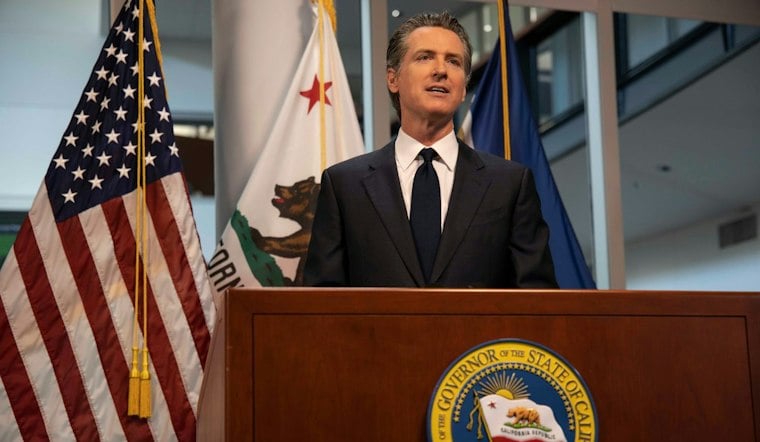
On September 18, five members of Ohio’s congressional delegation — Dave Taylor of Clermont County, Max Miller of Bay Village, Warren Davidson of Miami County, Jim Jordan of Champaign County, and Michael Rulli of Salem — wrote to Newsom and requested answers within seven days, according to Cleveland.com. Their questions include whether California knew Singh was in the country illegally, whether he was tested on English proficiency and road-sign knowledge before receiving his license, and whether the state will work with the Trump administration to stop issuing commercial licenses to people without legal status. The Ohio State Highway Patrol said the truck was passing another vehicle when it struck Watson’s car head-on. A witness said Singh was traveling at excessive speed and had ample time and space to return to his lane before the collision.
A California License, an ICE Detainer, and a Federal Work Permit
Per the Department of Homeland Security, Singh entered the United States illegally through Arizona in October 2023, was released by Border Patrol, and later received federal work authorization. California issued him a commercial driver's license in 2025, and Immigration and Customs Enforcement has since lodged a detainer against him. Taylor has been building toward this fight for months — he introduced Connor's Law, H.R. 3608, in May 2025 to codify federal English-language proficiency requirements for commercial drivers and mandate out-of-service orders for non-compliant operators, per Land Line Media's reporting on the bill.
The lawmakers’ letter argues that California’s sanctuary-state policies contributed to Watson’s death and says undocumented immigrants should not be driving heavy trucks on U.S. roads. It cites a 2025 Florida crash that killed three people and a separate case involving a driver who needed a courtroom interpreter. In a Florida lawsuit, California rejected the claim that it fails to verify legal status and rigorously test commercial-license applicants.
Federal Audit Found Licensing Failures, California Points to Safety Data
A Federal Motor Carrier Safety Administration audit found that more than 25% of reviewed California commercial licenses issued to work-authorized non-citizens were improperly issued, and the state separately issued a Brazilian driver a commercial license to drive passenger and school buses that remained valid for months after his legal status expired. The pressure on California isn't new: U.S. Transportation Secretary Sean Duffy threatened in October 2025 to withhold $160 million in federal highway funds after an FMCSA audit identified systemic non-compliance in the state's commercial licensing program, according to Newsweek.
California DMV officials have pushed back with their own numbers. The DMV calculated that California-licensed commercial drivers had a fatal-crash rate 39.4% below the national average using 2023 federal crash data, while Texas's rate ran almost 50% higher than California's. The DMV says it verifies an applicant's legal presence through the federal SAVE system before issuing a standard or non-domiciled commercial license, and that applicants must pass a road test, vehicle inspection and skills test entirely in English, with no interpreters allowed and automatic failure after two instances of not understanding English instructions. State Attorney General Rob Bonta has made a similar case in court, arguing California verifies legal presence and tests English proficiency before issuing commercial licenses. California officials also note that the state's sanctuary law, SB 54, does not restrict the DMV's licensing process, and that the DMV is not a law enforcement agency under that law.
The Federal Rules Behind the Licensing Dispute
California’s position on its earlier licensing process differs from a federal rule that took effect later. In an October 26, 2025, response to FMCSA, the California DMV said its review found no inconsistency with federal CDL requirements in effect before the interim final rule, according to the California DMV response. That is the state’s account of its review, not an independently established statewide error rate. A separate federal rule took effect March 16, 2026. The Federal Motor Carrier Safety Administration’s Federal Register notice says states may not issue non-domiciled commercial learner’s permits or CDL privileges unless applicants provide evidence of lawful immigration status. That rule postdates Singh’s 2025 license issuance.
A National Pattern of Letters, Lawsuits and Rule Changes
This isn't an isolated flashpoint. Senator Bernie Moreno separately demanded that Connecticut Governor Ned Lamont apologize after a Fulton County crash killed 29-year-old Austin J. Karr Grimes in a collision involving a driver holding a Connecticut drive-only license issued to a non-citizen; Lamont's office has defended that policy, saying it brings more drivers into training and insurance systems and reduces hit-and-run crashes. The two letters — to Newsom and to Lamont — went out roughly two weeks apart, both tied to crashes involving non-citizen license holders. In May 2026, the U.S. Supreme Court rejected Florida's bid to sue California and Washington over a 2025 Florida Turnpike crash that killed three people and involved a driver, Harjinder Singh, who held commercial licenses from both states. Bonta had urged the court to reject Florida's case, and Washington Attorney General Nicholas Brown called the lawsuit a political stunt, not a real claim.
Underlying all of this is a shifting federal rulebook. The U.S. Department of Transportation has estimated that tightening non-domiciled CDL standards would force roughly 194,000 of the nation's estimated 200,000 non-domiciled commercial license holders out of the freight market.
For Watson's family in Brown County, the licensing debate is now inseparable from the seven-day clock Ohio's congressional delegation has put on Sacramento.





