

























































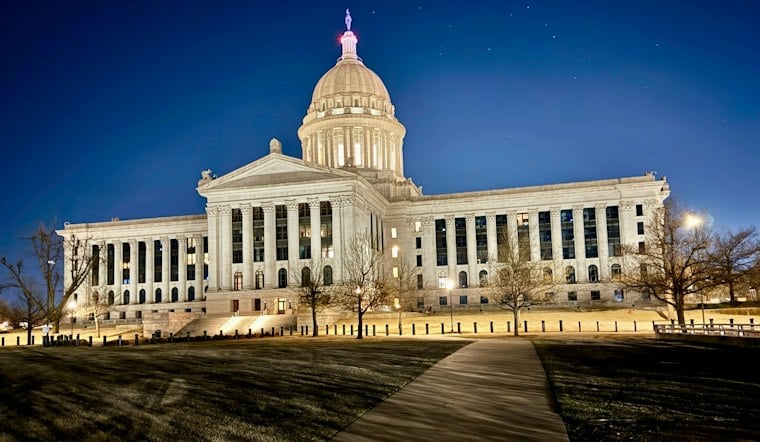
Oklahoma teachers are burning out over classroom chaos more than low pay, and one state lawmaker wants to do something about it before the next legislative session begins. Rep. Rob Hall held an interim study at the Oklahoma State Capitol focused on school discipline and support for teachers and administrators, examining whether the state needs firmer legal backing for educators trying to keep order in their classrooms.
Hall, whose district covers parts of Bixby and Tulsa, said a well-ordered classroom is a precondition of effective instruction, and that chaos in a classroom makes teaching and learning exponentially more difficult or impossible. As News 9 reported, disruptive student behavior makes it more difficult for teachers to do their jobs, and survey data and conversations with educators show managing student behavior has become a significant source of stress for teachers statewide.
That concern lines up with national numbers. According to the RAND Corporation's 2026 State of the American Teacher survey, cited by the National Education Association, 52 percent of K-12 public school teachers nationwide named managing student behavior as their primary source of job-related stress, outranking low salary at 33 percent and long working hours outside contract at 32 percent. Hall described student discipline as the number one job-related stressor for teachers, per the same survey data referenced in his study.
Burnout Runs Higher Than Other College-Educated Workers
The same RAND data found 57 percent of K-12 teachers reported job burnout and 55 percent reported frequent job-related stress, figures substantially higher than comparable college-educated workers in other fields, who reported 36 percent burnout and 34 percent stress, according to Education Week. Those numbers help explain why Hall is treating classroom discipline as a distinct policy problem from teacher pay.
Hall pointed to a specific pattern he says undermines classroom order: student discipline can become a cycle in which a student is reprimanded, referred for discipline and quickly returned to the classroom. He said the education of many has been sacrificed by repeatedly returning a few students to classrooms without corrective action or appropriate discipline, according to News 9's reporting on the interim study.
Federal Guidance and District Policy Shifts Under Scrutiny
Part of Hall's inquiry centers on how federal guidance changes have created uncertainty for school administrators regarding racial disparities in school discipline, which he said has had a confusing effect on administrators trying to set consistent policy. Testimony submitted to lawmakers during the same September study window added detail to that concern: Lauren Greuel, associate counsel for the Wisconsin Institute for Law and Liberty, told legislators that federal discipline guidance under the Obama and Biden administrations encouraged local schools to adopt Positive Behavioral Interventions and Supports and reduce suspensions, which she argued left violent or disruptive students in classrooms and degraded academic outcomes, according to the Oklahoma Council of Public Affairs.
Greuel's research also identified major Oklahoma districts, including Tulsa, Norman, Chickasha, Enid, and Bixby, that explicitly embed restorative justice framework goals into their published district strategic plans, per the same account. Separately, in written testimony submitted for the House Common Education Committee's interim study, 20-year Oklahoma teacher Ben Berry said local administrators have prohibited basic classroom discipline measures — including withholding recess, requiring students to write sentences, keeping students after class, or assigning clean-up duties — on grounds that they harm student mental health, the Oklahoma Council of Public Affairs reported.
Existing Law Already Gives Teachers Some Veto Power
Oklahoma law already offers teachers a narrow protection in the most serious cases. Under Title 70, Section 24-101.3, a student suspended for a violent offense directed toward a classroom teacher cannot return to that teacher's classroom without the teacher's express approval, while the statute also grants school boards and staff good-faith civil liability immunity, according to Justia Law. Hall's study appears aimed at whether that kind of protection should extend beyond violent incidents to cover persistent, non-violent disruption as well.
Lawmakers have tried before. During Oklahoma's 2024 legislative session, state lawmakers introduced SB 1237, a broad Teacher Bill of Rights measure encompassing classroom discipline authority, immunity from civil liability, and workplace safety protections, but it did not advance to full statutory enactment, according to BillTrack50. More recently, the Oklahoma Senate Education Committee approved Senate Bill 1790, the Protected Learning Environments Act authored by Sen. Dusty Deevers, which proposed a statewide three-tiered discipline matrix to give teachers explicit legal authority to remove disruptive students and shield educators from administrative retaliation, per the Oklahoma State Senate.
Looking to Other States for a Model
Hall is investigating whether a teachers' bill of rights already adopted in several other states could work in Oklahoma. Alabama passed its own version in 2024 under Title 16, Chapter 28C, following Florida's 2023 law under Chapter 1015, establishing statutory procedures that let teachers exclude disruptive or disrespectful students from class while requiring written principal documentation or family conferences before the student re-enters, Education Week reported. Several states have adopted similar policies intended to establish or strengthen protections for teachers in the classroom, and Hall said he will investigate whether similar approaches could be used in Oklahoma when lawmakers return for the next legislative session.
Hall was careful to note the limits of any legislative fix. He said behavioral issues can begin outside of school, pointing to factors like parenting, screen use, and the government's response to COVID as contributing causes. Still, he said schools should help students pursue positive decisions while under school care, adding there are no simple solutions to classroom discipline problems, per News 9's account of the study.
The discipline study was one of two interim studies Hall convened during the same week; a day earlier, on September 15, 2026, he hosted a separate House interim study focused on free-market solutions, regulatory burdens, and private property rights to address rising housing costs in Oklahoma, according to the Oklahoma House of Representatives. For now, any legislative response on classroom discipline remains a matter for the 2027 session, when Hall has said he plans to pursue the issue further.



