

























































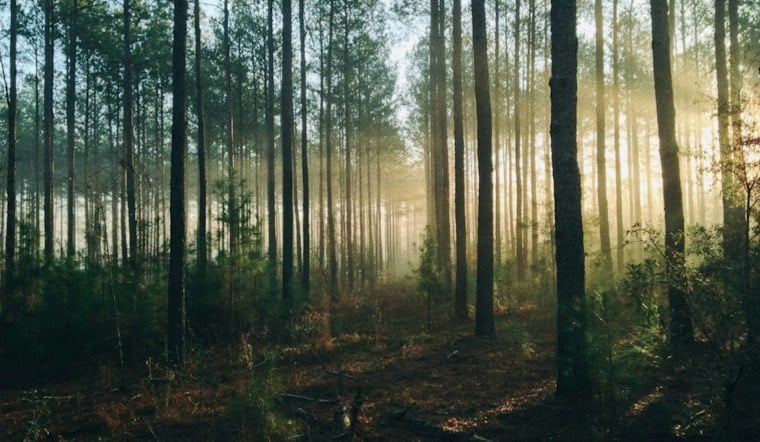
A grassroots coalition says it has raised enough money to halt logging on 29 acres of the 74-acre Doc Holliday timber sale on Washington’s northern Olympic Peninsula. The arrangement pays the timber-sale purchaser to relinquish the right to harvest those acres rather than removing the land from the state’s timber program. The Elwha Legacy Forests Coalition said by mid-September that it had covered the cost of the final 14 acres, completing a monthslong fundraising campaign that began with a small patch of forest near a popular campground.
The arrangement worked because Webster Logging, the company holding the state timber sale, agreed to waive its right to harvest the forestland if the coalition covered state logging fees and replaced the timber revenue it would have earned. As reported by the Washington State Standard, Bruce Webster signed a $620,000 contract with the Washington Department of Natural Resources in 2024 to log the Doc Holliday sale, which included 74 acres of forestland west of Port Angeles. Webster has said he had no problem working with the coalition as long as he was paid what he would have otherwise made from the timber.
The coalition’s payments were structured to cover the timber value, logging costs and Department of Natural Resources purchaser fee for the 29 acres, which supports the agency and local government services, according to the same report. The state agency was not a party to the agreement, however, and the land remains state forestland that could theoretically be offered again in a future timber sale. That limitation makes the campaign a payment-based reprieve from logging, rather than a permanent state conservation designation.
A Two-Acre Deal Grows Into a 29-Acre Reprieve
The effort started small. The coalition signed its first contract with Webster in May, raising $32,000 to save two acres surrounding Sadie Creek Campground. The Washington State Standard described it as apparently the first agreement of its kind in the state between a timber-sale purchaser and a nonprofit, while Washington Commissioner of Public Lands Dave Upthegrove called the initial two-acre agreement uncharted territory.
The campaign expanded in stages. In August, the coalition raised $260,000 to save another 13 acres, and Webster gave the group more time to raise money for the final 14 acres covered by the effort. By mid-September, the coalition said it had completed the fundraising needed to stop logging on 29 acres of the 74-acre Doc Holliday sale, although the campaign’s own accounting distinguishes between acreage secured through its direct contracts and acreage protected through the broader arrangement.
The coalition’s own accounting, posted on its website, says that with help from more than 7,400 donations, it stopped logging on the remaining acres of Doc Holliday Unit 5 and all acres of Units 4 and 6 in September, as noted by Elwha Legacy Forests. The Washington State Standard, however, reported that more than 7,500 people donated to the campaign’s GoFundMe page, which raised $563,000 in total. The two accounts do not explain the difference in donation counts; together, the accounts describe a campaign that covered 29 acres, not the entire 74-acre sale.
Big Gifts Alongside Thousands of Small Ones
The fundraising drew a mix of large and small contributions. The Holdfast Collective contributed $75,000 to the GoFundMe campaign, and an anonymous donor gave $72,000, according to the Washington State Standard’s reporting. The gifts were part of a campaign that drew thousands of donations.
Elizabeth Dunne described the protected acreage as a rare coastal temperate rainforest, according to the same outlet. She said the campaign could help develop new approaches to conserving state lands by demonstrating that members of the public are willing to finance alternatives to logging.
DNR Weighs a Formal Conservation-Lease Process
The Doc Holliday arrangement has also prompted discussion of whether Washington needs a formal mechanism for privately funded conservation on state timberland. A Department of Natural Resources work group has begun developing policies for conservation leases that could operate similarly to the coalition’s agreement with Webster Logging, though as of September the idea remained in development, Michael Kelly said, according to the Washington State Standard. Separately, the GoFundMe campaign page says the department is working on a mechanism to remove forests from the timber-harvest rotation once their value has been paid with private funds.
The state has other tools available for permanent protection that this arrangement did not use. The Department of Natural Resources can designate state forestland as natural areas shielded from logging, and the Washington Legislature can appropriate money to replace timber-sale revenue that counties and other taxing districts would otherwise receive, as reported by the Washington State Standard — options that remain on the table for future conservation efforts.
Washington’s Broader Conservation Network
For a broader view of the state’s permanent and long-term conservation tools, the Washington State Department of Natural Resources says its natural-area system includes more than 41,483 acres in 58 natural area preserves, while its natural resources conservation areas conserve more than 127,981 acres in 39 areas, according to the agency. Those designations provide a different framework from the Doc Holliday agreement, which halted the planned harvest without changing the land’s state-forest status.
How the arrangement fits Washington’s conservation system
A separate state mechanism, the Department of Natural Resources’ Trust Land Transfer program, uses proceeds from transferred state trust lands to buy replacement lands for the affected trust; for state forestlands, replacement lands generally are sought in the same tax district or county, according to the Department of Natural Resources. That framework, along with legislative funding or agency natural-area designations, differs from the Doc Holliday agreement because it is intended to address the affected trust or establish a formal conservation status rather than simply compensate a timber-sale purchaser. The Elwha watershed also has a broader restoration history. The National Park Service says Congress authorized Elwha ecosystem and fisheries restoration in 1992, with dam removal beginning on September 17, 2011, and the Elwha River now flowing freely from the Olympic Mountains to the Strait of Juan de Fuca.
Commissioner Upthegrove, who supports conserving old-growth forests, has set aside 77,000 acres of state forestland for conservation since taking office, as noted by the Washington State Standard. The coalition has also floated a land swap, proposing to trade a 29-acre Doc Holliday unit for another parcel in the Double Down timber sale, but the Department of Natural Resources did not respond to that proposal, according to Washington State Standard’s sister outlet. Such a swap would require the department to identify replacement timber and amend its existing contract with Webster Logging, the outlet noted.
What Comes Next on the Peninsula
Greg Curtis said the conservation effort could be the beginning of similar work elsewhere on the peninsula, according to the Washington State Standard’s reporting. The coalition has also said it hopes the public will eventually be able to bid on timber sales directly, not just logging companies, a goal outlined in the same sister-outlet report.
The Doc Holliday campaign illustrates both the reach and the limits of private fundraising: it can compensate a timber-sale purchaser and stop the scheduled harvest on selected acres, but the land remains technically eligible for a future sale because the agreement did not include a formal commitment from the Department of Natural Resources, according to the Washington State Standard.




