

























































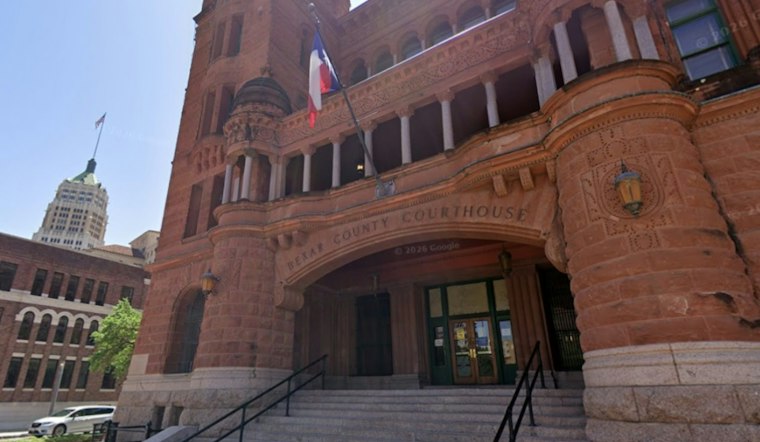
For nearly three weeks, anyone heading to a courtroom inside the Cadena-Reeves Justice Center in downtown San Antonio has had to rely on a single working public elevator out of four. Now an elevator used to transport inmates through the building has broken down too, forcing people in custody to be walked through other parts of the courthouse and prompting a district judge to sound the alarm over security.
Only One of Four Public Elevators Running
The justice center has four elevators available to the public, but only one has been operating in recent weeks, according to KSAT. The station reports the outage has stretched on for nearly three weeks, creating delays and raising security concerns inside the downtown courthouse. 379th District Court Judge Ron Rangel said the fallout has been widespread, telling the station that people have complained about elevator delays making them late for docket calls.
Rangel said delays can affect attorneys, witnesses, defendants and members of the public, describing the backup as a problem that reaches everyone trying to get to a courtroom on time. The station's report notes that Bexar County had previously told KSAT that a second elevator had been brought back into service and a third would soon be repaired — but that timeline was not met, leaving the courthouse still running on a single public elevator this week.
Inmate Elevator Failure Raises Security Concerns
Compounding the problem, an elevator dedicated to moving inmates through the courthouse has also gone out of service. People in custody are now being moved through other areas of the justice center, including back hallways near judges' offices and jury rooms, per the same account. Rangel said that routing inmates that way can create security concerns, particularly during jury trials, since inmates walking through back hallways may encounter jurors who are members of the public.
Courthouse staff normally try to prevent potential jurors from seeing defendants in restraints or being escorted through the building, since that kind of exposure could affect a trial. Rangel said judges have already contacted Bexar County facilities officials about the elevator problems, though the officials have provided no firm timeline for repairs beyond what the county laid out publicly this week.
The concern about jurors seeing a defendant in restraints has a constitutional dimension, though a hallway encounter does not by itself establish a violation. In Deck v. Missouri, the U.S. Supreme Court held that visible restraints during trial require a case-specific finding that they are justified by a state interest. The ruling addresses restraints seen by the trial jury, underscoring why courthouse procedures seek to keep escorted defendants out of jurors’ view.
County Lays Out a Staggered Repair Timeline
According to a county statement relayed by the same outlet, one passenger elevator remains operational while Bexar County works to bring the others back online in stages. The county said a second passenger elevator is expected to be put back into service before the end of the week, and a third is expected to return to service after installation of a motor within two weeks. The fourth passenger elevator, the county said, is completely out of service and will not run again until a broader elevator replacement project is finished — a project expected to take approximately 18 months.
On the inmate-transport side, the justice center has four dedicated inmate-transport elevators, and the county said one of them is out of service, with plans to have it back in operation within two to three days. County officials said sourcing compatible parts has been challenging given the age of the equipment, and that parts and technician availability affect how quickly repairs can move forward. The county added that a full elevator modernization design has already been funded and is expected to be completed within the next 18 months, and said it is working to restore service as quickly and safely as possible.
The elevator problems affect a courthouse complex that has expanded as Bexar County’s need for courtroom space grew. County records say the Cadena-Reeves Justice Center was completed in 1990 and describe a 2010 expansion project undertaken to meet demand for courtroom space in the existing center. The expansion was also intended to reconsolidate support staff and add judicial space, as detailed in the county’s project archive.
Accessibility Questions Remain Unaddressed
Rangel said courthouse buildings must provide accommodations for people with accessibility needs, but he told KSAT he had not seen such accommodations provided up to this point. The judge's comments point to an open question about how the justice center will serve people who cannot use stairs while repairs continue in stages over the coming weeks and months. KSAT says it will keep tracking the repairs and the county's restoration timeline as the outage drags on.
The accessibility question is governed in part by Title II of the Americans with Disabilities Act, which applies to state and local government services, including courts. The U.S. Department of Justice says governments must ensure their programs and services are accessible overall, and may use different methods to provide access in existing facilities; that standard does not automatically require every existing building feature to be accessible. The county’s response to people unable to use stairs remains important as the federal accessibility requirements apply to courthouse services.





