

























































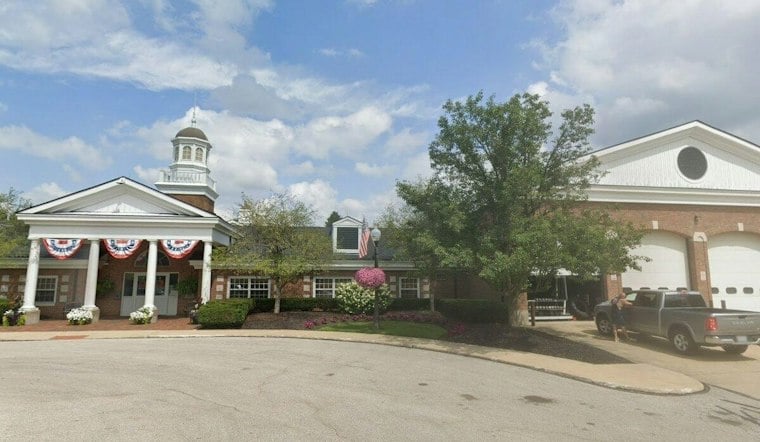
Orange Village Council has made it illegal to leave trailers and other towed equipment sitting unattended on the small Cuyahoga County suburb's public streets, passing an emergency ordinance on second reading on September 9, 2026. The measure targets everything from boat trailers to landscaping rigs left curbside while the truck that hauled them drives off.
Ordinance No. 2026-25 enacts Section 351.17 of the village's codified ordinances and was passed on second reading at council's request from the Orange Police Department and village administration, according to Cleveland.com. Council designated the measure as emergency legislation, a procedural move under Ohio municipal code that let the ban take effect right away instead of after the standard 30-day waiting period.
Police Chief Michael Roberts told council the ordinance is primarily a safety issue, and Deputy Police Chief Michael Debeljak said he, Roberts and the administration back it for the same reason. Debeljak said unattended trailers have caused accidents over the years when no one was present to move them, per the same report. Low-profile trailers left on narrow roads have also created navigation problems for the village service department and school buses, Cleveland.com reported.
What Counts as Unattended
The ordinance defines an unattended trailer as one parked on the street with no capable motorized towing vehicle attached, or with no licensed and authorized person close enough to hear an audible request to move it. It covers open utility trailers, cargo trailers, equipment trailers, boat trailers, landscaping trailers, construction trailers and other towed equipment, according to the same account.
The rule bars parking, leaving standing, or storing unattended trailers and towed equipment on public streets, roadways, cul-de-sacs, alleys, public rights-of-way and other public vehicular ways within the village. The ordinance's legislative text spells out concerns about unattended trailers and emergency responders, municipal service vehicles, snow-plowing operations and refuse collection, a concern spelled out in the ordinance's legislative text posted by Orange Village.
Contractors Raised Alarm Over Early Wording
The initial draft worried local businesses. Council member Kim Ullner said the earlier wording could put every landscaping company serving Orange in big trouble, according to the report, and pushed for the ordinance to define more specifically what unattended means. Law Director Stephen Byron, who drafted and refined the ordinance's language, amended the definition to address that concern.
Roberts said landscapers may still park temporarily as long as they do so safely with a good line of sight, and suggested contractors could instead stage trailers in a front yard or another parking lot rather than on the street. He added that landscapers are already prohibited from parking on village streets, at least on the main thoroughfares, and that the department wants contractors to stage equipment somewhere other than village roads when the towing vehicle isn't present.
A Village Built for Tight Streets
Orange Village is a compact, affluent suburb of about 3,421 residents spread across 3.82 square miles in eastern Cuyahoga County, according to 2020 U.S. Census data cited by Wikipedia. The village sits in the Chagrin Valley region and traces its roots to 1815, when it was part of Orange Township — the 1831 birthplace of President James A. Garfield — before that township split into five separate communities including Orange Village, Hunting Valley, Moreland Hills, Pepper Pike and Woodmere.
Byron's role drafting the trailer ordinance's language fits a broader résumé; he serves as law director for several Northeast Ohio municipalities, including Pepper Pike, Waite Hill and Kirtland Hills, through the firm Singerman, Mills, Desberg & Kauntz. Orange Village is led by Mayor Judson Kline and Council President Lisa Perry, with Byron providing legal counsel to the council throughout the ordinance's drafting.
The police department pushing the ordinance has its own recent leadership change. Roberts assumed executive leadership of the Orange Village Police Department following the retirement of longtime Chief Christopher Kostura, who served 45 years, while Debeljak now serves as deputy police chief.
Other Local Business at the Same Meeting
Council's session also touched on the village's community park at 4600 Lander Road, where Mayor Kline said the village is placing flyers to gather resident input on potential amenities and enhancements. A survey on the topic is available at orangevillage.com. The park is part of the ongoing feedback effort.



