

























































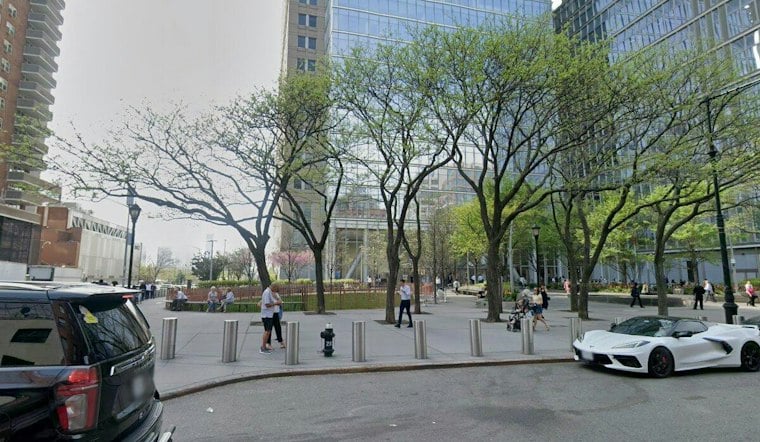
More than 140 corporate leaders filed into Citi's Tribeca headquarters Thursday for the UN Global Compact Network USA Annual Summit, a gathering billed as the only UN General Assembly-week event dedicated entirely to U.S. private-sector sustainability leadership. The theme, “The Room Where It Happens: Shaping the Next Era of Sustainability Leadership,” set the tone for a day spent wrestling with a question that's increasingly hard to answer: how do companies keep their green promises when regulators, budgets, and boardrooms are all pulling in different directions?
A Tribeca Tower Built for the Message
The venue itself doubled as a talking point. Citi's global headquarters at 388 Greenwich Street achieved WELL Platinum certification, making it the world's largest building to receive the top healthy-building standard, according to Citi. As detailed by FacilitiesNet, the bank spent years redeveloping the complex to bring employees together and improve efficiency and work experience; the certifications were a bonus, not a project goal. The summit's backdrop thus served as a physical case study for the conversations happening inside.
Amanda Gardiner, executive director of UN Global Compact Network USA, opened the summit and framed the stakes plainly, according to Morningstar. Gardiner said companies face continuing challenges and opportunities stemming from technology, the environment, geopolitics, and regulation — a list that doubled as the day's unofficial agenda. Sessions throughout the summit examined GlobeScan research on corporate sustainability trends across North America, the forces driving corporate ESG commitments in 2026, and the emerging tools reshaping how U.S. companies track and report their progress.
Ambition Holds, but the Job Description Is Changing
The numbers behind those sessions tell a split story. A tri-national survey released this month by GlobeScan and UN Global Compact Country Networks found that just 10% of North American sustainability professionals expect their organization's ambition to decrease, even amid mounting economic and political pressure — a data point Morningstar's account of the summit ties directly to the day's discussions. Yet a separate survey of senior sustainability executives at companies with at least $1 billion in revenue, reported by ESG Dive, found regulatory compliance has become the top priority for 61% of sustainability teams in 2026.
That tension between staying ambitious and staying compliant showed up again in how leadership itself is being redefined. Research tied to the same GlobeScan survey found 76% of North American sustainability professionals now rate the ability to connect sustainability to business value as the primary marker of leadership, a shift the summit's sessions were built to address directly. The paperwork behind that shift is not trivial: the Global Compact's mandatory annual filing, the Communication on Progress, requires participating businesses to complete a 66-question digital questionnaire covering greenhouse gas emissions and sustainable finance, with companies that miss the December 31 deadline facing public delisting on January 1.
Turnover Inside a Growing Network
The scale of that turnover is already visible in the network's own membership. UN Global Compact Network USA's 2025 Annual Report counted over 1,000 participating U.S. companies and organizations, but 230 U.S. companies were delisted that same year — a churn rate that underscores how demanding the compliance side of the mission has become. The U.S. chapter operates under the umbrella of the broader United Nations Global Compact, which spans more than 25,000 participant organizations across over 160 countries, making it the world's largest corporate sustainability initiative.
Every participant, in theory, signs on to the same baseline: the Global Compact's Ten Principles, covering human rights, labor standards, environmental responsibility, and anti-corruption. Network USA describes its mission as helping companies weave those principles into day-to-day business strategy rather than treating them as a separate compliance checkbox, and the summit was pitched as a forum where organizations at very different stages of that journey — different industries, different company sizes — could compare notes and trade practical fixes rather than platitudes.
Roundtables Tackle Energy and AI Risk
Baker Hughes and Cisco backed the summit and hosted executive roundtables focused on energy resilience and circular business models, giving attendees a more technical counterpoint to the day's big-picture panels. Those conversations landed against a broader backdrop of anxiety about emerging technology: research published by GlobeScan in May found 44% of global corporate practitioners now identify AI and technological developments as major business risks, while only 18% feel prepared to manage AI-driven misinformation or deepfakes.
The day closed with a fireside chat titled “Who Leads, Who Acts, Who Shapes the Future,” featuring author and adviser Andrew Winston alongside Ann Tracy, chief sustainability officer at Colgate-Palmolive and board chair of UN Global Compact Network USA. The conversation centered on the role of U.S. business in a rapidly shifting global landscape, what leaders need to sustain ambition through disruption, and the leverage American companies hold to push progress across their own supply chains.
A Summit Amid a Gridlocked City
The timing placed the summit squarely inside one of Manhattan's most congested weeks of the year. The gathering coincided with the 81st session of the UN General Assembly High-Level Week, during which city officials designated 20 Gridlock Alert Days to manage the traffic and security disruptions that come with hosting world leaders. Executives filing into Citi's Tribeca tower for panels on corporate resilience did so against the same backdrop of blockades and slowdowns that has defined the broader UNGA week downtown.




