

























































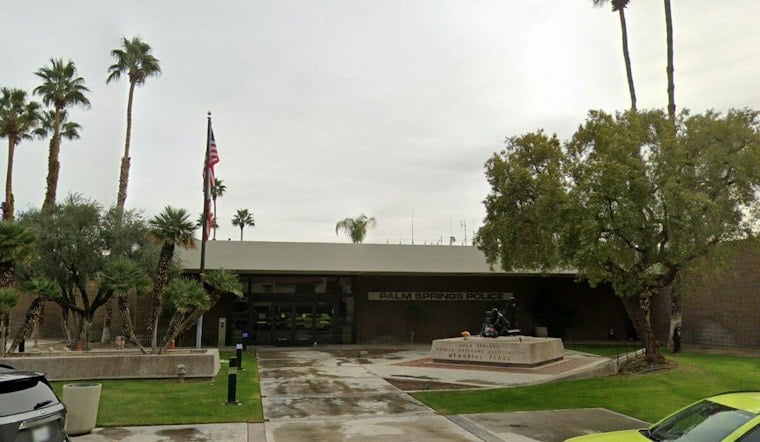
Palm Springs is considering a proposed agreement that could commit the city to spending up to $529,225 over five years for new Tasers for the Palm Springs Police Department, while Roggin Report panelists question the purchase in light of officers' reported seven deployments.
The proposed agreement, first detailed by NBC Palm Springs, would cover not just the 100 tasers themselves but also cartridges, software, warranties and other related services bundled into the five-year contract. The new devices are intended to replace the department's current tasers, which have been discontinued by the manufacturer. According to the outlet, the vendor no longer produces that existing model or the replacement parts needed to keep it running, effectively forcing the department's hand on an upgrade.
Palm Springs has bought Tasers before: a 2016 city agenda recommended a sole-source purchase of 93 X26P devices for $106,347.82. The current proposal names Axon’s TASER 10 and bundles a certification package with hardware, software, services and warranties over five years. That makes the proposed $529,224.69 ceiling a broader package than a device-only price, and marks a change from the X26P model listed in the earlier Palm Springs purchase agenda.
Still, the size of the ask has drawn scrutiny. Palm Springs Police Department officers deployed tasers seven times, the station reports, a number that Roggin Report panelist Paul Scott, a filmmaker, seized on when questioning the size and scope of the proposed purchase. Scott asked whether seven deployments justified spending more than half a million dollars, and pressed for more detail on the number of units, the additional equipment and services bundled in, the tasers' expiration date, and whether the city could expect any trade-in credit for the old equipment.
Police Department Defends the Numbers
In response to that scrutiny, the police department said deployment numbers do not fully reflect the value of tasers as a de-escalation tool, per the same account. Scott, for his part, also suggested that other areas of the city budget might deserve additional attention rather than a purchase of this scale.
The reported seven deployments also are not interchangeable with California’s statewide use-of-force totals. The state Department of Justice says its incident-reporting dataset covers force resulting in serious bodily injury or death, or a firearm discharge, and expressly excludes electronic control devices from its firearm definition. Separately, California’s Racial and Identity Profiling Act stop-data fields track whether an electronic control device was pointed or sparked, used in drive-stun mode, or used in dart mode. The categories show why the reporting period and what counts as a deployment matter when evaluating the number. California DOJ’s use-of-force report and its RIPA data guide describe the separate systems.
Roggin Report panelist Tammy Bleck, who owns Sherlock Homes Watch, offered a more sympathetic read of the department's request but acknowledged she lacked full visibility into the deal's specifics. She said she was not familiar with all the details behind the proposed purchase and would defer to the police department's needs, according to the report. Bleck said she generally supports police and does not want to second-guess officers about their equipment needs, though she still questioned whether 100 tasers makes sense for a city the size of Palm Springs.
Framing the Debate Beyond Tasers vs. Firearms
Bleck pushed back on framing the discussion as a simple binary. She said the debate should not be reduced to a choice between tasers and firearms. Bleck questioned whether 100 new units made sense, saying, “You sure wouldn’t think so.”
Other California cities have approved larger TASER 10 purchases with bundled costs. Riverside’s City Council approved 300 devices in October 2024 for a total of $1,449,030.16, including accessories, a five-year warranty and training. Riverside’s package involved three times as many devices as Palm Springs’ proposal, but the totals alone do not establish a like-for-like price comparison: the contract components and terms would need to be matched. Riverside’s council minutes record the approved purchase.
The proposal raises broader questions about how the police department determines the number of tasers it actually needs, and what the city receives in exchange for a five-year agreement that could run as high as $529,225. Those questions remain open as the council continues to weigh the purchase, with no timeline confirmed for a final vote in the reporting reviewed so far.





