

























































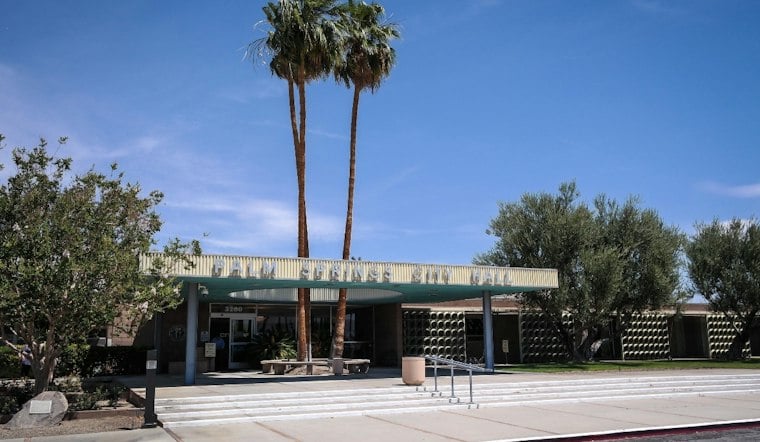
Palm Springs city leaders will consider next week whether to stretch a temporary ban on new data center applications from 45 days to nearly two years, a move that would give planners until late August 2028 to figure out how to regulate the power-hungry computing facilities. The Palm Springs City Council is set to take up the extension at its meeting Wednesday at 5:30 p.m. at 3200 E. Tahquitz Canyon Way.
The council voted unanimously on August 26 to establish the original 45-day moratorium, which bars the city from accepting, processing or approving any applications or permits tied to data centers, according to MyNewsLA.com. That short-term pause is set to expire on October 10, and city staff is now recommending the council extend it by 22 months and 15 days — the maximum length allowed under state law.
City officials say the extra time is needed because Palm Springs currently has no definitions or regulations addressing data centers in its municipal and zoning codes, and no policies in place to govern how or where they could operate. The Department of Planning Services says it needs additional time to analyze the land use and craft appropriate rules as the city undertakes a broader update of its citywide zoning code. A staff report cited by the outlet states that additional time is necessary to thoughtfully and thoroughly review these land uses both internally and with the community.
State Law Sets the Two-Year Ceiling
The 22-month-and-15-day extension isn't an arbitrary number. Under California Government Code Section 65858, cities can enact urgency interim zoning moratoriums with a four-fifths council supermajority, initially for up to 45 days, then extend them after a public hearing for up to 22 months and 15 days — creating a hard two-year cap meant to prevent indefinite freezes without public process, according to FindLaw.
Palm Springs isn't the only Coachella Valley city leaning on that statutory maximum. Desert Hot Springs' City Council voted unanimously on July 7 to extend its own temporary data center moratorium by the same 22 months and 15 days, bringing its total pause to two years while staff studies utility, land-use and environmental impacts, per The Riverside Record. That city had initially adopted its own 45-day pause back in June before formalizing the longer freeze.
Neighboring Cities Are Going Further
Some valley neighbors aren't stopping at a pause. The Coachella City Council adopted a measure on August 26 prohibiting large-scale data centers, while allowing some small-scale data centers for storage, security, electricity and telecommunications purposes, according to KVCR. Community opposition in Coachella over electric grid capacity and water strain helped fuel valley-wide scrutiny of data center proposals.
Taken together, three Coachella Valley municipalities — Coachella, Desert Hot Springs and Palm Springs — have all taken distinct legislative steps on data centers this summer.
Water and Power Strain Drive the Concern
Much of the anxiety centers on resources that are already scarce in the desert. Water use and cooling are among the concerns raised as communities weigh data center proposals.
Energy demand is climbing too. Data centers currently account for about 2% of California's total electricity demand, but that consumption is projected to double over the next decade, according to California Energy Commission projections cited by the Los Angeles Times. High-density AI server farms require substantial power inputs and continuous cooling equipment, straining local grids not built for that load.
A Statewide Pattern of Pushback
Palm Springs' move lands just days after Governor Gavin Newsom signed a package of seven data center bills into law on September 21, requiring developers to disclose projected water and electricity use, pay for power grid upgrades, and contribute to wildfire mitigation costs, according to CalMatters. The state laws followed growing public concern over the environmental and economic impacts of artificial intelligence infrastructure.
Public opinion backs the pushback. A July survey by the Public Policy Institute of California found that 73% of California residents oppose data center construction in their local communities, driven by worries over utility strain and electricity costs, the Times reported. Municipalities across the state have proposed or adopted temporary data center moratoriums, and Los Angeles County imposed one for unincorporated areas the previous week.
The starkest example of local resistance may be Monterey Park, which in June became the first city in the nation to enact a permanent data center ban through a ballot measure. Measure NDC passed with more than 88% voter approval, according to GatherGov.
For now, Palm Springs is sticking with the pause-and-study approach rather than an outright ban. Wednesday's vote will determine whether the city buys itself nearly two full years to write rules for an industry that, city staff says, its current codes simply were not built to address.





