

























































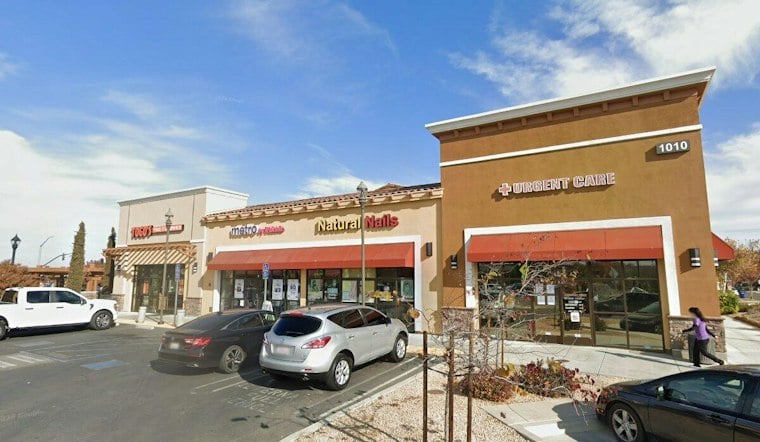
Nearly three decades after Del Puerto Hospital shut its doors, Patterson still has no emergency room of its own, and paramedics routinely load patients into ambulances for rides to Turlock or Modesto that typically run 25 to 30 minutes each way. Residents of the Stanislaus County city have lacked a local hospital emergency department for decades, forcing paramedics to transport patients to emergency rooms in neighboring communities while the city waits for a new hospital to materialize.
The gap traces back to 1998, when Del Puerto Hospital closed for good, according to The Modesto Bee. Since then, Patterson residents have faced long travel times to reach acute care hospitals, specialty providers and behavioral health services, according to the Del Puerto Health Care District. The district's own survey found that more than half of residents within its boundaries leave the West Side entirely just to see a doctor, per the Patterson Irrigator.
A Stopgap Bill Moves Through Sacramento
While the long-term fix remains years away, state lawmakers are pushing a shorter-term option. A bill authored by Assemblyman Juan Alanis, R-Modesto, would authorize a rural emergency stabilization care unit in Patterson, the Bee reported. The Assembly approved that bill, AB 2282, on a 76-0 vote in late May.
The proposed unit would provide emergency evaluation and care along with imaging and lab services, and it would receive patients daily, around the clock, until a permanent hospital opens, according to the same Bee report. In the meantime, Patterson District Ambulance provides 24-hour emergency care.
The Slow Build Toward a Permanent Hospital
Behind the emergency-unit push sits a much larger, slower-moving project: a phased healthcare campus. The Del Puerto Health Care District Board of Directors has reviewed a master plan intended for submission to the City of Patterson for approval, and the district expects to begin construction next year on a campus that would include a 25-bed critical-access hospital, per the Bee's reporting.
Exactly how big that campus will be depends on which account you read — district materials describe it as 38.5 acres, while other reporting has cited figures of 39 acres and 27.5 acres, and the discrepancy has not been resolved. Timelines for the actual hospital diverge too: one Bee report says the hospital will not open before 2035 and campus construction is expected to start the following year, while the Patterson Irrigator describes the acute care hospital as a final addition sometime between 2035 and 2040. What is consistent across sources is that earlier pieces of the campus — including buildings for the outpatient clinic and ambulance service — could be ready as soon as 2028, and the Irrigator reports the full campus is planned for phased development over the next 10 to 15 years.
What the Finished Campus Could Include
Beyond the hospital itself, the district's vision for the site includes a new ambulance facility, a behavioral health center and an assisted living center, according to the Irrigator. City of Patterson records show staff are preparing an updated environmental document and plan to present proposed revisions to the Planning Commission and City Council in the coming months, though it is not established whether those reviews have concluded.
Why the Wait Matters Statewide
Patterson's predicament plays out against a backdrop of rising demand on California's emergency rooms. Emergency-department visits statewide climbed 17%, to 14.9 million, between 2013 and 2023, growth that far outpaced the state's 2% population increase over the same period, according to the California Health Care Foundation. In 2023, 330 acute-care hospitals statewide operated a licensed emergency department — none of them in Patterson. The median ED stay statewide was three hours that year, stretching to four and a half hours for patients with psychiatric or mental health needs, and California emergency departments are required to treat all patients regardless of ability to pay.
For now, Patterson's fallback remains what it has been since 1998: a paramedic crew, an ambulance and a half-hour ride to someone else's emergency room.





