

























































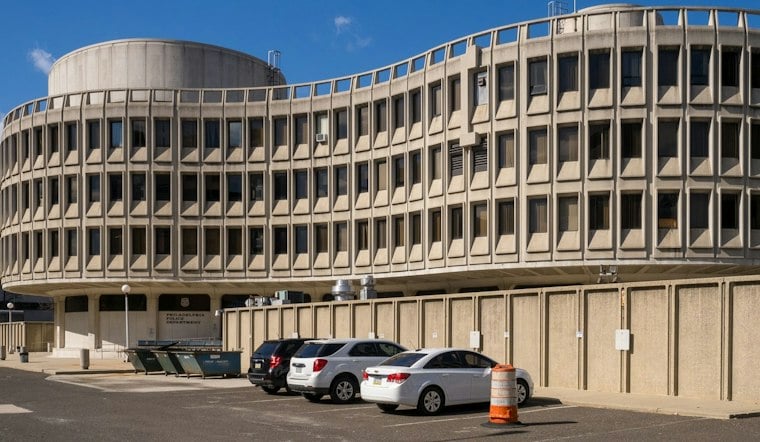
Retired Philadelphia police Sgt. Greg Masi spent several days in Lower Manhattan in the aftermath of the September 11, 2001 terrorist attacks. Twenty-five years later, he has blood cancer and asthma that the federal World Trade Center Health Program has determined are linked to his time at Ground Zero, and he wants one thing from the city before his illness potentially takes his life: a written guarantee that his family will receive line-of-duty death benefits.
Masi is among roughly a dozen Philadelphia police officers who were officially dispatched to New York City in September 2001 to assist with recovery and communications operations at Ground Zero, according to NBC10 Philadelphia. He said he and other responders did not know at the time that toxic materials lingered in the dust that coated the site, and he says he simply fulfilled his oath to serve and protect. Now, he says, 9/11 remains unresolved a quarter-century later for the people who were there.
The World Trade Center Health Program made its determination that Masi's time at Ground Zero contributed to his health conditions back in 2020, per the same report. The program provides medical and mental health services to people affected by the attacks, and its reach has only grown: as of August 2026, national enrollment exceeded 100,000 members, with more than 43,000 responders and survivors participating outside the New York metropolitan area, according to the CDC World Trade Center Health Program. Nearly 57,000 first responders and survivors nationwide have now been certified with a 9/11-related cancer, a 143% increase over five years, per statistics compiled by Citizens for the Extension of the James Zadroga Act.
Why Officers Want a Promise in Writing, Not a Fight After Death
The officers are not seeking immediate benefits, the NBC10 report notes. Instead, they want written assurances that their families will receive line-of-duty death benefits if service-related illnesses eventually cause their deaths. That distinction matters because Philadelphia currently requires families to petition the city's pension board only after an officer has died, with the board reviewing each line-of-duty death case individually rather than issuing guarantees in advance.
According to the City of Philadelphia Board of Pensions and Retirement, a service-connected death health care benefit is available to survivors of police officers and firefighters whose deaths have been deemed service connected. Philadelphia pension-board records show that on Dec. 7, 2023, Dennis Smith applied for service-connected death benefits as the spouse of the late Lynneice N. Hill, a former police officer.
Masi said he wants his family taken care of if his Ground Zero-related illness causes his death. A line-of-duty designation would provide officers' families with greater benefits, including a larger portion of pensions, according to the outlet's reporting. In Pennsylvania, that designation carries substantial financial weight: the state's Emergency and Law Enforcement Personnel Death Benefits Act, known as Act 101, sets a one-time death benefit for surviving beneficiaries of public safety officers killed in the line of duty at $165,992.50 for the 2025-2026 fiscal year, according to the Pennsylvania Department of General Services. Separately, under the state's Act 51 of 2009, surviving spouses or dependent children of officers who die from line-of-duty injuries are entitled to a monthly state income benefit equal to the deceased officer's full monthly salary.
Union and Department Weigh In
Roosevelt Poplar, president of Fraternal Order of Police Lodge 5, called the Philadelphia officers heroes and said the city has an obligation to the officers it sent to Ground Zero, per the NBC10 report. The Philadelphia Police Department said the officers served at Ground Zero in their official capacity with the department's full support, and the department has said it recognizes that retired officers are confronting serious health conditions following that service. Police Commissioner Kevin Bethel is working to ensure families receive the benefits they deserve, and the department says it continues to work with city partners toward a resolution through appropriate review processes.
The city of Philadelphia has said it recognizes some officers' medical conditions may be job-related and that it is committed to standing with responders and their families. Officials have also said the city will support the pension board's decisions on line-of-duty death designations and will recognize responders who die from WTC-related illnesses on the memorial wall in Washington, D.C.
A City Council With a Track Record of Stepping In
Philadelphia's City Council has shown before that it is willing to legislatively expand who qualifies for line-of-duty death status rather than leaving families to navigate case-by-case reviews alone. In June 2021, the council enacted legislation guaranteeing line-of-duty death benefits to city employees, including police officers, who died from COVID-19 contracted while working in person, according to reporting cited by The Trace. More recently, in June 2026, the council unanimously passed legislation extending line-of-duty death benefits and lifetime survivor pensions to families of first responders whose suicides are linked to job-related trauma, a bill that passed despite financial concerns raised by the mayoral administration.
Those precedents leave open the question of whether the council or the mayor's administration will craft a similar formal policy for the small cohort of officers sent to Ground Zero, sparing grieving families from administrative battles after an officer's death. At the federal level, any resolution would also interact with existing compensation structures: under the Dale Long Public Safety Officers' Benefits Improvement Act of 2012, federal line-of-duty death and disability payments must be offset by any award a responder or family receives from the September 11th Victim Compensation Fund, according to the U.S. Government Accountability Office. That federal fund has approved more than 76,000 eligibility determinations totaling over $18.38 billion for ill responders, survivors and families of the deceased as of September 2026.
Separately from Philadelphia's pension system, the U.S. Department of Justice's Public Safety Officers' Benefits Program provides death and education benefits to survivors of fallen law enforcement officers, firefighters and other first responders.
Medical monitoring itself appears to matter for survival odds. A March 2026 study of 28,430 responders published in the Annals of Epidemiology and highlighted by the Centers for Disease Control and Prevention found that 9/11 responders enrolled in the World Trade Center Health Program experienced a lower overall risk of death compared to eligible responders who were not enrolled — underscoring why formal recognition and continued screening remain critical for officers like Masi as they wait for the city to settle the benefits question.


