

























































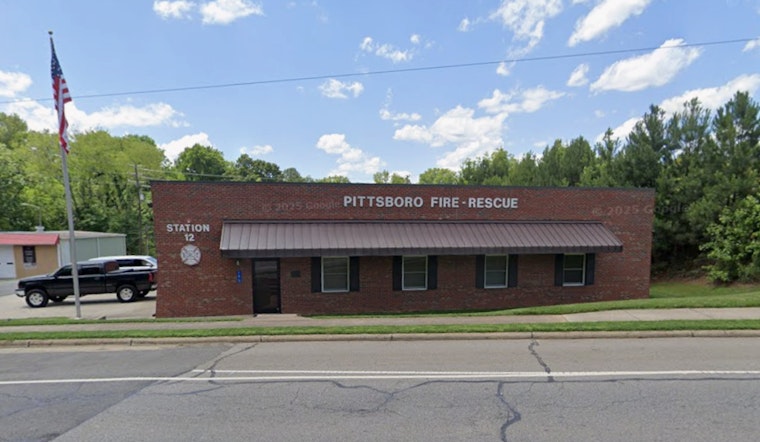
David Reeves has worked in emergency response since 1977, and it took a free skin check inside a Chatham County firehouse to find the malignant mole quietly growing on his neck. The Pittsboro Fire-Rescue training chief had no idea anything was wrong until volunteers from a local dermatology practice spotted it during a routine screening.
Reeves is chief of training for the Pittsboro Fire Department, according to Spectrum News, which first reported on the screening event and Reeves's diagnosis. Volunteers with Central Dermatology Center identified the malignant mole on his neck, and the practice's volunteers went on to schedule his surgery. Reeves said the byproducts of combustion pose a major danger to both firefighters and the citizens they serve, framing his own diagnosis as proof of a risk he had spent decades warning colleagues about.
“It's well worth it,” Reeves said of the free cancer screenings, arguing they are a simple, low-cost way to cut down on firefighters' cancer risk, per the station's report. Pittsboro Fire-Rescue operates as a combination department, staffed by both career professionals and volunteers who protect the Town of Pittsboro and the surrounding Circle City Fire District in Chatham County.
A Weeklong Screening Turns Up Dozens of Warning Signs
The screening event that caught Reeves's mole was part of a weeklong outreach effort that ultimately screened firefighters from the Caldwell, Pittsboro, Sanford and Timberlake fire departments. Per the same account, the effort identified 47 moles requiring further review and 20 cases of a scaly skin lesion that can develop into a serious form of skin cancer if left untreated.
Dr. Carolyn Hardin, the Mohs surgeon who operated on Reeves, said the screening program was designed to make cancer checks easy for busy firefighters to fit into their schedules. She warned that untreated skin conditions can spread and lead to serious illness or death. Hardin is a fellowship-trained Mohs surgeon and U.S. Army veteran who previously served as Chief of Dermatology at the 121 Combat Support Hospital in Seoul, South Korea, according to Central Dermatology Center, which operates clinical offices across Chapel Hill, Sanford, Cary, Raleigh and Pittsboro.
Why Firefighters Face Elevated Melanoma Risk
Firefighting is widely recognized as an occupational hazard, and fire exposure releases a mix of toxins and carcinogens including asbestos, benzene, formaldehyde and PFAS, according to the article's reporting. Those substances can enter the body through inhalation, ingestion and skin absorption — a pathway that has drawn increasing scientific scrutiny in recent years.
Firefighters carry a 21% greater risk of melanoma than the general public, according to the American Academy of Dermatology, which has backed a nationwide push for firefighter skin-cancer checks. The risk is even steeper for firefighters aged 30 to 49, who face a 62% greater risk of melanoma than the general population. The Firefighter Cancer Support Network notes that firefighters working today face elevated cancer risk down the road as a result of cumulative occupational exposure.
The World Health Organization's International Agency for Research on Cancer reclassified occupational exposure as a firefighter to its highest hazard category, Group 1, in June 2022, explicitly citing a positive association with skin melanoma alongside bladder cancer and mesothelioma, according to the American Cancer Society. Occupational cancer was responsible for nearly 80% of International Association of Fire Fighters member line-of-duty deaths in 2025, up from 66% reported between 2002 and 2019, per the IAFF.
Gear Cleaning Can't Catch Everything
Departments have tightened protocols for cleaning contaminated equipment after fire calls. Turnout gear, flame-resistant suits and boots are cleaned on site, while the protective layers underneath the thicker gear are laundered elsewhere, per Spectrum News's reporting.
Even so, a March 2026 bulletin from the CDC's National Institute for Occupational Safety and Health found that combustion byproducts like polycyclic aromatic hydrocarbons penetrate all layers of firefighter turnout gear, making dermal absorption a primary exposure route that standard aqueous laundering often fails to eliminate. Researchers noted that PAHs can remain embedded in gear fibers and off-gas directly onto skin long after a fire response, which helps explain why screening programs like the one that caught Reeves's mole are increasingly viewed as essential rather than optional.
State Law Backs Up the Safety Net
North Carolina has built a financial backstop for firefighters facing exactly this kind of diagnosis. Governor Roy Cooper signed Senate Bill 319 into law in July 2024, making the North Carolina Firefighter Cancer Benefit Program permanent and expanding initial lump-sum payouts up to $37,000 for an occupational cancer diagnosis starting July 1, 2025, according to the IAFF.
Effective that same date, the state also expanded eligibility to cover non-active retired firefighters for up to 10 years post-retirement, provided they completed 20 years of creditable service, per the North Carolina Office of State Fire Marshal. The provision reflects a reality dermatologists and researchers stress often: cancer diagnoses frequently surface years or even decades after the original toxic exposure occurred on the job.
A systematic review published in the Journal of the American Academy of Dermatology found that career firefighters had elevated odds of developing melanoma in 80% of analyzed study datasets, driven largely by chemical absorption from smoke and soot, as reported by the Pittsburgh Post-Gazette. For a chief who has spent nearly five decades around fire, a five-minute skin check turned out to be the exposure check that mattered most.


