

























































Potomac Edison has asked the Maryland Public Service Commission to approve an additional $52.8 million in annual distribution revenue. The application was filed Sept. 4 under Case No. 9904, according to WBC Radio. The utility estimates that approval would increase the average residential customer’s monthly bill by about 5.3%, but that estimate is not a final charge: the proposed rates remain under regulatory review.
What the request would cover
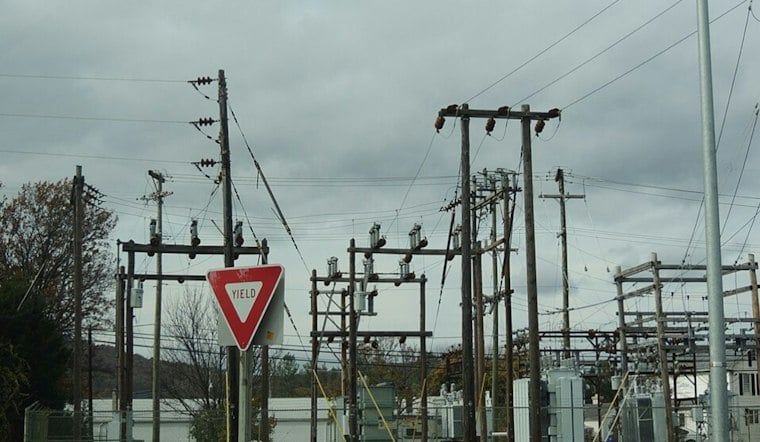
Potomac Edison, a FirstEnergy subsidiary, says the additional revenue would support aging-equipment replacement, grid technology and electric-system reliability. The projects listed by the utility include SCADA equipment, substation work, circuit connections, overhead lines, underground cable and tree removal near power lines, according to Potomac Edison. Those are the company’s proposed uses for the money; the commission has not determined whether the spending or the requested revenue requirement is justified.
The case concerns distribution revenue, not every component of a customer’s electric bill. The Maryland Office of People’s Counsel says Potomac Edison’s residential bill includes separate delivery, supply and transmission components. As of August 2026, the office listed a $6.00 monthly residential customer charge, a distribution rate of $0.02287 per kilowatt-hour and a combined supply and transmission charge of $0.1122 per kilowatt-hour. Actual bills also vary with usage and other charges, according to the Office of People’s Counsel.
The earlier case shows the request can change
A previous Potomac Edison proceeding illustrates the difference between a utility’s filing and a commission decision. In 2023, the company sought a $50.4 million increase, while regulators approved $28.0 million. The Office of People’s Counsel said the decision translated into an average increase of $4.84 a month, or about 4.9%, for a residential customer using 1,000 kilowatt-hours monthly. The office also said the commission adopted several of its positions, including a $6.00 residential customer charge and an independent audit of charges allocated by FirstEnergy, according to its 2023 bulletin.
That precedent does not predict the outcome of Case No. 9904, but it establishes that the commission may approve less than a utility requests and may modify related rate provisions.
Reliability context is mixed and limited
Maryland PSC staff found that the electric companies’ SAIFI performance was “relatively constant” from 2020 through 2022. SAIFI measures the frequency of interruptions; the finding does not address outage duration or establish that the projects proposed in the new case are necessary, according to the commission’s reliability review.
Potomac Edison has also completed earlier modernization work in Maryland. FirstEnergy said that projects completed Jan. 19, 2021, in the Brunswick and Cumberland areas involved nine automated reclosers and were expected to benefit 6,483 customers along 101 circuit miles. That work is a documented earlier investment, but it is separate from the projects proposed in Case No. 9904 and does not resolve whether the new request should be approved, according to FirstEnergy.
What customers and regulators will weigh
Potomac Edison serves about 295,000 customers in all or parts of Allegany, Carroll, Frederick, Garrett, Howard, Montgomery and Washington counties, according to the utility. Potomac Edison also says its residential rates were 25% below the average for its Maryland investor-owned utility peers as of June 1, 2026, and would remain the lowest among those utilities if the request is approved, according to FirstEnergy. Those comparisons describe the utility’s current position; they do not determine whether the proposed investments are reasonable or how the commission will allocate costs.
The Office of People’s Counsel, which represents residential utility consumers, has sought expert consulting and testimony in Case No. 9904, according to a public contract notice. The commission’s review will determine whether the requested increase should take effect in full, in part or not at all. Separately, eligible customers may receive assistance covering part of their current electric bills through the Electric Universal Service Program, according to Potomac Edison.



