

























































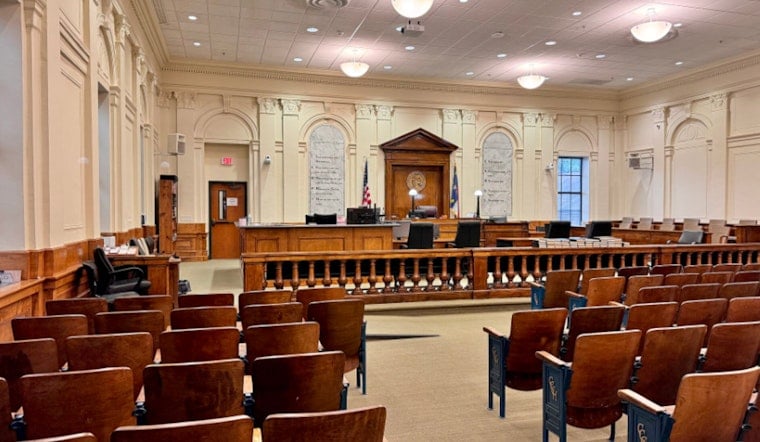
A Raleigh man hired through the pet-sitting app Rover is facing a felony animal cruelty charge after a French bulldog named Neeko died following what a warrant describes as being left caged outside during a punishing June heat wave. Amoni Baloubi appeared before Judge Mark Stevens in a Wake County courtroom, where the judge ordered that Baloubi may not have any pets other than the backyard chickens he already keeps.
According to CBS17.com, police say the alleged crime happened in June 2026, when Raleigh saw a heat wave stretch across several days and the National Weather Service recorded a high of 90 degrees on June 15. Per the warrant, that is the day Baloubi allegedly left Neeko, a French bulldog, caged outside in the extreme heat. The dog died as a result, according to the station's reporting.
Baloubi was charged with felony cruelty to animals, a Class H felony under state law, and his attorney, Tyler Ellenberg, told the outlet that Baloubi used Rover for dog and cat sitting work. Both Baloubi and Ellenberg declined to speak with the station after the court appearance. CBS17.com reported that its journalists heard at least one dog barking inside the address listed for Baloubi, though no further detail on that animal was provided.
What North Carolina Law Requires to Prove the Felony
Under North Carolina General Statutes § 14-360, maliciously killing an animal or causing its death through intentional deprivation of necessary sustenance is classified as a Class H felony, according to the North Carolina General Assembly. That statute requires proof of malice, a higher bar than simple negligence, which is likely to become a central issue as the case moves through Wake County court. The felony charge carries a maximum punishment of up to 39 months in prison, though North Carolina's structured sentencing guidelines, as detailed by Patrick Roberts Law, allow judges to hand first-time offenders community or intermediate punishments such as probation instead.
Raleigh's own municipal code sets a strict local limit on outdoor pet confinement during hot weather. Under Raleigh Code of Ordinances Section 12-3010 and Section 12-3004, owners and custodians cannot leave an animal outdoors without human accompaniment or adequate shelter for more than 15 minutes once temperatures exceed 80 degrees, according to PETA. With the June 15 high reaching 90 degrees, any extended outdoor confinement that day would have breached that threshold.
Why French Bulldogs Face Special Danger in Extreme Heat
Neeko's breed made the alleged confinement especially dangerous. A study led by the Royal Veterinary College found that flat-faced, or brachycephalic, breeds like French bulldogs have more than three times the odds of suffering environmental heatstroke compared to mesocephalic breeds, and roughly one in seven dogs treated for heatstroke die from the condition. Shortened muzzles impair a dog's ability to cool itself through panting, making hot cars, yards, and cages far riskier for breeds like Neeko than for many others.
The heat wave that hit Raleigh was part of a broader pattern across the state that summer. The North Carolina Department of Health and Human Services documented more than 1,800 emergency department visits for heat-related illnesses statewide between May 1 and mid-June 2026, underscoring how widespread the danger was even beyond this single case.
Rover's Response and the Limits of Its Guarantees
Rover requires all prospective sitters to pass an enhanced third-party background check that scans federal, state, and county databases for criminal behavior. Even so, the platform's terms of service state it does not warrant the accuracy, completeness, or timeliness of those checks, according to Adopt a Pet, a caveat consumer advocates say means background checks alone cannot guarantee ongoing pet safety.
Rover has deactivated Baloubi's account, and the company's trust and safety team has launched its own investigation into the case. Rover has said it will assist law enforcement with its investigation if contacted. Separately, the Rover Guarantee reimburses up to $25,000 in eligible veterinary care costs for injuries during booked services, according to Rover, though that guarantee excludes pre-existing conditions, unbooked care, and sitter property damage.
How the Case Fits Into Local Enforcement Patterns
In Raleigh, animal cruelty complaints and ordinance violations are investigated by the Raleigh Police Department's Animal Control unit, which operates within the Special Operations Division and executes arrest warrants alongside police detectives, according to the City of Raleigh. Animals seized or surrendered in cases like this typically pass through the Wake County Animal Center, the region's sole open-admission municipal shelter, which takes in strays, surrendered pets, and law-enforcement-confiscated animals from Raleigh and surrounding towns.
Baloubi's case is not an isolated one in Wake County this year. Local court monitoring groups tracked multiple felony and misdemeanor animal cruelty warrants filed in mid-2026, including a June case charging a Raleigh woman with animal neglect after a dog was found covered in feces without adequate food, water, or shelter. For now, Baloubi remains barred from keeping any pets beyond the chickens on his property as his felony case continues in Wake County court.





