

























































A 12-week training program in Red Oak has placed 21 of its first 22 graduates into data-center jobs paying between $22 and $40 an hour, according to hiring figures reported by Texas State Technical College and Compass Datacenters. The Mechanical Electrical and Information Technology, or MEI, Data Center Pathway Program was built to help job seekers and career changers enter the region's booming digital infrastructure sector without requiring prior experience.
The numbers reflect a fast-moving partnership that began when Compass Datacenters approached TSTC in 2024 about creating a specialized training pipeline, according to The Dallas Morning News. Graduates from the first two cohorts have gone on to work for companies including Siemens and CBRE, the paper reported, while Compass itself helped develop the MEI curriculum and funded scholarships for the program's inaugural 12-student class.
One of those graduates is Michael Carvalho, who worked as a janitor at Compass Datacenters before enrolling in MEI's first cohort. He told the paper he moved from janitorial work into a technical role and now works as a critical infrastructure technician for Compass. Carvalho said he became a data-center technician after completing the program.
What the Curriculum Actually Covers
The program packs 224 instructional hours into 12 weeks, teaching electrical and mechanical systems, HVAC, motor controls, cabling, safety, and communication, per the same account. Cohorts are capped at 12 students, and tuition runs $4,700 — though scholarships have covered the cost for every cohort so far. Schneider Electric funded scholarships for the second cohort and has since hired three MEI graduates, with plans to bring on more for manufacturing, commissioning, assembly, logistics, and technical-operations roles.
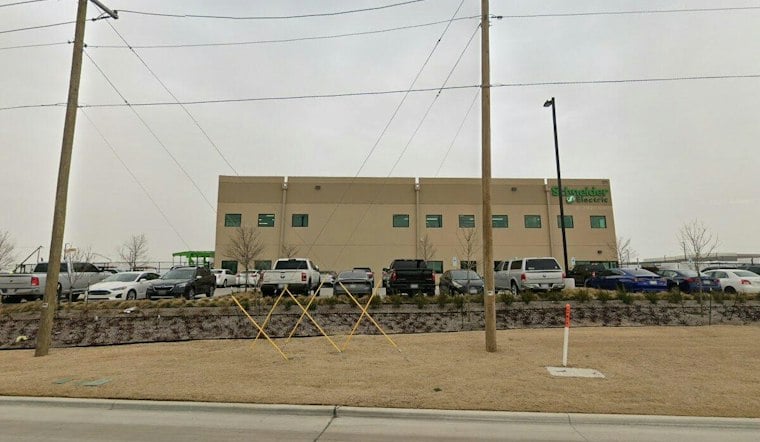
Schneider's involvement isn't incidental. The company opened a 105,000-square-foot manufacturing facility in Red Oak in June 2024, adjacent to Compass's campus, to build prefabricated modular data center equipment under a $3 billion partnership, according to CommercialSearch. Schneider is now contributing equipment to MEI's new training center, and a broader coalition of suppliers — Vertiv, RK Industries, Brasfield & Gorrie, and Rubicon Technical Services — are donating real-world equipment and control systems to furnish the program's 40,000-square-foot training facility, according to a release carried by PR Newswire.
That facility, once known as the Thunderball training center, was valued at $12.6 million when Compass donated it to the program, and TSTC expects to take ownership of the building this year, the Dallas Morning News reported. Salute funded scholarships for all 12 students in the program's third cohort, which began classes in Red Oak this month.
A Scholarship Recipient's Path Into Cybersecurity
Paula Ombar, a resource coordinator for Black Box — which provides IT solutions and data-center infrastructure — received a scholarship covering her MEI tuition. She learned about MEI through a Dallas College classmate.
The Texas Workforce Commission projects the North Central Texas computing infrastructure, data-processing, and web-hosting sector will add 1,752 jobs between 2024 and 2034. Compass estimates that its fully built 10-building campus alone would need about 300 onsite operations workers, plus more than 500 permanent jobs spanning engineers, accounting staff, and other support roles once fully staffed.
Why Companies Can't Wait for Traditional Degrees
Red Oak's labor crunch is a symptom of just how fast money is pouring into the town. Compass secured $326 million in fixed-rate refinancing in October 2025, backed by five operational Red Oak facilities representing 180 megawatts, part of its plan for a 300-acre, 10-building campus totaling 360 megawatts. Nearby, DataBank secured $1.45 billion in financing in June 2026 for its first three buildings, representing 180 megawatts, while Google has pursued an approximately $880 million data-center project at its Midlothian, Texas campus, according to The Real Deal. Data-center development in Red Oak was part of the region's growth.
Regionally, in a report published September 3 covering the first half of 2026, CBRE reported that Dallas-Fort Worth data center inventory had expanded past 1,400 megawatts with a vacancy rate of just 2.8%, while 95% of the 765 megawatts under construction in the metroplex was already pre-leased, according to Dallas Innovates. Cushman & Wakefield ranked Dallas-Fort Worth as the world's top primary data center market this year, while JLL separately named Texas the top overall data market in North America after overtaking Virginia. That kind of pre-leasing pressure helps explain why employers are recruiting technicians before buildings are even finished.
Weighing Fast Placements Against Long-Term Outcomes
Texas State Technical College operates under a legislative funding model implemented in 2013 that uses five years of former students' wage records and the minimum wage, according to TSTC. That structure gives the college a direct financial incentive to chase fast, high-wage placements like those coming out of the MEI program.
Phedra Redifer said short-term, employer-supported programs can connect residents to good-paying work within weeks, per the Dallas Morning News. But Laura Ward cautioned that an initial job placement is only a starting point for judging a short-term program's real value, and Amanda Bergson-Shilcock said programs should track employment after 90 days, six months, and one year to determine whether the gains hold up. TSTC and Compass have not yet provided longer-term graduate outcomes beyond the initial placement and starting-wage figures for the first two cohorts.
The debate over rapid training pipelines is unfolding alongside a separate reckoning over the power demands of the data centers themselves. An ERCOT-related forecast projected in 2025 that total Texas data-center electricity demand could reach about 22,000 megawatts by 2030, according to Texas Scorecard. The debate over data-center growth continues even as towns like Red Oak lean on programs like MEI to keep pace with employer demand.





