

























































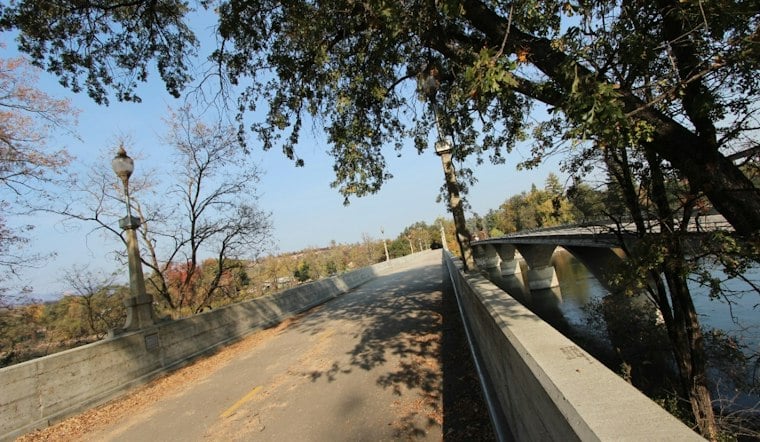
Redding's water utility is preparing to replace one of the city's most critical — and oldest — pieces of infrastructure: Pump Station 1, the facility that pulls drinking water from the Sacramento River and sends it to the Foothill Water Treatment Plant. The replacement project carries an estimated price tag of roughly $74 million, according to Action News Now, and it will reshape a stretch of the Sacramento River Trail near the Diestelhorst Bridge in the process.
Pump Station 1 currently pumps water from the Sacramento River and supplies Redding's Foothill Water Treatment Plant, which provides more than half of the city's drinking water, per the outlet's reporting. The station was built in 1937.
The city’s environmental review says modified fish screens were installed at the existing station in 2006, but the intake has been operating under a waiver while concerns remain that it may not meet state and federal fish-screen criteria when river levels are low. The same review says the existing intake is limited during low-water conditions and the city projects demand could require pumping capacity to rise from 28.9 million gallons a day to as much as 42 million. The city’s final environmental impact report identifies both fish protection and added capacity as reasons for replacing the station.
A New Site Upstream, Built for Decades of Growth
The proposed station is planned upstream. The new facility is being designed to meet projected demand and will feature increased pumping capacity, a new intake system, and what the city calls a state-of-the-art fish screen.
Project design is complete, and construction bidding is anticipated in early 2027, the same report notes. From there, the build is expected to take roughly four years, with limited windows available for in-river work — a scheduling constraint tied to the sensitivity of working near the Sacramento River's fish populations. The existing station will remain operational throughout construction, according to Shasta Unfiltered's reporting, until the new one is up and running.
The work is taking place in a river reach that supports anadromous fish year-round, including several runs of Chinook salmon and fall steelhead, making the timing of river work an environmental concern as well as a construction constraint. The project’s creek work also has a fish-habitat rationale: the city’s environmental review says restoring Jenny Creek to an open channel is intended to improve fish access to upstream spawning and rearing areas. The environmental review details the fish populations and habitat goals behind those measures.
Trail Closures and a Reshaped Riverfront
For regular users of the Sacramento River Trail, the project means changes are coming. Action News Now reports the trail will be widened near the new pump station, with a new paved access point planned from Overhill Drive along with a public restroom, underground utilities, and new access roads connecting the Sacramento River Trail to the Jenny Creek Trail. Temporary trail closures are expected during construction.
The project also includes environmental restoration work at Jenny Creek, where culverts will be replaced with an open channel. Once the new pump station is operating, the existing station will be demolished and its site restored to a native condition, according to a city report cited by Action News Now.
Funding
The project's funding plan includes a $50 million State Revolving Fund loan, according to Shasta Unfiltered's reporting on the council briefing — consistent with Action News Now's reporting that roughly $50 million is expected to come through the California State Water Resources Control Board's revolving loan program. The remaining funding gap may be filled by additional grants, loans, or city reserves, per Action News Now.
The $50 million financing is listed by the State Water Resources Control Board as a construction loan project under its Drinking Water State Revolving Fund. The program is designed to help public water systems finance drinking-water infrastructure; its standard construction loans commonly run 30 years, with interest set at half the state’s most recent general-obligation bond rate. That makes the planned state financing a substantial share of the project, but a loan rather than a grant. The state’s funding plan lists Redding’s $50 million Pump Station 1 project, and the program’s terms describe its loan structure.



