

























































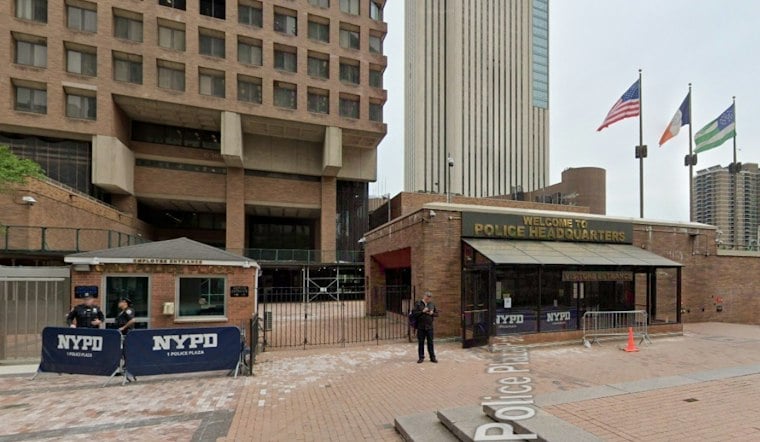
A retired NYPD officer has beaten cancer linked to the toxic dust of September 11, 2001, a recovery that stands out at a moment when new Ground Zero-related cancer diagnoses continue to rise, a quarter century after the attacks.
The officer's story was reported by Fox 13 Tampa Bay, whose Kylie Jones detailed how the September 11 attacks left many first responders carrying more than a mental load — some also faced life-threatening physical burdens years after the towers fell. The report lands in Florida, a state that carries particular weight in this story: more than 43,000 members of the federal World Trade Center Health Program now receive care through its National Provider Network outside the New York metro area, according to data from the Citizens for the Extension of the James Zadroga Act. The statistics page also provides state-level enrollment data. The officer's case can be viewed as part of a wider regional health reality rather than an isolated story.
A National Health Crisis That Keeps Growing
Nationwide enrollment in the federal World Trade Center Health Program has surpassed 145,000 members as of mid-2026, with 57,044 9/11-related cancer certifications recorded — cancer certifications increased 143% over the last five years, per data reported by Onco'Zine. The program, established by Congress under the Zadroga Act, provides free lifetime medical monitoring and treatment to those exposed to toxic Ground Zero dust.
For the first time in the program's history, certified 9/11 cancer diagnoses among civilian survivors — 28,913 cases — have surpassed certified cases among emergency first responders, at 28,131, according to CDC data reported by Hoodline. Civilian survivors in this count include lower Manhattan office workers, residents, and students who breathed in the toxic dust cloud after the towers collapsed.
The Toll on NYPD and FDNY Ranks
The scale of loss among uniformed responders remains staggering. More than 541 officers have since died of 9/11-related toxic exposure illnesses, and over 1,720 have been forced into disability retirements, per the Citizens for the Extension of the James Zadroga Act. Exposure during months of recovery operations at Ground Zero and the Fresh Kills landfill led to illnesses that surfaced only years later.
The Fire Department of New York has faced a similarly grim reckoning. More than 4,200 of the FDNY's 16,000 enrolled program members have received at least one cancer diagnosis, and over 600 total department personnel have died of Ground Zero toxic exposure — nearly double the 343 firefighters lost on the day of the attacks, according to CBS News. FDNY members faced extreme dust and smoke exposure during search-and-rescue efforts at the site.
New Diagnoses Still Surging a Quarter Century Later
At Northwell Health's WTC Health Program clinic in New York, certified 9/11 cancer cases surged 75% between 2023 and 2025, with 132 additional new cases recorded in just the first six months of 2026, CBS News reports. Medical experts cited by the outlet explain that many solid tumor cancers carry latency periods spanning 20 to 30 years, meaning the wave of diagnoses tied to 2001 exposure may still be building.
A separate analysis of federal WTC Health Program data published in September found that the number of 9/11 survivors receiving federal aid for cancer care roughly tripled over five years, climbing from 8,870 in June 2021 to 27,300 in 2026, according to Drugs.com. Researchers behind the analysis noted earlier and more aggressive breast cancers and unusually frequent lung cancer among never-smoking women.
The Science Behind the Toxic Dust
Epidemiological studies from Mount Sinai, reported by Pitta & Baione, show that first responders exposed to Ground Zero toxic dust face a 219% higher risk of thyroid cancer, a 41% higher risk of leukemia, and a 25% higher risk of prostate cancer compared to the unexposed general population. The dust clouds that blanketed lower Manhattan contained complex mixtures that included asbestos and benzene.
The World Trade Center Health Program was created in 2011, and the government formally expanded coverage in 2012 to include 69 distinct cancer types after peer-reviewed medical research established the toxic links, according to the CDC and Barasch & McGarry.
Compensation and What Comes Next
Financial support for sick responders has grown alongside the medical need. The September 11th Victim Compensation Fund has awarded more than $18.38 billion in tax-free compensation to over 76,000 injured responders, survivors, and surviving family members since its 2011 reactivation, per the U.S. Department of Justice and the Citizens for the Extension of the James Zadroga Act. The fund's compensation framework also includes certified 9/11 cancer claims.
For the retired NYPD officer whose recovery was featured by Fox 13 Tampa Bay, beating cancer places him among a growing number of Ground Zero responders and survivors now navigating this expanding federal safety net — one that, twenty-five years after the attacks, is still absorbing new diagnoses far faster than anyone initially expected.


