

























































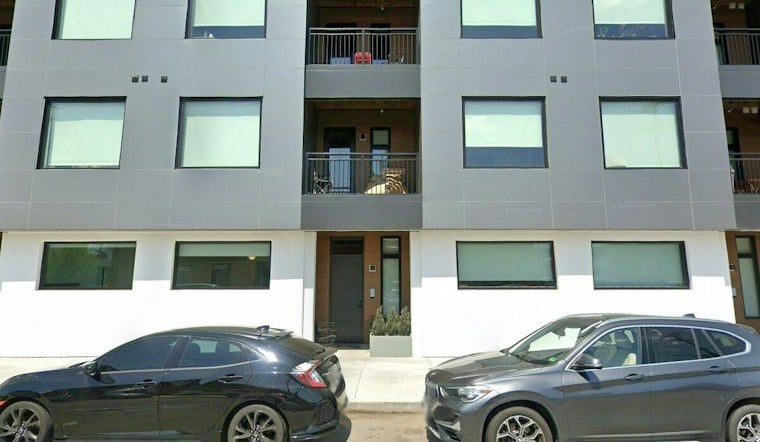
Richmond's housing-cost pressures are pushing some older residents to consider sharing homes rather than living alone. Some are offering spare bedrooms for rent, while others are seeking rooms they can afford on limited monthly budgets. The arrangement can provide homeowners with income and give renters an alternative to the city's increasingly expensive rental market.
The local roommate trend was reported by Axios in a report by Sabrina Moreno, which found older Richmond residents seeking shared housing. For hosts, taking in a roommate can provide income and companionship; for renters, offering household help can sometimes reduce the monthly cost, according to the report.
A Nationwide Squeeze on Fixed Incomes
Richmond's situation reflects a broader national squeeze. About one-third of households headed by someone 65 or older were cost-burdened in 2024, meaning they spent more than 30 percent of their income on housing, according to the Axios report. The pressure is especially pronounced among renters: the Joint Center for Housing Studies of Harvard University found that 58% of older U.S. renters, representing 4.5 million households, were cost-burdened in 2023, compared with 28% of older homeowners.
The Richmond region is not insulated from that pressure. In the Greater Richmond area, 52% of all renter households paid unaffordable housing costs in 2024, while the City of Richmond had a 56% renter-occupied rate across its 117,518 total housing units, according to the Housing Indicator Tool maintained by HAND. Statewide, roughly 1.01 million Virginia households, or 30.1% of all households in the commonwealth, were housing cost-burdened in 2024, based on Census data analyzed by USAFacts.
Why Downsizing Isn't Always the Answer
Downsizing might seem like the obvious fix, but it isn't necessarily cheaper for homeowners who would have to give up low mortgage rates locked in years ago, the Axios report notes. That helps explain why nationally, about 25 percent of households headed by people 65 or older have at least two spare bedrooms, more than double the share among younger households — a surplus of space that home-sharing arrangements are increasingly filling.
Federal Reserve Bank of Richmond research reported this year found that 75% of Americans aged 50 and older prefer to age in place in their current homes, even as rising living costs make solo homeownership increasingly difficult. Staying put while sharing a home lets older residents preserve their existing social networks and neighborhood ties rather than relocating to a new area or an institutional care setting.
Matching Services and Local Models
Around 55 home-share groups operate nationwide, vetting applicants, matching roommates and brokering agreements over details like pets, parking, chores and thermostat preferences, according to Axios's reporting. Nearby, Fairfax County has taken a more formal approach, promoting home-sharing as a way for older adults to lower housing costs and remain in their neighborhoods. FFXnow reported that county supervisors formally evaluated options in September 2022, weighing public awareness campaigns for private platforms like Silvernest against a county-managed roommate matching model.
Those platforms can carry real financial upside for hosts. Older homeowners who list spare bedrooms on specialized home-sharing services such as Silvernest earn an average of $10,000 per year in rental income, according to industry reporting by HousingWire. That kind of supplemental income can matter significantly for retirees managing property taxes and maintenance costs on a fixed budget. Virginia law, under Code § 58.1-3210, also authorizes localities to adopt ordinances granting real estate tax exemptions or deferrals to homeowners 65 and older or permanently disabled, subject to local income and net worth limits.
Tax relief may offer another option
Before relying on rental income, qualifying older Richmond homeowners can also check the city's real-estate-tax-relief program. For tax year 2023, the City of Richmond Department of Finance listed a Dec. 31 filing deadline, a $60,000 gross combined-income limit and a $350,000 combined-financial-worth limit, excluding the home and up to one acre of land from the financial-worth calculation.
More Than a Budgeting Fix
Home-sharing's appeal extends beyond the ledger. A 2025 AARP national survey found that 40% of adults aged 45 and older report feeling lonely or socially isolated, a health risk factor that earlier AARP research connected to $6.7 billion in additional annual Medicare spending. For roommates who end up sharing more than rent, the arrangement can chip away at that isolation while easing the financial strain for two people at once.
The shift toward shared housing among older Americans isn't confined to Richmond. Data from the National Association of Home Builders shows that a record 6.8 million U.S. households shared housing with non-relatives in 2023, with householders aged 55 and older the fastest-growing demographic, now accounting for 30% of all shared households nationwide. Still, as the Axios report makes clear, home-sharing will not solve Richmond's housing problems on its own — it's a workaround for individual households navigating a market that continues to outpace what fixed incomes can cover.





