

























































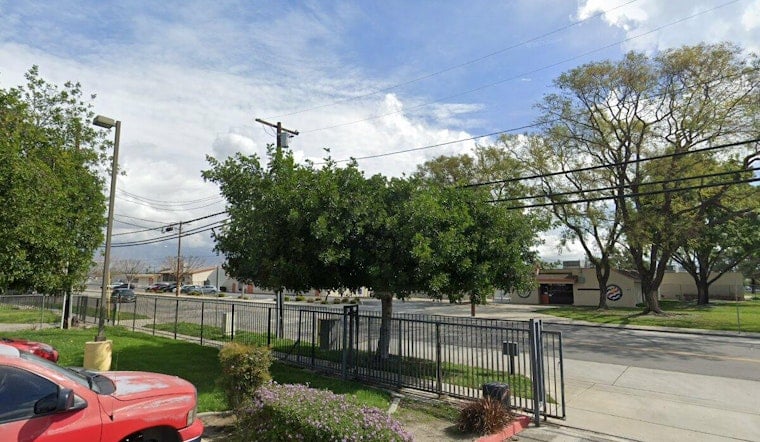
SAC Health has laid off 49 nonclinical employees and shuttered two of its San Bernardino clinics as the federally qualified health center works to close a $10 million operating gap. The cuts, made Thursday, hit administrative and support staff rather than clinical positions, while the health system's South K Street and East 3rd Street locations both closed in August.
The layoffs and closures were confirmed in a staff memo from SAC Health chief executive Jason Lohr, who wrote that the reductions were necessary to close the shortfall, according to the San Bernardino Sun. Lohr said he was taking responsibility for leading SAC Health through the situation and ensuring the decisions made were thoughtful, responsible and compassionate. The health system also restricted travel, conferences, sponsorships, meals, events and other discretionary spending, and reduced compensation across its executive and management teams.
A Consolidation Years in the Making
The East 3rd Street clinic sat on the former Norton Air Force Base, which closed in 1994; the building was deeded to Loma Linda University the following year, with plans for the university to use it as a community clinic. SAC Health says it plans to consolidate services from the shuttered sites into its new Brier Campus in east San Bernardino, a 280,000-square-foot flagship facility that opened in September 2025 after an $85 million conversion of a former call center. That opening was marked by a $10 million grant from the Yuhaaviatam of San Manuel Nation — the largest single donation in SAC Health's history, and, notably, the same dollar figure as the operating gap the health system now says it must close, as reported by Inland Empire Community News.
SAC Health runs 10 clinics across Barstow, Blythe, Indio, Murrieta and San Bernardino, and describes itself as serving more than 65,000 patients, many of whom rely on Medi-Cal. As a federally qualified health center, SAC Health is required to provide primary care regardless of a patient's insurance status or ability to pay, per the same reporting from the Sun. It also functions as a teaching site for Loma Linda University students, reflecting its affiliation with Loma Linda University Health and its role as what SAC Health itself describes as the largest specialty-based teaching health center FQHC in the country.
Roots Going Back to a Church Basement
SAC Health's history stretches back to the late 1960s, when it began as a student-led evening clinic at a Methodist church in San Bernardino, founded by Harvey Elder and Warren Peters. It grew into a formal 42,300-square-foot facility at the former Norton Air Force Base in 1995 and received official federal designation as an FQHC in 2015. That decades-long expansion culminated most recently in February, when SAC Health opened an $8.9 million biomedical building at Pacific High School, built in partnership with the San Bernardino City Unified School District, aimed at keeping students healthy and minimizing school absences — a goal tied directly to state funding, since school funding is linked to attendance rates.
Federal Medicaid Cuts Squeeze the Safety Net
The budget gap traces back to the federal One Big Beautiful Bill Act, signed into law in 2025 by President Donald Trump, which the Sun reports will cut nearly $1 trillion from Medicaid over a decade — the largest funding reduction in the program's 60-year history. The California Health Care Foundation has projected the law will cut federal Medi-Cal funding to California by $30 billion annually, with up to 3.4 million state residents potentially losing coverage over time. Because federally qualified health centers like SAC Health draw roughly 91% of their funding from clinical reimbursements, primarily Medicaid, rather than federal grants, according to Portside, reductions in federal Medicaid matching translate quickly into operating shortfalls for safety-net providers.
The stakes are especially high in San Bernardino County, where total Medi-Cal enrollment reached 836,885 residents in 2025, according to county Community Indicators data, even as that figure fell 2% from the year before. Roughly 18.6% of San Bernardino's population lived below the federal poverty line in 2024, according to Data USA, well above the 12.5% national rate, underscoring how heavily the local population depends on subsidized care. California's enacted 2026-27 state budget maintained Prospective Payment System reimbursement rates for community health centers for one more year, a move the Community Clinic Association of Los Angeles County said helped avert immediate closures statewide, though the relief was described as temporary.
SAC Health has said its restructuring reflects a broader response to economic pressures affecting healthcare organizations nationwide, reviewing operating expenses and commitments throughout the organization and reducing contracted services where operationally feasible. The health system's approach — consolidating physical sites and administrative overhead while insisting clinical care and its teaching partnership with Loma Linda University remain intact — mirrors the balancing act facing safety-net providers across California as they absorb federal funding reductions passed down from Washington.





