

























































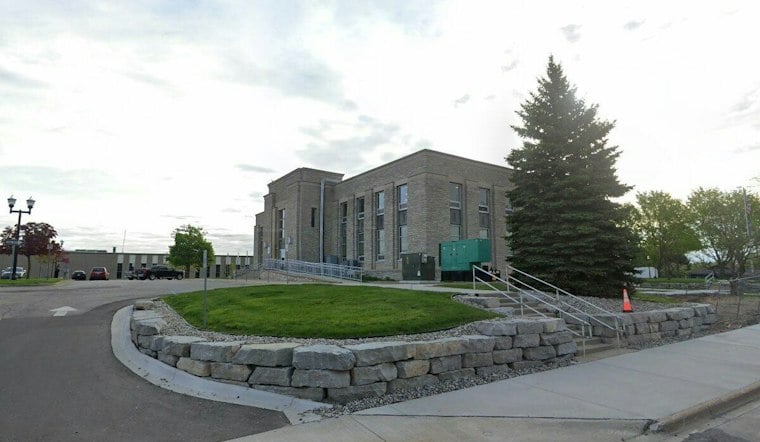
Saginaw City Council is set to vote Monday on a 10-page ordinance that would govern where data centers can be built, how loud they can run and who pays if the city's water and sewer systems need to grow to serve them. The vote comes even though no data center project has actually been proposed for the city.
Saginaw City Manager Tim Morales said no data centers are currently in development in Saginaw, according to MLive.com. Still, the council has been working toward this moment for months: it previously approved a moratorium on data center development spanning all of 2026 and directed city hall staff to craft a formal policy, the outlet reports. That moratorium will remain in place through the end of the year regardless of Monday's outcome.
What the Ordinance Would Require
The proposal would amend Saginaw's zoning code to classify data centers as special land uses in the city's light-industrial and general-industrial districts, meaning any future project would need review from the zoning administrator and approval from the Saginaw Planning Commission. Developers would be required to submit reports covering operations, water use, wastewater discharge, energy demand, noise, tree preservation, heat mitigation, emergency response and decommissioning, per the same account.
On the water front, applicants would have to estimate yearly, monthly, daily and peak water demand, describe their cooling systems, identify water meters and explain sustainable practices. They would also need to report wastewater discharge methods, treatment plans, pipe details and proof of required permits — and, notably, would be on the hook to pay for any needed increases in public water or wastewater capacity, the report notes.
Setbacks, Noise Limits and Generator Rules
Physically, data centers and related mechanical equipment would need to sit at least 500 feet from residential districts and homes. Ambient noise at the property line of the nearest residential or other sensitive use would be capped at 55 decibels. Routine backup-generator testing could only happen from 9 a.m. to 5 p.m. on weekdays, excluding holidays, with online notice posted at least 72 hours in advance — though testing could still occur outside those hours during power outages or utility-demand events.
The ordinance would also build in community notification steps well before shovels hit the ground. Developers would need to notify properties within a half-mile of a project site by mailed notice, publish meeting notices in newspapers, host at least two neighborhood meetings and maintain a project-details website, according to the outlet's reporting. Saginaw officials plan to add the finished policy to the city's code of ordinances by Oct. 9, 2026, if it clears Monday's vote.
The Broader Push Behind the Rule
The ordinance proposal states it seeks to support technological innovation and economic development while maintaining land-use compatibility, environmental stewardship and high-quality design, the same source reports. Saginaw's nine-member council will take up the vote at 6:30 p.m. Monday at the Andersen Enrichment Center, 120 Ezra Rust Ave., with the meeting broadcast on Charter Spectrum Channel 191 and the city's YouTube channel.
Saginaw isn't moving in isolation. Michigan currently lacks comprehensive statewide rules for the new generation of large-scale data centers, and as of mid-June more than 50 Michigan communities had already passed temporary moratoriums of their own, according to MLive.com. A separate count by ServerCountry.org put the figure at least 52 communities as of late June, while a September dataset from GridCensus listed 48 active and 59 total moratoria in Michigan; the figures were gathered at different times and are not directly comparable.
Statewide Stakes and Nearby Projects
Michigan lawmakers introduced a six-bill package in the state Senate in June aimed at creating new safeguards for large-scale data center projects, touching on issues like water use, energy demand, nondisclosure agreements and community benefits, per MLive.com's earlier coverage. The debate is playing out against a backdrop of enormous projected investment: McKinsey has estimated data-center infrastructure spending will total $7 trillion nationwide between 2025 and 2030, according to the Detroit Free Press.
Some of that investment is already landing in Michigan. Oracle and Related Digital are building a $7.4 billion data center campus in Saline Township expected to deliver 1.4 gigawatts of computing power, the Free Press reports, while Google is separately moving forward with a 1-gigawatt data center in Van Buren Township. Other communities have taken their own defensive steps this year — Allendale Township paused data center, battery-storage and large-scale solar and wind applications in June pending permanent rules, the City of Flint enacted its own moratorium the same month, and Delta County adopted a moratorium in July to study utility capacity, land use, noise, heat, water and environmental effects before writing permanent zoning standards, per GridCensus.
Supporters of the industry's growth in Michigan point to tax breaks for large data centers that state lawmakers passed and Gov. Gretchen Whitmer signed in 2024, viewing such incentives as a way to harness AI development and address the state's legacy-industry and population challenges. Opponents, meanwhile, have raised concerns about the environmental impacts of energy- and water-intensive developments and about artificial intelligence more broadly — a tension Saginaw's proposed ordinance is attempting to get ahead of before any specific project ever reaches the city's doorstep.




