

























































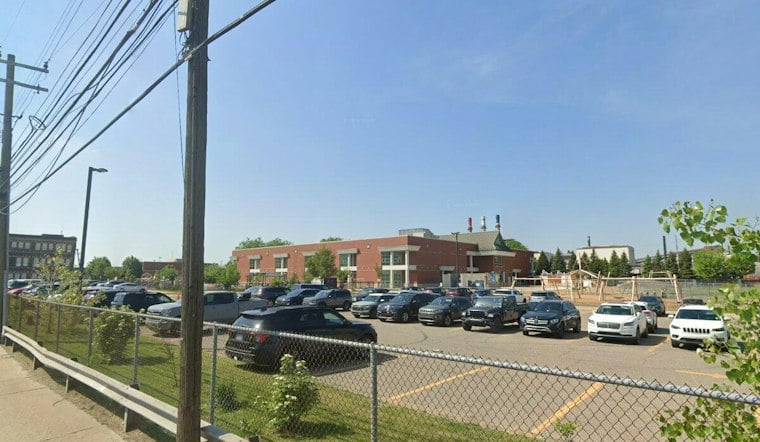
The Green Schoolyards work at Salina Elementary and Salina Intermediate has developed in phases through grants, donations and public investments rather than one clearly documented budget. A district newsletter described an approximately $425,000 expansion funded mainly through grants, donations and in-kind contributions, while the National League of Cities reported that Dearborn committed $300,000 in federal disaster-recovery funds for Salina Elementary. Michigan House Democrats separately announced $1.5 million in state funding for an outdoor recreational space at Salina Intermediate. WXYZ reported a broader $3 million project, but the available records do not reconcile those figures.
A project built in phases
The district's plans include a kindergarten nature-play area, additional trees and landscaping, outdoor classrooms, a recreation field and expanded green space at the neighboring schools, according to Dearborn Public Schools. The district says the campus serves about 970 students from preschool through eighth grade. A state funding announcement describes planned features at Salina Intermediate that include a sound-barrier wall, outdoor learning pavilions and gardens, according to Michigan House Democrats.
Trees, gardens and outdoor learning
The school websites describe the initiative as a partnership between Dearborn Public Schools and the Green Schools Coalition focused on nature-based learning and student well-being. Planned and completed elements include gardens, rain gardens, trees, native plantings, landscaping and play areas. The Salina Intermediate project page says ReLeaf, the DTE Foundation and Keep it Moving! planted 40 large trees, while the Salina Elementary page says Friends of the Rouge planted 200 trees and shrubs at the campus in 2023. The elementary school also has the Prairie at Salina, a restoration covering about one-third of an acre and funded by the Toledo Zoo and Cleveland Cliffs Foundation. These details are documented by Salina Intermediate and Salina Elementary.
Responding to an industrial setting
The campus is next to a major industrial area and faces concerns involving air quality and excessive stormwater runoff, the district reported in First Bell. District materials say added vegetation and green infrastructure are intended to absorb or delay stormwater, provide shade and support air-quality efforts. The National League of Cities reported that the city viewed the Salina Elementary work as part of its response to flooding, stormwater management and environmental-quality challenges.
Dearborn's stormwater capacity
Broader city records provide context for the stormwater concerns surrounding the project. According to the City of Dearborn, a flooding study found that the city currently has capacity to handle less than 3.5 inches of stormwater per rain event. A City of Dearborn stormwater requirements summary calls for drainage systems to be designed using 10-year storm intensity equations and detention volumes using 100-year storm intensity equations. Those requirements describe the city's broader approach to managing runoff; the available records do not establish a separate flood-capacity figure for the Salina campus.
New playgrounds join the longer effort
WXYZ reported that new playgrounds at Salina Elementary and Salina Intermediate have opened and described them as part of the larger green-schoolyards effort. The station also reported that the spaces are intended to support outdoor learning. The district's project pages identify the Salina Kindergarten Nature Playscape as opening on June 10, 2025, but the available records do not establish a single completion date or final scope for every element of the broader initiative.
Research cited by Michigan Today provides broader context for the district's concerns: a University of Michigan study found that schools in areas with the state's highest industrial air-pollution levels had lower attendance and higher proportions of students failing to meet state testing standards. Dearborn Public Schools says its Green Schoolyards initiative is intended to support children's well-being, environmental resilience, community engagement and equity.





