

























































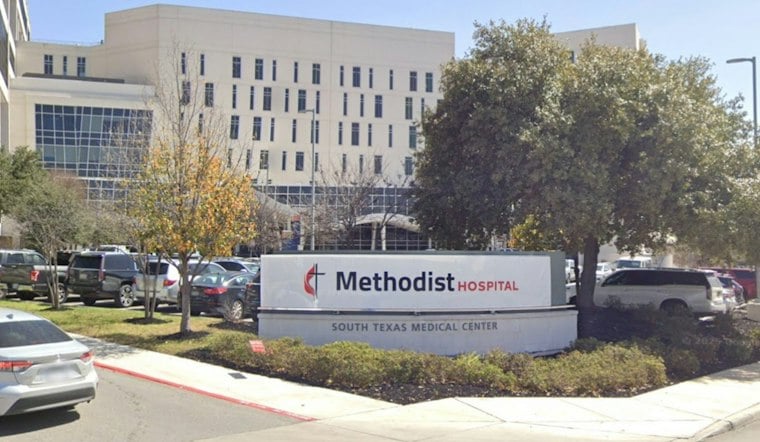
San Antonio's Intergovernmental Relations Committee has placed a draft resolution on Tuesday's agenda reaffirming the city's support for Brooke Army Medical Center's Level I trauma center, a direct response to Methodist Healthcare's stated intent to pursue a Level II trauma designation by October 1. The move revives a fight that has simmered in the city for nearly a decade, pitting the Pentagon's only Level I trauma facility against a private hospital system backed by one of the country's largest for-profit healthcare operators.
The Intergovernmental Relations Committee's agenda item, first reported by KSAT, states that BAMC needs sufficient patient volume and a mix of injuries with different levels of complexity to sustain its military mission, and warns the hospital could see fewer opportunities to treat the most complex cases if another hospital designation pulls patients away. According to the same report, Army officials have already voiced opposition to Methodist's plan, with Jeffrey Johnson stating that an additional trauma center could threaten military medical training and Department of Defense readiness. City and county officials quoted in the report acknowledged they lack the authority to actually block a state trauma designation, since that power rests solely with regulators.
Under state guidelines set by the 1989 Omnibus Rural Healthcare Rescue Act, official trauma designations in Texas are granted only by the Texas Department of State Health Services, according to Pulsara. That means San Antonio's resolution, however forcefully worded, carries no legal veto power over Methodist's application — its function is political pressure, not regulatory rejection.
A Fight San Antonio Has Waged Before
This is not the first time Methodist's ambitions have collided with BAMC's mission. The San Antonio City Council unanimously passed a resolution backing BAMC's trauma mission in December 2017 after Methodist Healthcare previously explored a higher-level trauma facility in the region, according to the San Antonio Report. During those same 2017 proceedings, U.S. Army North Commander Lt. Gen. Jeffrey Buchanan warned that diverting civilian trauma patients away from BAMC could put the facility at risk of closure or relocation in future federal Base Realignment and Closure evaluations, the outlet reported.
County officials sounded similar alarms that year. At a December 2017 Bexar County Commissioners Court hearing, County Judge Nelson Wolff pointed to Austin as a cautionary tale, noting that the opening of a Level II trauma center there had drawn 40% of trauma volume away from existing Level I facilities, per KSAT's reporting at the time. The pressure campaign ultimately produced a compromise: Methodist Hospital Stone Oak secured a Level III trauma designation in January 2021 after Mayor Ron Nirenberg confirmed that Joint Base San Antonio commanders found Level III capabilities posed no threat to BAMC's Level I volume, according to the San Antonio Express-News.
Why Civilian Patients Matter to Military Readiness
BAMC's stakes in the dispute trace back to how the hospital sustains its unique military mission. About 85% of all patients treated at BAMC in 2016 were civilians, according to the San Antonio Report. The facility treats more than 6,000 military and civilian trauma patients annually and approximately 750 burn patients annually, making it home to the U.S. Army Institute of Surgical Research Burn Center. Hoodline previously reported on a San Antonio shooting in which a local victim was transported to BAMC, underscoring how routine civilian emergencies feed into the base's training pipeline.
City and county leaders argue that shrinking that civilian caseload, even modestly, could erode the clinical readiness the Army depends on. The current city resolution explicitly states that additional trauma capacity elsewhere in San Antonio could reduce the civilian trauma volume BAMC needs for its training mission, and it calls on the Southwest Texas Regional Advisory Council to weigh in on the matter.
STRAC's Limited but Influential Role
STRAC coordinates trauma and emergency health care across a 22-county region spanning 26,000 square miles and serving roughly 3 million residents stretching from San Antonio to the U.S.-Mexico border, according to Pulsara. The regional council does not itself designate trauma centers, but it coordinates regional trauma and emergency health care and works on regional protocols.
Methodist Healthcare operates as a 50-50 joint venture between the non-profit Methodist Healthcare Ministries of South Texas and for-profit HCA Healthcare, managing 11 hospital facilities and dozens of outpatient sites across the metro area, Hoodline previously reported when the system added 18 Texas MedClinic urgent care locations to its footprint. The trauma center push comes amid broader growth for Methodist across the region, including a new emergency room on the city's Southside detailed in Hoodline's earlier coverage of Blue Skies of Texas.
KSAT reported that it reached out to officials at BAMC, Methodist Healthcare, University Hospital, the Texas Department of State Health Services and STRAC for comment, and said it plans to update its reporting as responses come in. University Hospital, which also holds a Level I trauma designation in San Antonio, provides the broadest range of trauma services alongside BAMC, requiring immediate access to specialists, surgery and critical care along with significant teaching, research and injury-prevention responsibilities. A Level II center, by contrast, provides comprehensive emergency trauma care with round-the-clock surgical and specialty capabilities but generally carries fewer research, teaching and patient-volume requirements — meaning some complex trauma patients could still need to be transferred to a Level I facility regardless of where they are first treated.





