

























































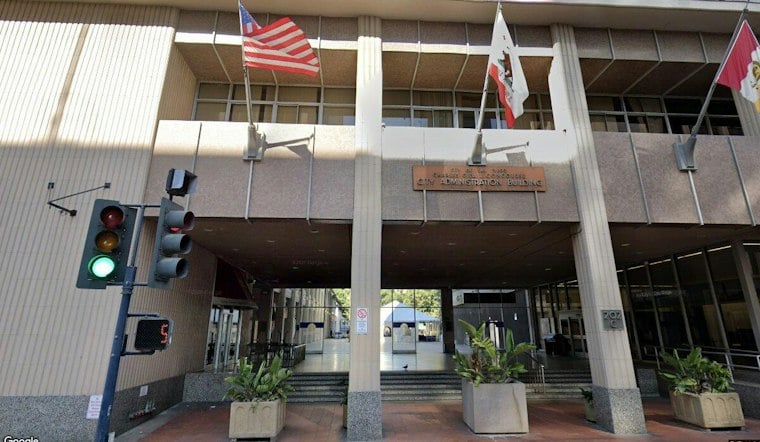
San Diego is moving to become the first city in California to require warning signs on every cryptocurrency ATM within its limits, targeting a scam that has drained hundreds of millions of dollars from victims nationwide — most of them senior citizens. The city has 110 of the machines scattered across downtown, City Heights and the Midway District near the sports arena, and criminals have used them to persuade mostly older residents to send money to scammers, often posing as law enforcement.
The San Diego City Council's Rules Committee unanimously endorsed the proposed ordinance on September 16, according to San Diego Union-Tribune reporter David Garrick. Under the draft measure submitted to the committee, host businesses such as convenience stores and gas stations would share legal responsibility with machine operators for keeping city-approved warning signs posted, complete with QR codes linking to scam-reporting resources, according to the City of San Diego. The proposal now heads to the full City Council for final approval next month and would take effect January 1, 2027, if passed.
What the Signs Would Say
The required signage would apply to all 110 existing machines as well as any new ones that begin operating in the city, per the Union-Tribune's reporting. The signs would carry blunt language: “Warning: Cryptocurrency may be used for scams,” and a caution that sending money to someone never met in person — or someone claiming to be with law enforcement — is likely a scam. Council President Joe LaCava, who is pushing the measure, said stopping scams before they happen “is critical and can mean the difference in facing a life-altering consequence,” per the same report. LaCava is also planning a separate community education campaign and a city website where residents could report cryptocurrency ATMs lacking the required warnings.
Council member Sean Elo-Rivera said the city should focus on financial scams as much as it does on street crime, according to the Union-Tribune's account. Council member Kent Lee said the sophistication of scams has significantly worsened with advances in technology and artificial intelligence, the paper reported.
Seniors Bear the Brunt of the Losses
The FBI's Internet Crime Complaint Center logged more than 13,400 complaints tied to cryptocurrency kiosks in 2025, involving more than $388 million in reported losses — a 58% increase from the prior year, according to the Federal Bureau of Investigation. Victims over age 50 accounted for roughly 78% of those reported losses. The figures describe complaints submitted to the FBI and reported losses, not every incident nationwide.
The San Diego Senior Affairs Advisory Board supports the proposed ordinance. Board member Alana Martinson told the Union-Tribune that a single loss can be devastating for low-income seniors living on fixed incomes, while Gwenmarie Hilleary said a warning could interrupt a scam before a victim sends thousands of dollars. Israel Hernandez said scammers exploit older adults' isolation, trust and limited digital access, according to the paper. The Union-Tribune reported that seniors are often targeted because they may be less digitally savvy and more likely to live alone.
Why Crypto Losses Are Especially Hard to Undo
Cryptocurrency transactions are harder to trace than traditional financial transfers, and once converted, the funds are essentially unrecoverable, according to the Union-Tribune's reporting. Unlike most traditional bank transactions, cryptocurrency transfers are not FDIC-insured, the paper noted. California has already limited the maximum amount of money that can be sent through a single cryptocurrency ATM transaction, a cap officials say will help fight this type of fraud.
That state cap traces back to Assembly Bill 39 and Senate Bill 401, known as the Digital Financial Assets Law, which established a $1,000-per-customer, per-day cash transaction limit on crypto kiosks starting January 1, 2024, according to the California Department of Financial Protection and Innovation. In September 2024, the Los Angeles County Superior Court upheld the limit after an industry group challenged it, the agency said.
What the National Data and State Rules Show
The FBI's broader cryptocurrency figures put the kiosk statistics in perspective: Americans filed 181,565 cryptocurrency-related complaints in 2025 reporting more than $11 billion in losses, according to the FBI. That is a much broader category than crypto-kiosk fraud. The kiosk-specific figures cited above are complaint-based, so they reflect reported losses and do not establish the total amount lost by all victims; they do show that people over 50 represented roughly 78% of reported kiosk losses in 2025. California has paired the transaction limit with a fee restriction. The California Department of Financial Protection and Innovation says operators have been barred since January 1, 2024, from accepting or dispensing more than $1,000 per customer per day through a kiosk. Since January 1, 2025, an operator also may not charge more than the greater of $5 or 15% of the transaction's U.S.-dollar value.
California hosted more than 4,500 active cryptocurrency kiosks as of late 2024, with San Diego, Los Angeles and Sacramento containing the state's highest municipal concentrations, according to blockchain analysis firm TRM Labs. That same analysis found roughly 84% of illicit transaction volume tied to state kiosk operators in 2024 was linked to scams.
Omaha's Results and a Wider National Debate
San Diego's approach follows Omaha, which required warning signs on its cryptocurrency ATMs; AARP reported that signs there were associated with an 80% reduction in ATM cryptocurrency scams in one year. Other cities have taken similar steps: San Antonio's City Council unanimously passed an ordinance in May 2026 requiring bilingual fraud warnings on all virtual currency kiosks, with daily fines of $100 to $500 for non-compliant store owners, according to KENS 5. San Antonio police had recorded 660 local crypto scam reports between January 2024 and April 2026 totaling nearly $39 million in losses, the station reported. But Omaha's experience also shows how scammers can adapt: in March 2026, WOWT reported that scammers circulated a fake social-media advertisement featuring a deepfake police officer to make a Bitcoin ATM appear legitimate despite the required warning stickers.
Some states have gone further than warning labels entirely. Minnesota, Indiana and Tennessee passed legislation between March and May 2026 banning cryptocurrency kiosks statewide, according to SC Media, which noted that consumer advocates continue to debate whether warning stickers alone can interrupt victims who are already being coerced over the phone. Federal Trade Commission reporting found that median fraud losses at Bitcoin ATMs reached $10,000 per incident in the first half of 2024, with adults over 60 three times as likely as younger adults to report losing money, and overall Bitcoin ATM losses nearly tenfold higher between 2020 and 2023, according to the Federal Trade Commission.
Whether San Diego's signage requirement can match Omaha's reported results remains to be seen, but for now the city is betting that a printed warning — paired with a QR code and a still-developing education campaign — can reach victims before a scammer's voice on the phone does.





