

























































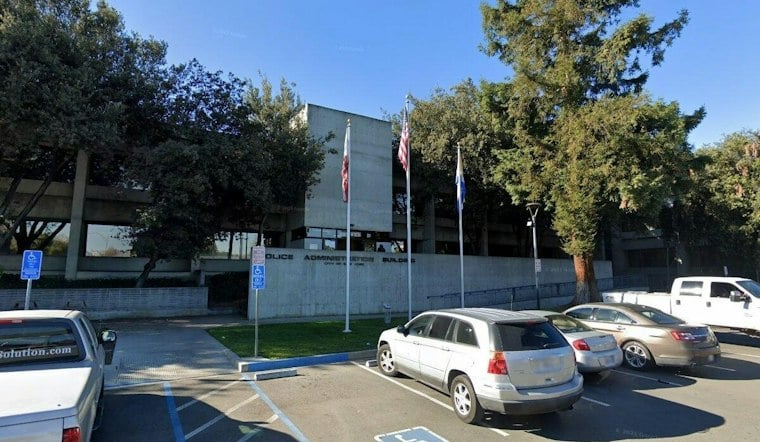
A San Jose police officer has been fired after department investigators determined he improperly accessed the city's Flock license-plate reader database using a personal phone and shared the tracking information with his cousin, who was accused of domestic violence by the woman being tracked. The woman reported in February 2025 that the man accusing her had somehow learned where she was, and the disclosure has reignited a fierce local debate over who can see the roughly 500 automated cameras' worth of driving data collected across the city every day.
According to Bay Area News Group, the officer, who had served with the San Jose Police Department for about two years, accessed the woman's plate data through the Flock system and passed along what he found. The incident surfaced in February 2025 after the woman reported the interaction and police ran her plate, discovering the improper access. An audit trail documented the access, and the investigation ended with the officer's firing in April 2026. Neither the officer nor his cousin has been criminally charged, per the same report.
Police Chief Paul Joseph called the officer's conduct a betrayal of public trust, the outlet reports, while also arguing that a single officer's abuse should not outweigh what he described as the technology's crime-fighting benefits. The department has credited its Flock network with helping it post a 100% annual homicide solve rate for several years running, according to the same account. In response to the incident, the department issued a directive the week of September 7 barring officers from accessing law-enforcement databases from personal electronic devices.
A Pattern Playing Out Nationwide
San Jose's case is not an isolated one. A national database maintained by the Institute for Justice has identified more than 140 documented cases across the country of officers abusing license-plate databases, with tracking romantic partners or domestic violence accusers among the most common forms of misconduct. Researchers with the organization noted that most abuse cases surface only after victims report being stalked. In San Jose's case, the woman reported the interaction, and an audit trail helped document the access.
The publicly available Institute for Justice database webpage, published August 12, 2026, also notes that ALPR abuses elsewhere have included officers checking whether women sought abortion services, and other cases in which incorrect plate reads led to people being erroneously stopped and held at gunpoint. Civil liberties attorney Adam Schwartz has said stored ALPR data exposes deeply private information about people's movements, and he supports requiring San Jose police to obtain a warrant before searching that stored data, according to the Bay Area News Group report.
Lawsuits Pile Up Against San Jose's Camera Network
San Jose is already being sued by the ACLU of Northern California and the Electronic Frontier Foundation on behalf of SIREN and the Bay Area chapter of the Council on American-Islamic Relations, alleging that retrospective monitoring of people's movements without warrants violates the Constitution. Separately, the Institute for Justice filed a federal class-action suit in April 2026 on behalf of residents Tony Tan, Scott West, and Colin Wolfson, asking a court to order San Jose to delete stored plate records within 24 hours unless officers first obtain a warrant. That lawsuit argues that maintaining searchable, month-long location histories on drivers violates the Fourth Amendment.
The state court version of the fight is being litigated in Santa Clara County Superior Court, where a judge appeared inclined toward the city's position but ordered additional legal briefing before deciding, according to San José Spotlight. Civil liberties attorneys in that case are urging police to obtain a warrant before searching stored ALPR location histories. Attorney Michael Soyfer has said police should be required to obtain a warrant before tracking people's movements this way.
City Council Already Cut Retention Once
San Jose first tested Flock technology in 2021 with a four-camera pilot at a single intersection before expanding it into today's roughly 500-device network, according to CBS News. In March 2026, the San Jose City Council unanimously approved a clawback policy that cut default plate-data retention from 365 days to 30 days and barred camera placement near sensitive sites such as reproductive health clinics, houses of worship, and consulate offices. Flock itself updated its systems in August 2026 to let police agencies shorten the default retention window even further, from 30 days down to seven.
Chief Joseph has said he wants changes to state law that would criminalize unlawful access to and disclosure of ALPR data. Current state law prohibits officers from accessing confidential criminal databases without a legitimate law-enforcement purpose, and under California Penal Code Section 502, unauthorized access to government computer systems can be prosecuted as a felony carrying up to three years in state prison and fines up to $10,000. California's Senate Bill 34, enacted in 2015, requires ALPR operators to maintain strict data-security policies and bars sharing tracking logs with federal or out-of-state agencies, but privacy advocates note it does not explicitly require a warrant for internal law-enforcement database queries.
Neighboring Cities Have Already Pulled the Plug
San Jose's reckoning follows similar moves elsewhere in the region. Mountain View has canceled an ALPR contract, a move Hoodline covered in its report on Santa Clara County's camera restrictions. Other Bay Area jurisdictions have also ended or canceled ALPR contracts. Brentwood ordered the removal of homeowners-association license-plate readers.
Amid the litigation, civil rights organizations submitted an amicus brief to the California Supreme Court this month urging justices to clarify that mass license-plate tracking causes inherent privacy harm under SB 34 without requiring victims to prove individualized financial or physical injury, according to the ACLU of Northern California filing. The brief challenges a lower court ruling that had imposed strict standing requirements on privacy lawsuits, adding another front to the legal battle over how San Jose and other California cities can use the technology going forward.




