

























































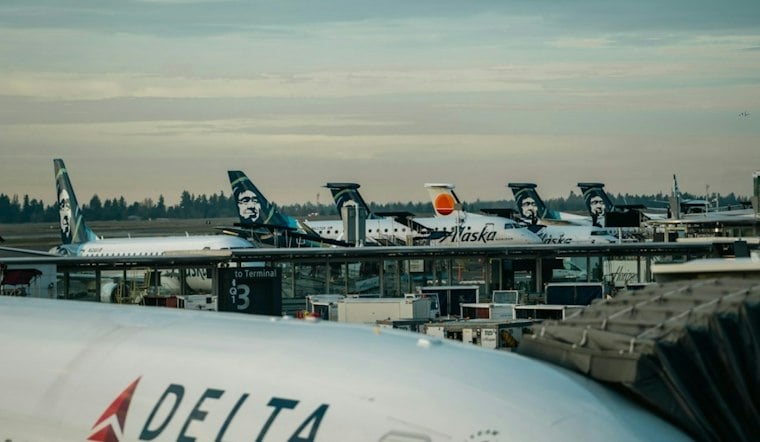
A group of Seattle-area residents who sued Delta Air Lines, Alaska Airlines and the Port of Seattle over aircraft pollution they say contaminated their soil and made them sick has lost its case. A federal appeals court ruled that the claims run into a wall built by Congress decades ago: only the federal government gets to set aircraft emissions standards.
What the Residents Were Asking For
The residents had sought cleanup payments for contaminated property and a court-supervised medical monitoring program, according to View from the Wing. Their amended lawsuit packed in a wide range of legal theories, including negligence, battery, trespass, public nuisance and inverse condemnation claims against the airport operator. Specifically, the residents alleged the airlines and the Port of Seattle failed to exercise ordinary care to protect them and their property, and that the airlines knew their pollutants would make harmful, unwanted contact with residents.
They also argued that depositing pollution on their property interfered with their right to use and enjoy it, and separately claimed the Port of Seattle damaged private property for airport operations without paying constitutionally required compensation. Beyond the cleanup money and medical monitoring, the residents sought compensation for the lost use and enjoyment of their property, the outlet reports.
The Pollution Claims at the Center of the Case
The lawsuit described aircraft exhaust as releasing harmful particles and gases, with metal-containing particles allegedly flaking off planes and pollutants accumulating in nearby neighborhoods from arrivals and departures before wind eventually dispersed them. The residents pointed to a flight-path zone stretching roughly five miles and home to an estimated 300,000 people, per the same account, and noted that Alaska Airlines and Delta together operate about 80 percent of the airport's flights.
Plaintiffs also cited University of Washington research they said found ultrafine particles beneath flight paths and pollution entering nearby classrooms. Building on that, they pointed to higher rates of respiratory and cardiovascular illness, premature births, shorter life expectancy and property damage in the affected area, and claimed the pollution burden falls disproportionately on lower-income and minority communities.
Why the Ninth Circuit Threw It Out
Despite the breadth of the allegations, the Ninth Circuit dismissed the case, ruling that Congress reserved aircraft emissions standards to the federal government. The appeals court found that letting a jury apply state tort law would effectively impose a different aircraft emissions standard than the federal one, according to View from the Wing's report on the ruling issued this past Wednesday. The court did not decide whether the Airline Deregulation Act also preempted the claims as regulation of airline service or prices, the outlet notes.
That federal preemption logic tracks the plain language of the regulation governing aircraft emissions. Under 14 CFR Part 34, issued pursuant to 42 U.S.C. 7573, a state or political subdivision may not adopt or attempt to enforce an aircraft emissions standard unless it is identical to the applicable federal standard. That statutory bar is what the seed report frames as Clean Air Act Section 233, which similarly prevents states and local governments from adopting or enforcing their own aircraft emissions rules.
For the Seattle residents behind the suit, the ruling closes off a path to compensation and medical monitoring through the courts, at least on the theories they raised. The underlying complaints about jet exhaust, ultrafine particles and neighborhood health effects remain contested allegations rather than court-established facts, and the airlines' and Port of Seattle's own positions on those allegations were not addressed in the available reporting.




