

























































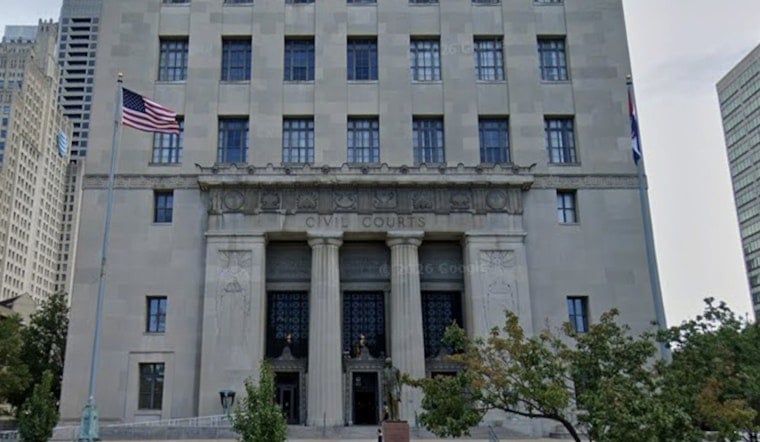
Two Southeast Missouri State football players filed suit against the NCAA in St. Louis County Circuit Court on Friday, seeking the right to play a fifth season after finishing their fourth in 2025. Cornerback Justus Johnson and outside linebacker Jeremy Walton say a new NCAA eligibility rule has left them sidelined even as their teammates opened the year with a win, and even as the Redhawks keep their roster spots open in case a judge sides with them.
According to the St. Louis Post-Dispatch, Johnson and Walton started their college careers in 2022 and are now ineligible to play a fifth year under the NCAA's new rule, despite the fact that players who entered college immediately before them were able to play five, six or seven seasons. Southeast Missouri State opened its 2026 season with a 23-21 victory over Indiana State on August 29, and the university is holding roster places open for both players while the litigation plays out, the paper reports.
Johnson, a St. Louis native and Christian Brothers College High School product, plays cornerback for SEMO after transferring from Murray State. He earned Associated Press FCS All-American third-team honors in 2024 after recording 43 tackles and breaking up 18 passes, according to Southeast Missouri State University Athletics. Walton, from Gurnee, Illinois, near Chicago, led the Redhawks defense in 2025 with 8.0 tackles for loss and 3.5 sacks across nine starts, per SEMO's athletic department.
How a Pandemic-Era Fix Became a New Exclusion
The NCAA granted some players extra eligibility during the COVID pandemic, and according to the suit, NCAA Division I teams then voted to allow student-athletes to play five seasons going forward. But the new rule excludes students who already played four seasons — which is exactly the situation Johnson and Walton find themselves in, per the Post-Dispatch's reporting by Daniel Neman.
The NCAA Division I Cabinet unanimously approved that age-based framework in June 2026, giving athletes up to five years of competition over a five-year window starting at full-time enrollment or after their 19th birthday, according to NCAA.org. The framework explicitly excludes athletes who had already exhausted four seasons of competition by the end of the 2025–26 academic year, leaving the entire 2022 high school graduating class without an automatic fifth season, according to a summary from Gowling WLG.
Money on the Line Beyond the Field
Division I schools can now share up to $20.5 million annually with their players, and Johnson and Walton are losing a portion of that potential school-shared compensation for every week they remain benched, the suit states. Both can also earn additional money by licensing their names, images and likenesses, income the Post-Dispatch reports is being lost in the meantime.
The financial exposure tracks with details from Gowling WLG's broader coverage of the $20.5 million revenue-sharing cap now available to schools under the proposed House v. NCAA settlement, underscoring just how much is at stake for veteran players held off the field.
A Missouri Court Already Sided With a Similar Player
Johnson and Walton's case follows closely on the heels of Mizzou defensive tackle Sterling Webb, who won an appeal on September 2 permitting him to play a fifth year for the University of Missouri. A St. Louis County Circuit Court judge denied the NCAA's motion to dismiss the temporary restraining order Webb had obtained, according to WildcatsRadio1290 — a ruling Hoodline covered in its report on the SEC's ban on ex-pro athletes.
That Missouri precedent matters because federal relief has largely evaporated for 2022 graduates. A federal class-action antitrust suit led by Northern Colorado basketball player Brock Wisne briefly won a nationwide injunction for the same class of athletes in July 2026, but the U.S. Court of Appeals for the 10th Circuit stayed that order on August 21, according to Courthouse News Service. That stay is what's pushing athletes like Johnson and Walton back into state courthouses one filing at a time.
Part of a Wider Legal Wave
More than 150 college athletes across at least 15 states have filed lawsuits seeking temporary restraining orders against the NCAA over the same fifth-year issue, Courthouse News Service reported in late August. SEMO competes in the Big South-OVC Football Association, an FCS alliance formed in 2022 and extended through 2030 that guarantees automatic NCAA playoff access, according to UT Martin Skyhawks Athletics — a structure that raises the competitive stakes of holding open roster spots for proven starters like Johnson and Walton.
Hoodline has tracked similar cases mounting across the country in recent weeks, including an ex-TCU lineman's fight to keep playing, a Michigan State receiver's injunction filed just before a season opener, a Georgia golfer's challenge to the same transition rule, and a UCF forward and two dozen basketball players who mounted their own state-court fights earlier this summer. Until the NCAA settles on a permanent transition rule or Congress steps in, eligibility for players like Johnson and Walton is effectively being decided week to week in county courthouses.





