

























































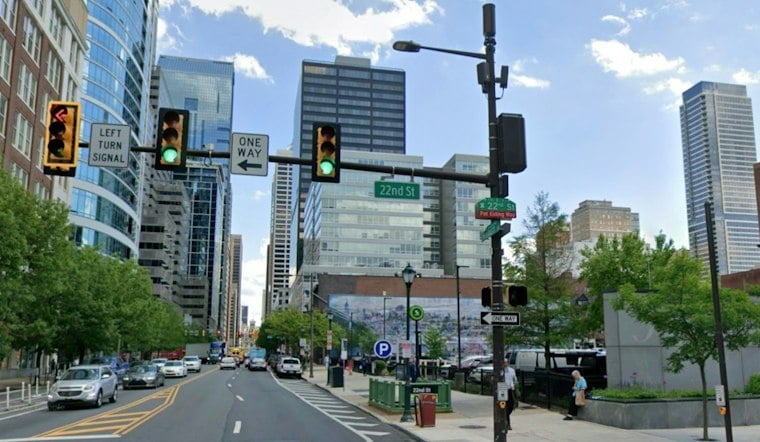
Three underground trolley stations in the heart of Philadelphia are finally getting elevators. SEPTA has secured an $80 million federal grant to make the 22nd Street, 33rd Street and 36th Street stations in the Center City Trolley Tunnel fully accessible, outfitting all three with elevators connecting street level to the underground boarding areas.
The money comes through the Federal Transit Administration's All Stations Accessibility Program, and as reported by NBC10 Philadelphia, it's the second such federal grant SEPTA has landed after previously receiving $56 million for ADA improvements at five Metro stations. Nationally, the September 2026 funding round distributed $232.83 million across eight projects, and SEPTA's award was the single largest of the bunch, according to Progressive Railroading. The program supports legacy transit stations.
The three stations at the center of this project were built in 1955 and have remained accessible only via staircases for more than 70 years, according to a release from U.S. Senator John Fetterman's office. That staircase-only access has long shut out riders who use mobility devices and families pushing strollers, per NBC10 Philadelphia's reporting. SEPTA General Manager Scott Sauer said the agency is advancing more than a dozen Metro and Regional Rail station accessibility projects system-wide, the station notes.
A Tunnel Carrying Tens of Thousands Every Day
The stakes are high given how much of Philadelphia's daily commute runs through this corridor. The Center City Trolley Tunnel serves trolley lines that together carry more than 60,000 daily passengers between West Philadelphia and major employment centers downtown and in University City, the senator's release states.
SEPTA Board Chair Kenneth E. Lawrence Jr. said the station accessibility projects funded by the grant are critically important to the agency's mission, according to the station's report. Philadelphia Mayor Cherelle L. Parker said the grant is a win for city residents who rely on safe, accessible and modern public transportation, and added that making the three trolley stations fully accessible reflects a broader commitment to equity, per the same account.
Elevators Double as Prep Work for New Streetcars
The accessibility upgrades aren't just about elevators for their own sake — they're also groundwork for SEPTA's next generation of vehicles. Grant funds will go toward constructing raised platforms and other enhancements needed for a new fleet of low-floor streetcars that SEPTA is currently procuring, the outlet reports. That fleet traces back to a $714 million deal approved by SEPTA in February 2023 for 130 new streetcars, with the first expected in winter 2027 and all 130 scheduled to be in place by 2032, according to The Philadelphia Inquirer. The modernization plan includes raised station platforms, while the 80-foot low-floor cars feature ramp extensions for boarding.
This isn't SEPTA's first accessibility project to break ground this year. SEPTA recently broke ground on a separate accessibility overhaul at 11th Street Station on the Market-Frankford Line, closing that station on September 5 for a 12-month continuous rebuild that will make 27 of the line's 28 stations fully accessible, per SEPTA. SEPTA also became the first transit agency in the nation to advance to construction on a project through All Stations Accessibility Program funding, at Erie Station on the Broad Street Line, NBC10 Philadelphia reports.
Big Capital Wins, Persistent Budget Strain
Zooming out, SEPTA is committing more than $1 billion across a 12-year capital plan to make Metro and Regional Rail stations accessible, with a goal of getting more than 95% of total system trips — and 99% of Metro trips by 2034 — passing through accessible stations, according to WMGK 102.9. But that ambitious capital push sits alongside real financial strain. In June, SEPTA's Board approved a $2.7 billion budget for Fiscal Year 2027 that includes a $920.7 million capital budget, but also carries a $192 million structural operating deficit and a $10.2 billion backlog in state-of-good-repair needs, according to SEPTA. Federal capital grants like this one help pay for construction, elevators and vehicles.
The Center City Trolley Tunnel itself has felt that strain firsthand in recent months. It underwent an emergency closure from November 2025 to January 2026 for overhead wire replacements, followed by multiple weekend closures in September 2026 for substation repairs at 33rd Street, according to WHYY. The 33rd Street electrical substation was the site of repairs, according to the station's reporting notes — a reminder that even as federal dollars fund long-term fixes like elevators, the tunnel network keeps testing SEPTA's ability to keep the trains running in the meantime.





