

























































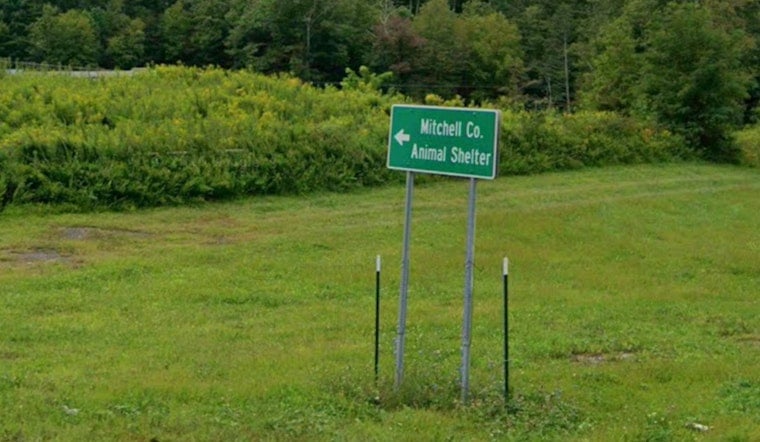
Lisa Wilson stood inside Mitchell County Animal Rescue in Spruce Pine and handed over her dog, Eddie, because she could no longer find a landlord who would take both her and her pet. She had adopted Eddie as a puppy roughly a decade earlier, and he had been by her side through her 2021 separation from her husband, offering her comfort during a hard stretch of her life. Within days, hundreds of strangers had sent in donations and housing tips that would change the outcome entirely.
Wilson's situation traced back to a housing crunch that has gripped Spruce Pine since Hurricane Helene tore through the region in September 2024, according to The Oakland Press, whose report was written by Maggie Penman. Wilson could no longer afford to keep her house earlier this year and, as part of her divorce, needed to either sell it or buy out her husband's share. The landlord at the rental she found afterward did not allow dogs, leaving her stuck.
Katie Elkins, executive director of Mitchell County Animal Rescue, noticed Wilson's distress when she came in to surrender Eddie and asked for her permission to post about the situation on the shelter's Facebook page. Wilson agreed to let the shelter step in and help. Elkins shared the housing request on August 24, and the response, per the same account, was immediate and overwhelming.
A Grant Built for Exactly This Moment
The shelter had already received a grant from Best Friends Animal Society that included funds specifically earmarked for intake diversion, the practice of helping owners keep their pets rather than surrender them by covering costs like veterinary bills, security deposits, or moving expenses. That grant money let Mitchell County Animal Rescue offer to help cover Wilson's security deposit even before the public donations started rolling in. Best Friends Animal Society, which operates a national network spanning thousands of shelters across all 50 states, promotes what it calls “strategic managed intake” — using grant funding to keep pets in homes instead of shelters.
The strategy responds to a well-documented national pattern. According to Best Friends Animal Society, housing-related restrictions are the single leading reason owners surrender pets to shelters, accounting for 16.0% of dog and cat surrenders, and 80% of owner surrenders overall stem from human financial or living situations rather than issues with the animal itself. Shelter Animals Count data reported by Newsweek shows owner surrenders climbed from 29% to 30% of community intakes nationwide in 2025, with 10,000 more dogs surrendered than the year before even as total shelter admissions dipped slightly.
Helene Left the Mountains With Almost No Vacancies
Spruce Pine's housing crunch didn't start with Wilson's divorce — it started with the storm. Hurricane Helene damaged or destroyed roughly 75,000 homes across Western North Carolina, causing an estimated $12.7 billion in residential damage and choking off rental availability in mountain communities, according to the NC Budget & Tax Center. That devastation landed on a market that was already brutally tight. The Urban Institute has reported that before Helene struck, Western North Carolina's rental vacancy rate averaged just 1 percent, with nearly 23 percent of households already experiencing severe housing cost burdens.
State relief has covered only a fraction of the need. The North Carolina General Assembly initially allocated just $1 million in rental assistance and $9 million for household energy assistance across disaster-declared counties, an amount housing advocates have criticized as insufficient given the scale of displacement, per the NC Budget & Tax Center. With landlords holding nearly all the leverage in such a scarce market, many have simply refused to rent to tenants with pets, leaving families like Wilson's facing an impossible choice.
Visits, Volunteers, and a Dog on Hold
While the fundraiser gained steam, Wilson didn't disappear from Eddie's life. She visited him at the shelter several times a week, walking him around the grounds she once thought would be his new home. Mitchell County Animal Rescue placed Eddie on hold specifically to prevent him from being adopted by anyone else while Wilson worked to get back on her feet, and shelter volunteers offered to help with her eventual move.
Eddie also had another outlet during the wait: the shelter's Trail Buddies program, launched in June 2026, which lets volunteers and community members take shelter dogs on hikes, day outings, or overnight staycations. Under that program, according to the shelter's own materials cited by Our Local Community Online, participants submit report cards and photos that help promote adoptable dogs, and Eddie could still be fostered or taken on outings by a volunteer while Wilson searched for housing.
Mitchell County Animal Rescue ultimately raised about $15,000 from hundreds of people, money intended specifically for Wilson's housing and moving costs. “I was just amazed,” Wilson said of the donations, according to The Oakland Press. She described Eddie as a special dog, one she and Eddie had relied on for each other through difficult years, and said she now has several affordable, pet-friendly apartment recommendations to consider. She plans to pick Eddie up as soon as she signs a lease.
A Story Bigger Than One Dog
Elkins said she hopes the outpouring for Wilson and Eddie inspires people to help others facing similar situations, since Mitchell County Animal Rescue — a nonprofit shelter serving Mitchell County residents at its facility on US Highway 19E that also places adoptable animals nationwide — cannot fund a security deposit for every family that walks through its doors. The broader shelter system is already strained: Shelter Animals Count has reported that dogs nationwide are staying in shelters far longer than pre-pandemic norms, according to dvm360, driving up operational costs and stress on the animals themselves.
Shelters are also absorbing a growing medical burden. A study published in the Journal of Shelter Medicine and Community Animal Health found that the share of dogs entering shelters already spayed or neutered dropped from 33.2% in 2019 to 22.3% in 2023, meaning more animals arrive needing costly veterinary care before they can be adopted out. For Wilson and Eddie, the ending arrived through a wave of public generosity rather than public funding — but for the hundreds of other Mitchell County families still squeezed by Spruce Pine's post-Helene rental market, that kind of viral rescue remains the exception, not the rule.




