

























































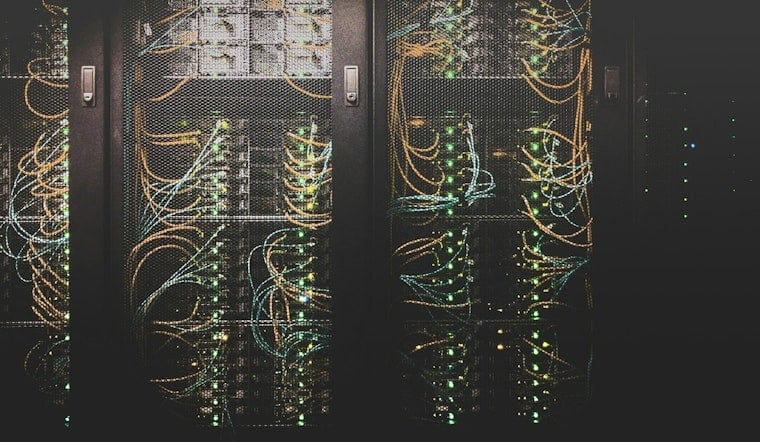
St. Cloud isn't waiting for a developer to show up with blueprints before it decides where data centers can and cannot go. The city's Planning Commission is set to hold a public hearing Tuesday at 6 p.m. at City Hall on a proposed set of zoning amendments that would, for the first time, spell out exactly where data centers could be built and how big they could get.
The city itself is the applicant behind the draft amendments, according to KNSI, which reported that St. Cloud is trying to establish data center rules before any building proposal is even submitted. Matt Glaesman, the city's community development director, wrote that establishing standards before a site-specific proposal arrives is the best practice based on community goals, per the same report. He also noted that St. Cloud's current zoning definition is dated and lacks specific site design standards, relying instead on general industrial language that was never written with server farms in mind.
Drawing a Line Between Small Servers and Hyper-Scale Campuses
The draft rules split data centers into two categories: enterprise or on-site facilities, and hyper-scale facilities, the station's report notes. Enterprise data centers — the smaller, more common type — would be capped at 10,000 square feet, 2,000 servers, and 50 megawatts of peak electrical use. Those enterprise facilities would be allowed by right in all three industrial districts as well as in C3 and C5 commercial districts, meaning they wouldn't need a special hearing to get approved.
Anything bigger than those enterprise limits would be classified as a hyper-scale facility, and hyper-scale projects would only be allowed in the I3 Planned Industrial District. Those larger facilities would also require a conditional use permit, which under the draft rules demands its own separate public hearing along with notice to neighboring property owners, according to the same account.
Buffers, Water Hookups and Backup Power Requirements
Hyper-scale facilities would have to sit at least 1,320 feet — a quarter mile — from any residentially zoned property, per the draft amendments. Those sites would also be required to connect to city water and sewer rather than drilling their own wells, and developers would need to use EPA Tier 4 backup generators, the article states.
The paperwork requirements are extensive. Every data center application, regardless of size, would need to include an environmental impact study, a noise study, a land use compatibility study, and a study of community impacts on emergency services and schools, per the draft rules. Developers would also have to document projected energy use, commit to water conservation measures and on-site solar, confirm with the electric utility that added demand won't undermine renewable energy targets, and submit a decommissioning plan for when a facility eventually shuts down.
State Review Kicks In for the Biggest Projects
Any data center reaching 450,000 square feet or larger would automatically trigger a state environmental assessment worksheet, and findings from that worksheet can become grounds to deny a permit outright, the report notes. That threshold echoes broader state-level scrutiny: under Minnesota legislation enacted in June 2025, any proposed data center consuming more than 100 million gallons of water annually is automatically referred to a multi-agency review panel that includes the state's Board of Water and Soil Resources, Pollution Control Agency, Department of Health, and Department of Natural Resources, according to the Minnesota House of Representatives.
That same 2025 state law repealed the sales tax exemption on electricity consumed by data centers while extending IT equipment tax exemptions to 35 years, and it authorized the Minnesota Public Utilities Commission to create a “very large customer” tariff class to keep infrastructure costs for data centers from being shifted onto other ratepayers, per the commission's own materials. The scale of the demand driving that concern is significant: a single 1,000-megawatt hyper-scale data center consumes roughly 8 million megawatt-hours of electricity a year, equal to about 12% of Minnesota's total annual electricity consumption and 24% of Xcel Energy's statewide supply, according to background data submitted to the Minnesota Public Utilities Commission.
A Statewide Pattern of Local Pushback and Deal-Making
St. Cloud's cautious approach fits a broader pattern playing out across Minnesota. Xcel Energy, the utility serving the central Minnesota region, already has about 2 gigawatts of data center capacity under contract or construction and is planning $60 billion in capital investments through 2030, with another $10 billion earmarked for transmission and generation to support up to 3 gigawatts of potential data center demand, Utility Dive reported. Closer to home, Xcel opened a new Waite Park Service Center in the St. Cloud metro area last October — more than triple the size of its previous facility, housing nearly 80 workers and 85 utility vehicles for regional grid maintenance.
Minnesota municipalities have not responded uniformly to the data center rush. Minneapolis instituted a temporary moratorium this year to update its zoning code, and Monticello passed data center zoning rules in April that explicitly refuse local tax incentives, while cities like Hermantown and Pine Island have instead approved tax abatement deals in exchange for infrastructure funding, according to MPR News. Hoodline previously covered the tax fight over Google's Hermantown campus, where local officials negotiated cash and infrastructure funding in exchange for welcoming the project.
Industry analysis from ROC Telecom found in August that Minnesota hosted between 41 and 57 enterprise and colocation data centers statewide, but that at least 12 to 13 proposed hyper-scale campuses remained stalled or delayed in municipal permitting processes. Meta's $800 million, 715,000-square-foot facility on 280 acres in Rosemount stands as the state's first active hyper-scale AI data center project under construction, expected to generate 1,000 construction jobs and 100 permanent tech positions, according to Enterprise Minnesota.
What Happens After Tuesday
Tuesday's hearing is only the first formal step. The Planning Commission can postpone action to gather more information, or it can forward a recommendation to the St. Cloud City Council, which would then hold its own separate public hearing before any final vote. Neither the city's land development code nor its comprehensive plan can be amended before that council hearing takes place, and the council, too, retains the option to postpone action if members want more information before voting.
St. Cloud's move mirrors a growing national trend of cities writing data center rules before developers come calling. Hoodline reported this month that Midwest City, Oklahoma and, earlier, Stow, Ohio, both drafted permanent zoning standards establishing setbacks and mandatory disclosures on water, power, and noise ahead of any formal proposals. For now, no hyper-scale developer has filed an application in St. Cloud — but if the draft rules pass, the city will have its ground rules ready the moment one does.





