

























































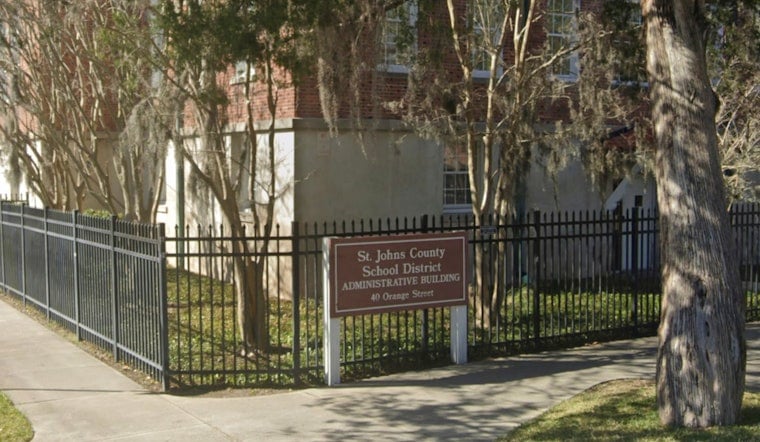
St. Johns County School District Superintendent Dr. Brennan Asplen told parents Monday that officials were reviewing AI-generated “Cat in the Hat” social media content circulating around district schools, but confirmed no credible direct or indirect threat had been identified. The review came together with the St. Johns County Sheriff's Office and the Florida Department of Education's Office of Safe Schools, and it landed just as students returned from Labor Day weekend to find the unsettling images spreading across their feeds.
According to First Coast News, the viral posts include threatening captions aimed at schools, students and specific locations, paired with eerie AI-generated images of the Dr. Seuss character. As News4JAX reports, law enforcement agencies across the country have been warning parents about the trend, which has now reached St. Johns County directly.
Even with no active danger determined, the sheriff's office announced it would deploy an increased law enforcement presence across all district school campuses as a precaution following the holiday weekend, per the same First Coast News report. The move was framed as reassurance for families rattled by a wave of unsettling content rather than a response to any confirmed plot.
A Meme That Turned Into a Multi-State Legal Problem
The “Cat in the Hat” trend didn't start out sinister. It emerged in late June 2026 on TikTok as a dark meme built on 2003 film footage, according to Hoodline's earlier coverage of a similar case. By August, it had mutated into AI-generated imagery showing a sinister version of the character lurking near homes and schools across the UK, Ireland and the United States.
Kentucky Homeland Security officials and local school administrators reported in late August that digital investigations suggested several circulating threat templates originated from overseas accounts before being replicated domestically by U.S. students, according to a report from WDRB News. That same report notes school districts and law enforcement agencies in Colorado, Texas, Oklahoma, Kentucky and Alabama have since issued safety warnings or filed criminal charges over the posts, including the arrest of a 14-year-old Colorado middle schooler in late August.
Florida Has Already Seen Felony Arrests Over the Trend
St. Johns County isn't the first Florida district to confront the meme's fallout. In Pasco County, sheriff's deputies arrested a 12-year-old Crews Lake Middle School student on September 1 on felony charges of written threats to kill and unlawful use of a two-way communication device after the student posted an online threat tied to the trend, as detailed in Hoodline's report on the arrest.
Days later, in neighboring Clay County, deputies arrested a 12-year-old elementary student on September 4 for writing a “death note” targeting students and staff, according to News4JAX. Together, the two arrests reflect a broader zero-tolerance posture among Northeast Florida law enforcement heading into September.
What Florida Law Says About Fake Threats
The legal stakes for students who participate in these hoaxes are steep. Under Florida Statute § 836.10, composing and transmitting a written or electronic threat to conduct a mass shooting or act of terrorism in a manner visible to others is a second-degree felony punishable by up to 15 years in prison and a $10,000 fine, according to the statute published on Online Sunshine.
Separately, Florida Statute § 790.163 makes a false report concerning the violent use of firearms or explosives against a school a second-degree felony that carries mandatory conviction without withheld adjudication, plus potential court-ordered restitution for law enforcement response costs. Neither statute distinguishes between a serious threat and a viral joke gone too far once charges are filed.
Why Departments Keep Taking the Bait Seriously
The strain on law enforcement extends well beyond Florida. State agencies like the Minnesota Bureau of Criminal Apprehension recorded 72 school threat investigations in 2024, compared with just 13 in 2023, according to FOX 9. That surge, driven largely by viral online hoaxes and mandatory reporting laws, helps explain why agencies from St. Johns County to Colorado are treating even debunked posts as worthy of a visible response.
For now, St. Johns County families are being told the threat assessment turned up nothing credible, but the extra patrols on campus this week signal that district and law enforcement officials aren't taking any chances with a trend that has already produced felony charges against middle schoolers elsewhere in the state.



