

























































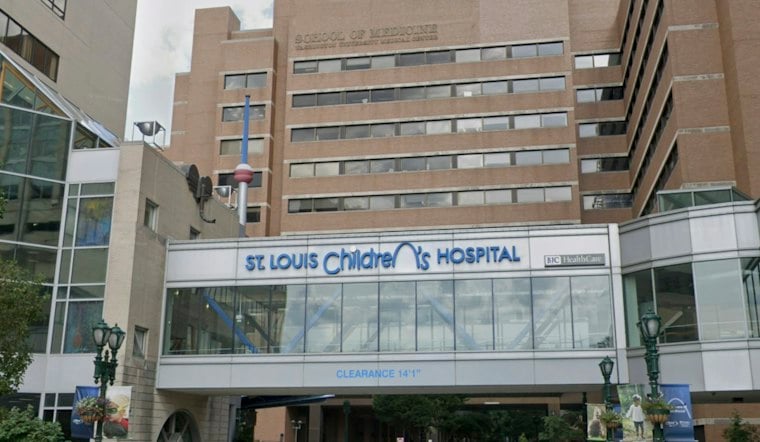
Thousands of St. Louis-area hospital workers were furloughed or laid off in 2020 as the pandemic upended patient volumes and hospital finances. That same year, the CEOs running the region's three dominant nonprofit hospital systems all took home more money than they had the year before.
The finding comes from an investigation by St. Louis Public Radio, in which reporter Jacob Barker examined IRS filings showing that the CEOs of BJC HealthCare, SSM Health, and Mercy all received more total compensation in 2020 than in 2019. Barker said the filings show none of the three systems reduced pay for any top executive when comparing the two years, despite public promises that executives would take pay cuts or salary freezes as the pandemic hit.
The pay increases were not limited to base salary bumps. According to the St. Louis Post-Dispatch, BJC HealthCare CEO Richard Liekweg received almost $2.6 million in total compensation in 2020, up from $2.4 million in 2019. His base salary rose by $100,000 to nearly $1.2 million, while his incentive pay climbed 20% to $1.2 million. Liekweg had said publicly, “When times are tough, we come together as a system, as healthcare workers, and as a community.”
Mercy's CEO Saw Pay Jump to $14.6 Million
The starkest number belongs to Mercy. Former CEO Lynn Britton's total compensation reached $14.6 million in 2020, up from $3 million the year before. Per the Post-Dispatch's review of tax filings, Britton's base salary increased by about $90,000 to $1.37 million, while his bonus and incentive pay nearly doubled to $3 million. The remainder of that total, roughly $10 million, came from previously promised deferred compensation. Mercy told the paper the payout stemmed from incentive compensation earned in prior years that happened to vest in 2020.
That explanation touches on a quirk of nonprofit tax reporting. IRS Form 990 Schedule J rules require organizations to report deferred executive compensation both in the year it is earned and the year it is distributed, a mechanism Venable LLP notes can cause tax-exempt hospital filings to show sharp single-year spikes in reported earnings whenever retirement benefits vest, even if base salaries only rose modestly.
SSM Health's numbers followed a similar pattern, if smaller in scale. The Post-Dispatch's review of IRS tax documents found CEO Laura Kaiser received a $14,000 increase in base salary in 2020, bringing it to $1.6 million, alongside million-dollar executive bonuses. Kaiser had said SSM Health was inspired by everyday heroes providing care, comfort and compassion. The raises extended beyond the CEO suite at Mercy as well: former CFO Shannon Sock's total pay more than doubled to nearly $5 million, and former Chief Administrative Officer Cynthia Bentzen-Mercer earned nearly $2.6 million, an increase of more than $1 million from 2019, according to the same Post-Dispatch review.
Furloughs Hit Thousands of Frontline Workers
While executive pay climbed, rank-and-file workers absorbed the pandemic's financial shock. In May 2020, BJC HealthCare placed 2,962 employees on eight-week furloughs, roughly 10% of its workforce, as the health system halted elective procedures, according to Becker's Hospital Review. BJC operates 15 hospitals across the St. Louis area, southern Illinois, and mid-Missouri. St. Louis Public Radio's reporting places these furloughs alongside broader mass layoffs that swept through St. Louis hospital systems that year.
SSM Health placed approximately 2,000 employees on furlough that April, about 5% of its total workforce, with additional staff moved to partial furloughs or reduced schedules, the Post-Dispatch reported at the time. Health systems across the region cited sharp drops in patient volumes and canceled elective surgeries as the reason for the emergency cost-cutting.
Even as they cut staff, the systems accepted substantial federal aid. Federal CARES Act Provider Relief Fund distributions allocated roughly $230 million across 1,256 health care providers in the St. Louis region by May 2020, according to KSDK. That included $34.9 million to SSM Health St. Louis, $31.7 million to Barnes-Jewish Hospital, and $12.9 million to Mercy Hospitals East Communities. Barnes-Jewish Hospital sits near Forest Park in St. Louis.
Systems Decline to Explain Unfulfilled Promises
According to Barker's reporting, BJC, SSM Health and Mercy all declined to explain the executive raises or address why their 2020 promises of pay cuts or freezes went unfulfilled. Mercy did tell reporters that it paid executives incentive compensation that had been promised in prior years, tying the 2020 spike to those earlier commitments rather than to new bonuses tied to pandemic performance.
The St. Louis findings land amid wider federal and state scrutiny of nonprofit hospital finances. In July, the U.S. House Ways and Means Committee voted along party lines to advance H.R. 9504, the Tax-Exempt Hospitals Transparency Act, which would expand IRS Schedule H reporting requirements, according to the American Hospital Association. Congress has repeatedly questioned whether tax-exempt hospitals' community benefits justify their executive pay levels.
State lawmakers have moved in a similar direction. A Vermont Senate proposal introduced in January 2025 would cap nonprofit hospital CEO compensation at 10 times the wage of a system's lowest-paid direct care employee, according to Chief Healthcare Executive, which noted that research shows the gap between nonprofit hospital CEO salaries and average worker pay has widened significantly since 2009. St. Louis, home to BJC HealthCare, Mercy and SSM Health, sits squarely inside that national debate over whether nonprofit hospital tax exemptions still match up with executive paychecks and frontline sacrifice.
The pay disclosures follow other recent legal and financial disputes involving the same three systems, including Hoodline's coverage of a BJC-Anthem coverage standoff and a $6.8 million jury verdict against SSM Health.




