

























































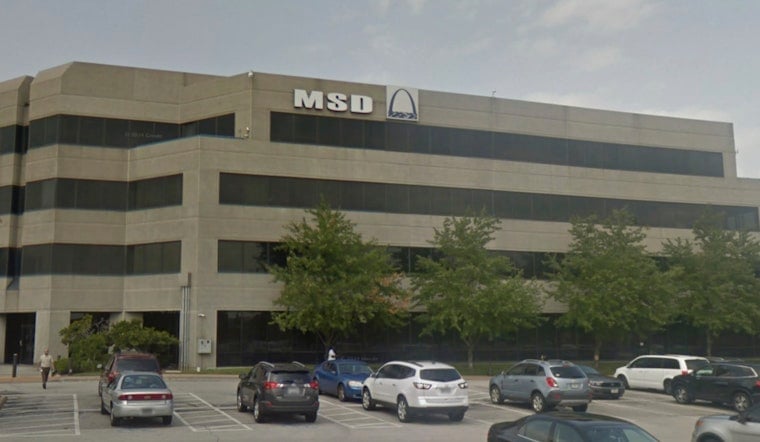
The Metropolitan St. Louis Sewer District is preparing to do something it has never done in its 70-year history: physically cut off customers who refuse to pay their bills. Starting no earlier than October 1, 2026, MSD Project Clear will begin disconnecting sewer service to commercial accounts carrying large, long-standing unpaid balances, part of a phased crackdown aimed at recovering more than $100 million in accumulated debt.
MSD has already sent service disconnection warning letters to a handful of commercial businesses with large overdue balances, according to KSDK. Those businesses must pay their total balance or enter a payment plan within 30 days or face complete disconnection of sewer service. The utility, which serves roughly 1.3 million residents across St. Louis City and St. Louis County according to BondLink, was created in 1954 when regional voters combined 79 separate local sewer districts into a single public utility.
Why MSD Is Escalating Now
MSD Project Clear disclosed that severely delinquent accounts represent well over $100 million in accumulated unpaid balances, and the utility spent more than $7 million last year alone just trying to collect past-due wastewater bills, per its own announcement. Bess McCoy, speaking for the district, said MSD previously relied on collection notices, warning letters, late fees, legal judgments and property liens to chase down debts, per the station's report. The utility has a declining collection rate, and unpaid balances ultimately force paying customers to absorb higher long-term operational costs.
Executive Director Bret Berthold, who took over MSD on July 1, 2024, after six years as the district's Director of Operations, stated that physical shutoff is a last resort pursued only after repeated outreach and payment plan offers fail. The financial stakes are considerable: for Fiscal Year 2027, MSD's board adopted an $897.7 million total budget, with $290.1 million going to operations, $454.6 million to capital improvement projects, and $153.0 million to debt service. MSD is legally required to run a balanced budget, meaning expenditures cannot exceed revenues, which adds pressure to close the collection gap.
How the Disconnections Will Actually Work
MSD plans to physically disconnect sewer service either by plugging a customer's lateral line or installing a device in the public sewer, according to the article. A physical sewer disconnection device blocks only the affected customer's access without affecting other customers on the same line. Because coordination with area water providers has been taking a long time, MSD is also working with those providers on water shutoffs as an alternative enforcement tool, since cutting water service can effectively stop sewer service from functioning as well.
That approach has statutory backing. Under Missouri Senate Bill 361, state law requires water service providers to enter agreements with sewer utilities to terminate water service over delinquent sewer bills, and it establishes a circuit court petition process if the two sides cannot reach an agreement within four months, according to the Missouri Senate. If a disconnection does happen, MSD will notify the local health department, which may ultimately condemn a property as a result, per the same account.
Residential Customers Could Be Next
For now, the crackdown is focused on large commercial businesses with the biggest overdue balances, but MSD has indicated it may extend physical disconnections to residential customers in the future. That prospect raises the stakes for the district's roughly 1.3 million residential and commercial ratepayers, many of whom are already funding one of the largest infrastructure investments in St. Louis history.
MSD is operating under a 2012 federal consent decree with the EPA and the Missouri Coalition for the Environment that mandates $4.7 billion in capital spending over 23 years to eliminate combined sewer overflows and modernize aging infrastructure. St. Louis City and St. Louis County voters previously approved Proposition Y in April 2021, authorizing $500 million in revenue bonds to help finance those court-ordered upgrades while keeping annual bill increases to roughly 3.5%, according to Ballotpedia.
Help Is Available Before Shutoffs Happen
MSD offers payment plans for all past-due bills, commercial and residential alike, and officials are hoping the warning letters push delinquent customers toward those options before enforcement escalates. The district also runs a Customer Assistance Program that grants a 50% discount on monthly wastewater charges for qualifying low-income, senior, or disabled residents earning below 200% of the federal poverty level, though MSD has said it has customers who qualify for discounted rates but have not yet enrolled.
Beyond MSD's own program, income-eligible Missouri households facing utility disconnections can apply for one-time grants of up to $750 through the federally funded Low-Income Household Water Assistance Program, administered by the Missouri Department of Social Services. Customers with questions about their accounts or available assistance can reach MSD customer service at 1-866-281-5737.




