

























































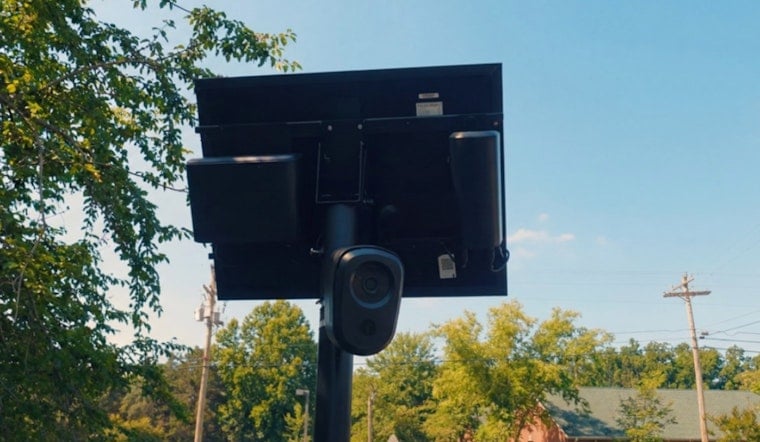
Stevens Point city staff plan to enclose all 10 of the city's Flock Safety license plate cameras in coverings that will block them from seeing or collecting data, and Mayor Mike Wiza says the suspension will stay in place while the city weighs walking away from its contract with the company altogether. The cameras, installed on poles at key entry points into the city since May 2023, will remain dark, Wiza said in a release issued Friday.
Wiza said the decision follows reports that municipal and state employees with access to the Flock data system have allegedly misused it, according to a report from the Wausau Pilot & Review. Erik Pfantz first reported the details for the Stevens Point Journal, and the mayor said recent events and allegations have raised doubt about trust in how the camera data has been used. Stevens Point is also setting up Flock's transparency portal website, and city staff will keep the 10 automated license plate recognition, or ALPR, cameras enclosed in coverings that prohibit them from collecting data while the review continues.
A Contract Built for Wisconsin-Only Sharing
Under the city's contract with Flock, cameras were placed on poles along important entry points into Stevens Point, and data sharing was limited to 217 other Wisconsin-based law enforcement agencies, per the Pilot & Review's reporting. The city has paid $27,500 a year for the arrangement, which began with camera installation in May 2023, according to Jeremy Mueller, who said via email that the rollout started that month. The Stevens Point Police Department had also established Policy 459 to govern ALPR use, covering scope of use, training standards, limits on use, discipline for misuse, data retention timelines, accountability standards, and monthly system audits and annual reports.
Flock has said captured data is retained for seven days under current terms. The company has defended the broader value of its network, saying the cameras help solve crimes and find missing or abducted persons. Stevens Point's suspension comes as Flock-branded and networked ALPR cameras have expanded to more than 120,000 units across 49 states since the company began installing cameras in 2019.
Sheboygan's Trust Breach Looms Large
Wiza's decision echoes events in Sheboygan, where the city covered all 15 of its Flock cameras on August 25 after officials identified company actions in July that they said violated contract expectations, according to Wisconsin Watch. Sheboygan's police chief and city administrator petitioned the Common Council for complete contract termination, and the council is expected to discuss further details of the allegations on Tuesday. Hoodline previously reported on the Sheboygan standoff.
Wiza also pointed to action in Florida, where the governor banned Flock cameras from all state highways, citing growing signs of camera misuse and concerns about surveillance. That state-level directive followed an order from the Florida Department of Transportation on August 31 revoking all ALPR permits and instructing local police departments to remove cameras from state highway rights-of-way within 30 days, according to the agency's own engineering bulletin.
A Wisconsin Domino Effect
Stevens Point's move follows a rapid cascade of similar actions across Wisconsin. Fond du Lac and Winnebago counties simultaneously suspended all Flock cameras this month after search logs tied to active criminal investigations were publicly released by out-of-state police departments responding to open records requests, as detailed by the Wisconsin State Journal. Hoodline covered that Fond du Lac camera suspension earlier this month.
Dane County terminated its Flock contract and pulled $80,000 in annual funding at the end of May, forcing the Sheriff's Office to physically cover active cameras with bags after the contract expired, according to WISN 12 News. And in Oshkosh, the City Council voted in April to rescind its Flock contract less than 24 hours after approving it, after Flock's chief information security officer incorrectly told council members the system could not generate vehicle travel heat maps and Oshkosh officials learned the truth the next morning, per the ACLU.
Company Apology, National Pushback
Flock Safety CEO Garrett Langley issued a public apology last month and announced platform changes, including reducing default data retention from 30 days to seven days and requiring officers to log search audit codes before running searches, according to CBS News. The changes came after a Washington Post investigation found at least 50 law enforcement officers across the country have been charged or accused of improperly using the camera network, including several cases in which officers allegedly used it to stalk ex-partners or romantic interests.
Flock has reported that its nationwide network captures roughly 20 billion license plate scans per month, raising concerns about detailed behavioral tracking of ordinary drivers visiting sensitive locations without a warrant. The Institute for Justice has documented more than 100 incidents of ALPR abuse nationwide. In Texas, Governor Greg Abbott ordered all state agencies to halt funding for Flock cameras after an investigation revealed a state authority had directed more than $30 million toward expanding the network, according to the Texas Tribune.
For now, Stevens Point's 10 cameras remain covered and offline while the city decides whether to end its relationship with Flock entirely. Wiza said the operation of the cameras will remain suspended as officials continue reviewing the misuse allegations.





