

























































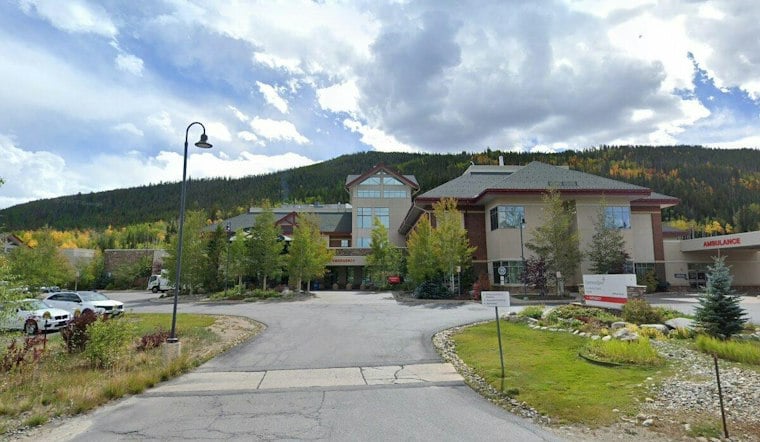
A female hiker plummeted down a steep, technical stretch of trail near Summit County's 12,682-foot Peak 3 after a rock she was using as a handhold suddenly gave way beneath her. She landed in a spot so difficult to reach that rescuers called in a Black Hawk helicopter with a hoist team to pull her off the mountainside, and she was flown to St. Anthony Summit Hospital afterward.
The fall happened along a roughly 10-mile traverse in Summit County, according to the Denver Gazette, which reported the woman fell about 300 feet on the technical route. The Summit County Sheriff's Office, however, described the same fall as about 100 yards down the mountainside — a measurement equivalent to 300 feet. Either way, she ended up in a difficult-to-access area that required an aerial rescue rather than a ground team scramble.
The rest of her hiking group escaped without injury, the outlet's report notes. It is not clear from available reporting exactly how many people were with her or what happened in the moments immediately after she went down, but the account is consistent with how quickly a routine scramble can turn dangerous when rock breaks loose without warning.
A Notoriously Technical Stretch Near Frisco
The terrain around Peak 3 is part of the broader Tenmile Traverse, a route with no marked trail that includes Class 4 scrambling in its toughest sections, according to a separate account from summitdaily.com. That outlet's coverage of a 2023 rescue in the same stretch quoted a description of the segment between Peak 2 and Peak 3 as “no trail. It's technical,” with a feature nicknamed the Dragon flagged as the most demanding portion.
In that May 2023 incident, Summit County Rescue Group coordinated a helicopter hoist for a man who became cliffed-out in that same area, calling 911 after reaching a spot between cliffs where he no longer felt safe continuing on foot. Rescue officials said at the time that sending ground teams into that terrain would be “really challenging and dangerous,” the same report states. That 2023 hiker had come prepared with overnight gear, food, water and two portable phone batteries, which kept him in contact with the mission coordinator until the Black Hawk arrived. Years earlier, in the summer of 2019, a woman fell 10 to 15 feet in roughly the same area and suffered a lower-leg injury, per the same account.
Helicopter Hoists Have Climbed Across Colorado
Colorado backcountry rescue teams reported an increase in helicopter hoist requests in 2025. By the end of June 2025, Colorado backcountry rescue teams had already requested 18 helicopter hoists, compared with just nine by the same point the year before, according to vaildaily.com. Overall requests for assistance from state search-and-rescue coordinators also climbed, reaching 62 through the end of June 2025 versus 47 at the same point in 2024 and 49 in 2023, per that outlet.
Two of those 2025 hoists happened within days of each other on well-known Summit-area peaks. On June 19, a Black Hawk pulled a father and son off Quandary Peak's technical west ridge after they lost the trail and became stranded, the Vail Daily reported. Less than a week later, on June 25, another Black Hawk hoisted two 19-year-old hikers from a steep cliffside on Capitol Peak after the pair spent a night stuck on the mountainside waiting for help.
Technical rescues involving stranded or fallen hikers are not unique to Colorado. In October 2017, a Utah National Guard Black Hawk crew hovered in a dark canyon and hoisted an injured hiker off the ground around 11 p.m. after he fell 200 yards in the state's Uinta Mountains, according to sltrib.com. That rescue, like the one near Peak 3, underscored how nightfall and rugged terrain can turn a hiking accident into a race against the clock for rescue crews.
Why Loose Rock Remains a Persistent Danger
The Denver Gazette's reporting points to a broader hazard built into Colorado's technical hiking terrain: unpredictable rock that can shift or break without warning, with potentially severe consequences when a handhold fails mid-climb. The Summit County Sheriff's Office said that a rock the hiker was relying on came loose unexpectedly and sent her down the mountainside.
The outlet's coverage also emphasizes that hikers heading into terrain like the Tenmile Traverse need a means of communication that does not depend on cellular service, since remote, technical routes routinely fall outside normal phone coverage. No further details on the hiker's condition, identity or the exact timing of the fall were available in the reporting.



