

























































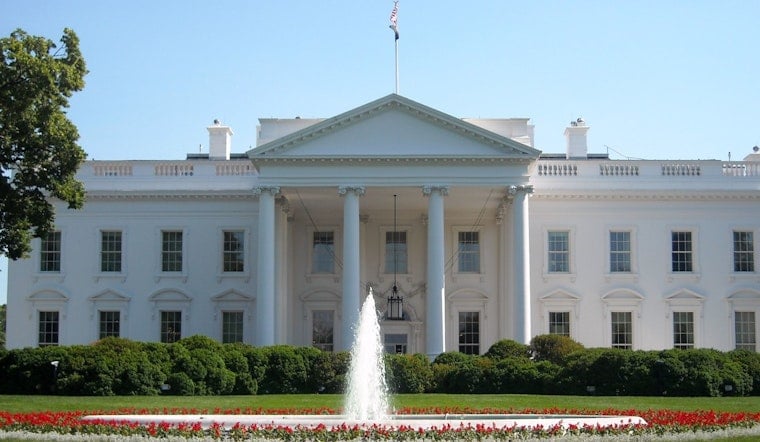
The Supreme Court ruled 5-4 on Monday that construction can continue on President Donald Trump's $400 million White House ballroom, finding that the National Trust for Historic Preservation lacked legal standing to challenge the project. The decision replaced a temporary order previously issued by Chief Justice John Roberts and clears the way for crews to keep working on the site of the demolished East Wing.
The ruling, issued on the last day of August, did not settle whether the ballroom project is actually legal. According to News4JAX, the Supreme Court majority found only that the preservation group likely did not have the legal right to bring the challenge in the first place, sending the underlying lawsuit back to lower courts. As reported by Courthouse News, the ruling turned on a narrow legal threshold: plaintiffs must show they suffered a direct, personal injury to have grounds to sue in federal court, and the justices found the Trust had not cleared that bar.
Roberts broke from the court's conservative majority on this question, joining three liberal-leaning justices in calling the construction likely unlawful, per the same report. That dissent echoes what two lower courts had already concluded. A divided U.S. Court of Appeals for the D.C. Circuit panel upheld an order halting the work in August, with two judges appointed by Democratic presidents finding the project was for Congress to decide and was not a matter for executive self-help, according to the Constitutional Accountability Center. A third appeals court judge, appointed by Trump, agreed only that the preservationist group had no legal right to sue, without ruling on the merits.
How the Legal Fight Reached the Justices
The National Trust for Historic Preservation, which Congress chartered in 1949 as a nonprofit tasked with facilitating public participation in preserving historic sites, filed its lawsuit in December 2025. The organization argued Donald Trump had no unilateral authority to undertake the work, and that the White House had violated the National Capital Planning Act and National Environmental Policy Act by failing to submit construction plans for required public review or issue environmental impact reports, according to the group's own filing announcement.
U.S. District Judge Richard Leon, who was nominated by President George W. Bush, ordered a stop to aboveground ballroom construction in April 2026, though his order allowed work to continue on below-ground bunkers and military installations. Federal courts found the ballroom project required congressional approval, affirming Congress's exclusive power over federal property under the Constitution's Property Clause. The Trump administration then asked the Supreme Court to intervene after those federal courts ordered the aboveground project halted.
Solicitor General D. John Sauer argued before the justices that the preservationist group had no legal right to sue and separately called the decision halting construction extraordinary and unlawful. The Trump administration has maintained that the president has total authority to renovate the White House and other federal buildings, and Sauer said completion of the project was vitally required by national security. Administration lawyers pointed to the ballroom's location above a five-story underground military complex that includes bomb shelters, emergency medical facilities, and executive security infrastructure, according to reporting cited by Courthouse News.
A Demolished Wing and an Accelerating Timeline
The historic East Wing of the White House was demolished in late 2025 to make room for the 90,000-square-foot venue — roughly 8,400 square meters — which was designed to eliminate the need for temporary event tents on the South Lawn during state dinners. Trump claimed in late August that construction was already 65% complete, and court documents indicate key portions of the project could be finished within months. Construction crews have reportedly been working 20 hours a day to advance the build.
Lawyers for the National Trust for Historic Preservation accused the White House of trying to outrun the courts, suggesting the accelerated pace was designed to render legal challenges moot before they could be resolved. Per court filings, the ballroom's structural framework is expected to be completed by November, with the facade largely finished by April 2027 and full completion slated for August 2028. The Trump administration's emergency application to the Supreme Court listed Interior Secretary Douglas Burgum, GSA Administrator Edward C. Forst, and White House Chief of Staff Susie Wiles as co-applicants, according to the application filed with the court.
Private Donors, Federal Contracts, and Public Opinion
The administration has announced the ballroom work would be funded entirely by private donations, framing it as a project that costs taxpayers nothing. But a June investigation by Public Citizen, reported by Hoodline's earlier coverage, found that 14 of the 27 corporate donors helping finance the $400 million project had received more than $50 billion in new or expanded federal contracts over the preceding six months, raising ethics questions about the private financing model.
Public opinion has also run against the project. National polling by Economist/YouGov in August found that 57% of Americans overall opposed demolishing the East Wing for the 1,000-seat venue, a sentiment Hoodline explored in its coverage of shifting women voters souring on Trump, where opposition reached 68% in separate Bellwether polling. Whether the National Trust or another plaintiff with stronger legal standing will mount a fresh challenge remains an open question, as does the ultimate constitutional fate of a project the Supreme Court's majority declined to rule on directly.





