

























































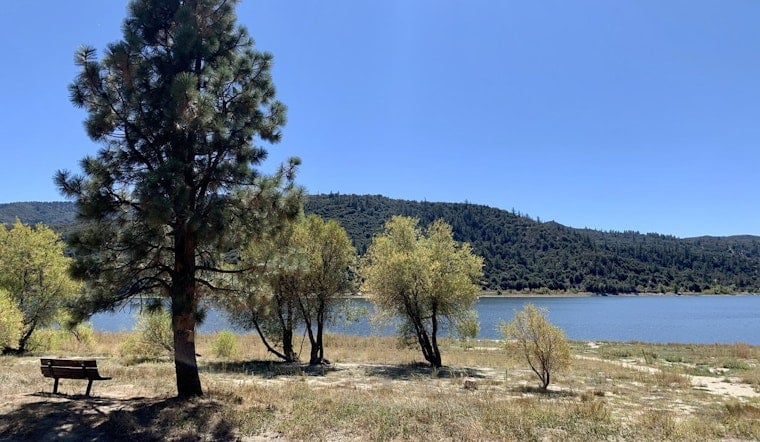
Riverside County's Lake Hemet is under a swimming advisory. Toxins produced by harmful algal blooms could make people and pets sick. The advisory covers the popular mountain lake, a longtime draw for campers and anglers in the San Jacinto Mountains, and it remains in effect until further notice.
LAist reported the Lake Hemet advisory. Harmful algal blooms typically appear as green, cloudy, discolored water along with visible scum and algae, and visitors and residents were urged to avoid swimming in the lake and to stay away from any scum or algae collecting near the shore.
Dogs and children face especially high risk during these blooms because they are more likely to swallow water while playing or swimming, per the outlet's report. Pets can become ill after contact with contaminated water or scum. Owners are advised to seek emergency veterinary care immediately if a pet shows signs of illness after contact with lake water.
A Pattern That Keeps Repeating at the Mountain Reservoir
The Lake Hemet advisory landed about a week after a similar alert for Big Bear Lake, the same report notes. The earlier alert concerned discolored water, a green sheen, scum, and floating algae throughout Big Bear Lake, according to LAIST's earlier coverage of that lake.
This isn't the first time algae has forced changes at Lake Hemet. Rising algae levels in June 2024 shut down the swim zone at Lake Hemet Campground for the entire summer, prompting management to build an onshore “Water Zone” with inflatable slides and splash pads so campers would have somewhere to cool off, KESQ reported at the time. That closure came after water testing showed algae levels hovering near warning thresholds throughout the season.
The 470-acre reservoir sits at an elevation of 4,340 feet, surrounded by the San Bernardino National Forest, with roughly 12 miles of shoreline, per its Wikipedia entry. It's managed by the Lake Hemet Municipal Water District, which traces its history back to 1895, when the Lake Hemet Water Company completed the 122.5-foot Lake Hemet Dam — at the time the world's tallest solid masonry dam, until Arizona's Roosevelt Dam surpassed it in 1911. The dam was later raised to 135 feet in 1923 and passed into public ownership when the municipal water district was formed in 1955.
How California Grades the Danger, and Why Boiling Won't Help
California's Cyanobacteria Harmful Algal Bloom Network uses a three-tiered system to judge how dangerous a bloom has become, according to the US EPA. A “Caution” level kicks in at 0.8 micrograms of microcystins per liter or when scum becomes visible; “Warning,” at 6 micrograms per liter, triggers outright swim bans; and “Danger,” at 20 micrograms per liter, restricts all contact with the water.
State health and environmental scientists also warn that common camping fixes won't make contaminated water safe. Boiling or filtering water tainted with cyanobacteria doesn't neutralize the algal toxins, since cyanotoxins are chemical compounds produced by bacteria rather than something heat or standard filters can break down.
Harmful algal blooms in California are most common between late May and October but can technically occur year-round, the report notes. Visitors can check the state's interactive map to see whether a bloom has been reported in their area before heading out for the holiday weekend.
A Separate Warning Already Hanging Over the Lake
Lake Hemet was already carrying a different environmental advisory before this week's algae bloom. In May, California's Office of Environmental Health Hazard Assessment issued an updated site-specific fish consumption advisory for the lake. Separately, state guidance recommends eating only fish fillets and discarding the guts.
The overlapping advisories at Lake Hemet and Big Bear Lake come amid reports that harmful algal blooms have appeared more frequently in California over the last decade. Shallow, slow-moving water and environmental factors including temperature and nutrients can contribute to these outbreaks.
For now, the message from state officials is straightforward: stay out of the water at Lake Hemet, keep pets and children away from any scum along the shoreline, and don't count on the advisory lifting before the holiday weekend wraps up.





