

























































James Ronald Howland spent 37 years behind bars for the 1989 stabbing death of his Tacoma neighbor James Forrester. On September 24, with a retrial underway and DNA evidence that had once excluded him from key crime-scene items sitting in the record, the 69-year-old pleaded guilty to premeditated first-degree murder anyway, a plea that is expected to lead to his release after his October 9 sentencing hearing rather than a return to prison for life.
Howland's original 1990 conviction for aggravated first-degree murder, which carried a mandatory sentence of life without parole, was vacated in 2024 by a Pierce County judge after post-conviction DNA testing excluded his DNA from several crime-scene items, according to The News Tribune. That testing also turned up a partial female DNA profile on two hairs recovered from Forrester's bedding that matched a partial female profile found on the blood-stained screen door, though DNA on the murder weapon and on Forrester's clothing was also tested. Investigators separately seized blood-stained clothing from Howland's property, and while later testing excluded Forrester as the source of blood on that clothing, Howland has said the blood came from his own injection drug use, per the same report.
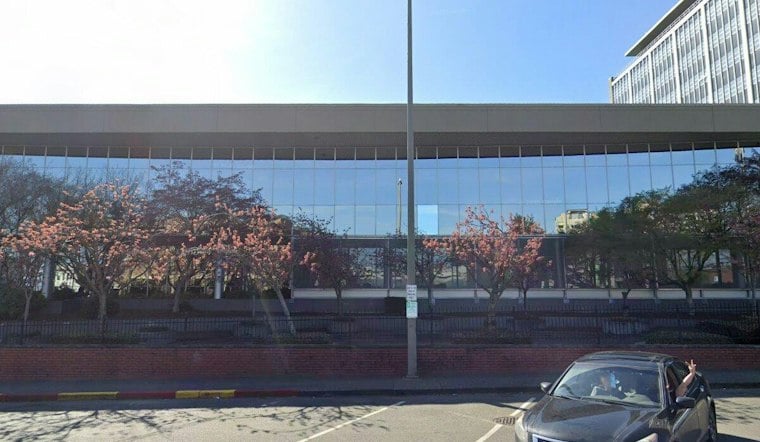
Forrester, 61, was found dead in his bed in the first-floor unit of the Ferndale Apartments at 1726 Market St. in Tacoma, with 16 stab wounds, on August 2, 1989. The murder weapon, an Old Hickory brand kitchen knife, was found in his lap. A jury convicted Howland of aggravated first-degree murder in 1990, and he had been incarcerated ever since his pretrial arrest that same year.
How Decades-Old DNA Reopened the Case
Washington's post-conviction DNA testing statute, RCW 10.73.170, allows people serving felony sentences to petition for new testing when it could produce significantly more accurate or exculpatory results than what was available at trial. The law was first enacted in 2000 and expanded in 2005.
That statute carries real teeth thanks to the Washington Supreme Court's 2014 ruling in State v. Crumpton, which held that trial courts weighing post-conviction DNA testing motions must presume the requested results will favor the defendant, per FindLaw's summary of the decision. That presumption helps explain why Washington courts have granted testing even in decades-old cases where the original trial evidence looked strong. Lawmakers are now considering going further: Senate Bill 5934 would create a presumption in favor of granting testing unless the state proves by clear and convincing evidence that results would not demonstrate innocence, according to BillTrack50, which noted the bill cited national findings that post-conviction DNA testing has exonerated hundreds of people since 1989.
Retrial Testimony and a Recorded Confession
The retrial began in Tacoma on September 23, and prosecutors leaned heavily on evidence beyond DNA. Deputy Prosecuting Attorney Thomas Howe told jurors the case was not about DNA at all, arguing that Howland's infatuation with April Short, one of Forrester's friends who regularly stayed overnight at his apartment, drove the killing. “Attraction can lead to obsession and obsession can lead to murder,” Howe said, according to the News Tribune's account of the trial.
That theory was bolstered by a recorded conversation. Thomas Tamberelli, who contacted police about statements Howland allegedly made, wore a wire under a court order and recorded conversations with Howland in September 1989. In those recordings, Howland told Tamberelli he killed Forrester to punish Short and that he had wanted a gun from her. Howland later testified that he had taken credit for the murder only to protect Short, the report states. Howland was also accused of kicking down Forrester's apartment door, and was separately known to have been a suspect in the late-1980s fatal shooting of Thomas James Freeman, a 53-year-old man killed in Salt Lake City, Utah — a case in which Howland was acquitted of second-degree murder. He also has a 1986 Utah conviction for attempted aggravated assault.
Defense Pointed to Absence of Physical Evidence
Harley Hunner, Howland's defense attorney with the Department of Assigned Counsel, argued that no DNA, hair samples, shoe prints or fingerprints tied his client to the scene, and that there were no eyewitnesses to the killing. At least nine witnesses from Howland's original 1990 trial have died in the decades since, complicating both sides' ability to relitigate the case, though Tamberelli is still alive.
Despite that defense, Howland pleaded guilty to premeditated first-degree murder rather than face a full retrial on the aggravated charge. The aggravated charge carried a life sentence without parole, while the plea to premeditated first-degree murder allowed a standard-range sentence. Premeditation itself is a distinct legal element under RCW 9A.32.020, requiring an intent to kill that exists for “more than a moment in point of time” before the act. Prosecutors and defense agreed to recommend a sentence of 26 years and eight months. Adam Faber, a spokesperson for the prosecutor's office, said Howland admitted in court that he committed the murder.
Howland's sentencing hearing is scheduled for October 9, and he is expected to be released after the hearing.
A Long Road Through Washington's Innocence System
Cases like Howland's move through a narrow institutional pipeline in Washington. The Washington Innocence Project, founded in 1997 as the Innocence Project Northwest at the University of Washington School of Law by professor Jacqueline McMurtrie, has secured the exoneration or release of 15 wrongfully convicted people statewide, according to background from the University of Washington School of Law. State law also requires that any post-conviction DNA testing ordered under RCW 10.73.170 be performed by the Forensic Laboratory Services Bureau of the Washington State Patrol Crime Laboratory, the sole agency authorized to process that evidence.
That system is now facing scrutiny over its capacity. During a September 15 work session, the Washington Innocence Project discussed procedural barriers, while the Washington State Patrol Crime Laboratory described DNA testing turnaround times and evidence capacity, according to Citizen Portal's coverage of the session. RCW 10.73.170(6) includes provisions allowing courts to order biological material held for extended periods, according to Justia Law's summary of the statute.





