

























































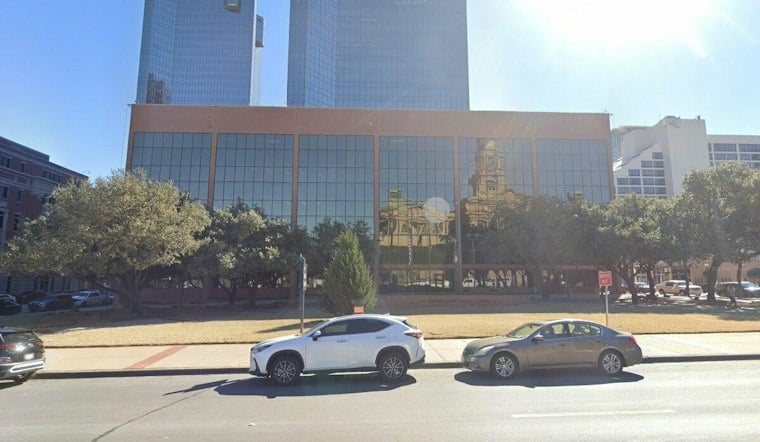
Tarrant County’s property-tax rate will fall again, but the change is small enough that the county’s budget director estimates the average homeowner will save about $1 next year. Commissioners approved an $834 million budget and reduced the rate from 18.62 cents to 18.6 cents per $100 of taxable value, according to the Fort Worth Report.
Why a lower rate does not guarantee a lower bill
The rate is only one part of a property-tax bill. The Texas Comptroller describes the no-new-revenue rate as the rate that would produce the same tax amount from the same properties in two different years, underscoring why changes in property values and the tax base matter alongside the adopted rate. A homeowner’s taxable value, exemptions and other taxing entities can therefore determine the final bill even when one rate declines.
For qualifying residence homesteads, the Tarrant Appraisal District says the homestead exemption can also limit annual appraised-value increases to 10%, a protection commonly called the homestead cap. That cap affects how quickly taxable value can rise; the county rate determines how much tax is applied to that value. The district’s explanation does not establish that every homeowner receives the same exemption or pays the same total tax.
The county is not the only taxing decision affecting residents
Other local taxing entities have taken different approaches. The Tarrant County Hospital District, which operates JPS Health Network, kept its fiscal 2026 rate at 16.5 cents per $100 after a cumulative reduction reported at 26.5% since 2018, according to Community Impact. Tarrant County College trustees, by contrast, voted Sept. 10, 2026, to raise that district’s rate from 11.228 cents to 12 cents per $100, according to the Fort Worth Report.
The City of Fort Worth is facing a different budget problem: a projected $77 million gap for fiscal 2027 after certified property values grew by less than 0.9%, according to Hoodline. These comparisons involve separate governments, budgets and tax bases, so they do not measure the effect of Tarrant County’s rate cut directly. They do show why a homeowner’s overall tax bill cannot be inferred from the county rate alone.
What commissioners approved
The county’s budget takes effect Oct. 1 and is about $10.6 million larger than last year’s plan. Public-safety spending rises by nearly $19 million to about $273 million, while community-services funding faces about $3.5 million in cuts or reallocations, including more than $456,000 in changes to human services, according to the Fort Worth Report. The plan also includes $2.8 million for outreach, rent and utility assistance through the Center for Transforming Lives.
The vote was 3-2. Republican County Judge Tim O’Hare and Commissioners Matt Krause and Manny Ramirez supported the budget; Democratic Commissioners Alisa Simmons and Roderick Miles Jr. opposed it. The Fort Worth Report attributed the disagreement to different views of how much tax relief the county should provide and whether doing so would require drawing down reserves or reducing services.
The budget provides 4% raises for law-enforcement employees and 3% merit-based increases for other county employees. Commissioners’ annual salaries will rise 3% to $227,234.80, while the county judge’s salary will rise to $237,234.60, according to the same report.
A legal limit on some public-safety changes
The adopted tax rate and the county’s ability to rearrange spending are also separate questions. Texas Legislature Online says Senate Bill 23 applies to counties with more than 1 million residents and bars an applicable county from implementing certain reductions or reallocations involving qualifying primary law-enforcement funding or resources until voters approve them in an election. The law does not determine the county’s tax rate, but it can limit flexibility over some public-safety funding decisions.
The county has presented the reduction as a fourth consecutive rate cut, while the modest estimated household savings reflect the difference between a rate applied to taxable value and the broader factors that determine a property-tax bill. The precise effect for any individual homeowner will depend on that property’s taxable value, exemptions and the rates adopted by the other taxing entities on the bill.
Governor Greg Abbott has cited Tarrant County as an example of lowering property-tax rates while expanding public-safety funding, according to the governor’s office. Whether the county’s approach produces meaningful relief for individual households, however, cannot be determined from the rate cut alone.





