

























































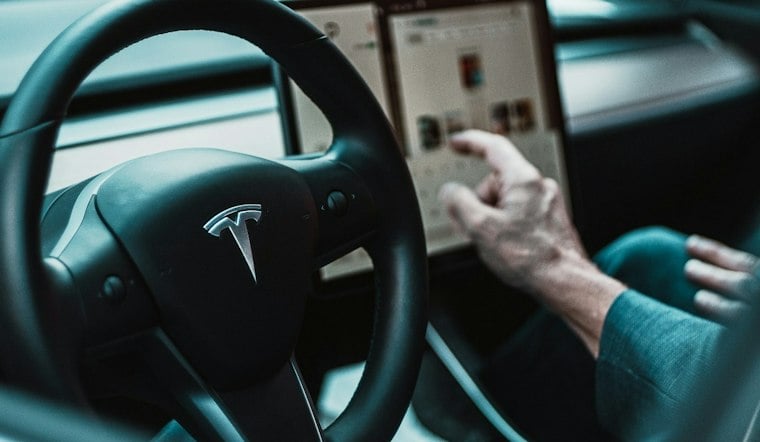
Tesla has settled a wrongful-death lawsuit stemming from a 2023 crash on Interstate 680 in Contra Costa County that killed 31-year-old Genesis Giovanni Mendoza Martinez. Martinez was driving a 2014 Model S when it struck a fire truck, and the case was headed toward a jury trial before the parties reached a confidential agreement.
According to Carscoops, Martinez was traveling roughly 70 mph on February 18, 2023, when his Model S hit a fire truck responding to an earlier accident on I-680. His brother, who was riding in the passenger seat, suffered serious injuries. Vehicle data showed that Autopilot had been engaged for about 12 minutes before the crash, the outlet reported.
The family's lawsuit accused Tesla and CEO Elon Musk of overstating what the Level 2 driver-assistance system could do. The family's attorneys argued that Tesla's marketing led Martinez to rely too heavily on Autopilot and believe the vehicle could drive itself without his continued control. Tesla disputed that account and argued that Martinez failed to follow warnings in the owner's manual and alerts issued by the vehicle.
A Judge Cleared the Way for Trial
Before the settlement, U.S. District Judge Vince Chhabria allowed the misrepresentation claims to proceed. He found that the Autopilot name was plausibly misleading to consumers and that Musk's public statements about the system — including his claim that it was probably better than a human driver — could support the claims. Those rulings left the issues for a jury, but the October 26 trial will not take place because the case was settled.
What federal safety reviews say
According to the National Highway Traffic Safety Administration, the agency opened a 2021 preliminary evaluation after a series of crashes involving Tesla vehicles with Autopilot engaged striking stationary first-responder vehicles, later upgrading it to an engineering analysis. NHTSA said Level 2 systems still require drivers to maintain supervisory responsibility and that foreseeable driver behavior is an important safety consideration in their design. Separately, the agency opened a March 2026 engineering analysis of Tesla's Full Self-Driving systems focused on whether they detect reduced visibility and provide drivers with adequate warnings; that review concerns FSD and is distinct from the 2023 Autopilot crash.
The deal came together less than two months before the case was scheduled for an October 26 trial, according to The Truth About Cars. As with other Tesla settlements, the financial terms were not disclosed.
Part of a Broader Pattern of Settlements
The agreement fits into a broader series of legal challenges over Tesla's driver-assistance systems. Electrek reported that Tesla had resolved at least four other Autopilot crash lawsuits since losing a major trial in August 2025. Reuters has also reported on lawsuits filed nationwide by people who attributed crashes to vehicles operating in Autopilot mode.
Tesla did not settle one such case in 2025, a Florida lawsuit over a 2019 crash in which George McGee was driving a Model S that struck a parked Chevrolet Tahoe. Naibel Benavides Leon was killed outside the vehicle near the Tahoe, and Dillon Angulo was seriously injured, according to the Los Angeles Times. A jury ultimately found Tesla liable; Carscoops reported the damages at $243 million, while CNBC described the figure as $242.5 million awarded to the victim's family and the injured survivor out of a total $329 million in damages. Reuters has reported that Tesla had rejected a $60 million settlement offer before that verdict came down, and CNBC later reported that a federal judge in Miami denied Tesla's bid to overturn the jury's award.
Legal Exposure Continues to Mount
Tesla's litigation over its driver-assistance technology remains active. Reuters has noted that the company's past lawsuits involving self-driving capabilities have generally been resolved or dismissed before trial, making the Contra Costa settlement another case that will not produce a jury verdict on the marketing and supervision issues.
The settlement also comes as Musk has said Tesla will have a widespread U.S. network of driverless robotaxis by the end of 2026, according to CNBC. That ambition is separate from the capabilities and driver-supervision requirements at issue in the Contra Costa case.





