

























































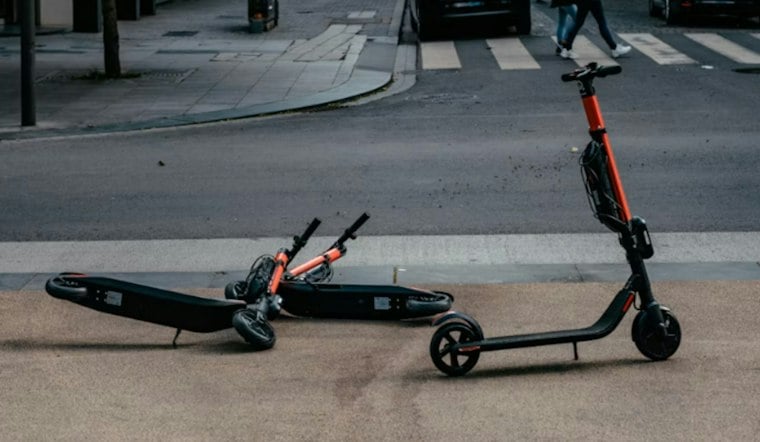
Texas A&M System regents are warning that scooters and e-bikes could disappear from the College Station campus entirely if crash numbers don't come down soon. The warning follows a 37 percent jump in campus micromobility crashes from 2024 to 2025, with 52 incidents recorded last year and roughly half of them resulting in injury.
Regent John Bellinger did not mince words about what's at stake, saying the issue must be fixed or the devices will be removed from campus altogether, according to Chron. Fellow regent Sam Torn went further, noting that the micromobility problem extends across the entire Texas A&M System, including Prairie View A&M, and that officials should study the issue systemwide to improve safety for riders and the pedestrians in their path, per the same account. The Board of Regents' warning amounts to a threat that e-scooters and e-bikes could be banned from campus if crash numbers don't decrease.
What the Numbers Show
Roughly 38 percent of registered micromobility devices on campus are now electric, a share the university expects to keep growing, the outlet's reporting notes. Texas A&M already requires that any device brought onto campus be registered, and current university rules cap electric motors at 750 watts while banning anything more powerful. Devices must be parked at designated bike racks, riders are required to travel at safe speeds, keep control of their devices, and yield to pedestrians — though helmets remain encouraged rather than mandatory under current guidance.
Those existing rules clearly haven't been enough to stem the rise in incidents, which is why regents are now floating a more drastic option. On the Reddit forum r/aggies, student reaction to the possibility of a full ban has ranged from sarcasm to outright criticism, the article notes.
A Campus Already Rethinking Traffic
The regents' warning doesn't arrive in a vacuum. Texas A&M President Mark A. Welsh III announced back in January 2025 a multi-year pause on undergraduate enrollment growth alongside a campus infrastructure plan aimed at separating pedestrian traffic from bikes and scooters, according to The Battalion. Ahead of this fall semester, Transportation Services also lowered speed limits on major campus roadways, dropping the cap on thoroughfares like John Kimbrough Boulevard to 20 mph to give drivers and riders more time to react, as reported by The Battalion.
State law gives the university broad latitude to act if those measures fall short. Under Texas Transportation Code § 551.352, motor-assisted scooters are generally allowed on public roadways with speed limits of 35 mph or less, but the law explicitly grants municipalities and public institutions the authority to restrict or ban their operation in the interest of safety. That statutory backing is what gives the Board of Regents the standing to follow through on its threat if the crash trend continues.
How Other Campuses Have Responded
Texas A&M wouldn't be the first Texas flagship to crack down. The University of Texas at Austin instituted a Pedestrian Friendly Zone on August 24, requiring all personal electric vehicle users to dismount and walk through the core campus, and using GPS geofencing to automatically cut motor power on shared rental scooters, as Hoodline previously reported. UT Austin's approach represents a middle-ground alternative to an outright ban — restricting where and how devices can be ridden rather than removing them from campus entirely.
Other universities nationwide have taken similarly tough stances this year. The University of Pittsburgh banned indoor dorm storage of e-scooters with $200 fines, while UMass Amherst created a core-campus dismount zone after 64 percent of surveyed students reported near-miss collisions, according to Hoodline's earlier coverage of both Pitt's dorm-storage crackdown and the UMass Amherst near-miss data. The pattern extends beyond higher education, too: Texas school districts including Katy, Conroe, and Barbers Hill ISDs instituted new policies for the 2026–2027 academic year prohibiting high-powered e-motorcycles and unpermitted electric vehicles on campus property, according to FOX 26 Houston.
A National Injury Trend
The concern driving these policies isn't limited to Texas. The U.S. Consumer Product Safety Commission estimated in April that emergency departments nationwide treated 79,300 e-scooter injuries in 2024, part of more than 360,800 total micromobility-related emergency room visits recorded between 2017 and 2022. Research from ERideHero and Johns Hopkins Medicine analyzing federal injury data found that e-scooter injuries jumped 43 percent in 2025 compared to the year before, with head injuries accounting for roughly 18 to 20 percent of all emergency room cases tied to the devices.
Locally, the pressure isn't confined to campus boundaries either. The City of College Station launched a joint Northgate Small Area planning process with Texas A&M in February 2025 to address pedestrian and micromobility conflict points along the busy commercial corridor bordering the university, according to The Battalion. Chron has reached out to Texas A&M University for comment on the potential ban, according to its reporting.




