

























































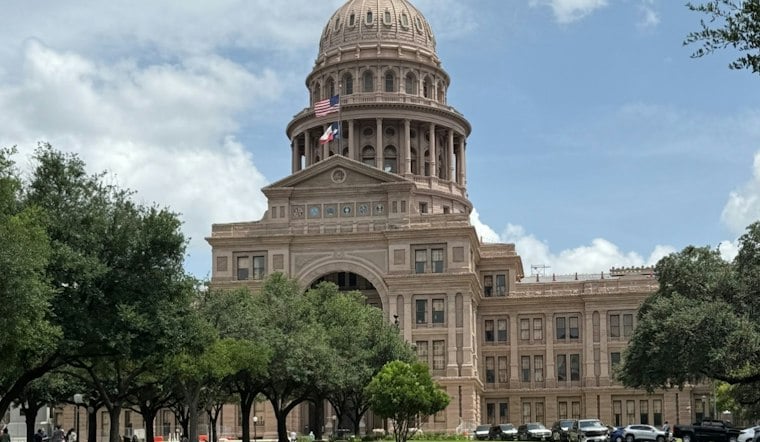
Texas lawmakers are weighing whether to eliminate no-fault divorce altogether. The Texas Senate Committee on State Affairs recently held a public hearing on issues to address before the 2027 legislative session, and ending no-fault divorce was among the topics discussed.
The push isn't new, but it's gaining steam. As Spectrum News reports, a bill to remove no-fault divorce was introduced in the Texas House in 2025 but died in committee. Family law attorney Jennifer Hargrave, who has practiced since 2006, told the outlet that ending no-fault divorce is gaining traction this year in a way it hadn't before.
Under Texas Family Code Section 6.001, the state's no-fault option is legally defined as “insupportability,” letting a court dissolve a marriage due to discord or personality conflicts without either spouse proving wrongdoing, according to the Texas Constitution and Statutes. The standard allows parties to obtain a divorce without proving grounds.
Republicans Frame No-Fault as a Threat to Family Stability
Mary Bowen, who spoke at the hearing, said unilateral no-fault divorce has to be brought down because it currently incentivizes the breakdown of families, per Spectrum News. Texas Republicans have listed rescinding no-fault divorce among their top issues in an updated 2026 document, and the party wants to promote maintenance of the traditional family through required intervention or counseling before any divorce decree.
That stance builds on the party's platform history. A Texas Republican platform called for removing no-fault divorce, according to the Republican Party of Texas. A June 2026 legal analysis prepared by Bresnen Associates for the Texas Family Law Foundation found the party's 2026 platform expanded family-court reform proposals further, pairing calls to end no-fault divorce with higher evidentiary standards for Child Protective Services removals, per Repro Rights NOW. Texas is not alone; both the Texas and Nebraska Republican state parties amended their official platforms in 2022 to explicitly call for removing or restricting no-fault divorce laws, as reported by WSLS.
Lawyers Warn Fault Requirements Could Trap Abuse Survivors
Southern Methodist University law professor Natalie Nanasi, who works in a clinical program overseeing students representing domestic-violence survivors in court, said pleading fault can increase tension and anger and put survivors at greater risk. Nanasi, who sees many no-fault divorce cases, said the majority of her clients choose no-fault pleas when seeking divorce from abusive partners.
Nanasi also said proving fault can be expensive because it may require discovery, witnesses, and expert witnesses — a burden that compounds the economic abuse survivors of intimate partner violence often experience, according to the same Spectrum News report. Hargrave said 95% of the divorces handled by her firm are initially filed as no-fault, underscoring how central the standard has become to Texas family law. No-fault divorce also protects family privacy, the outlet noted, sparing couples from airing allegations in open court.
What Would Remain If No-Fault Disappeared
If lawmakers eliminated the insupportability standard, Texas law would still include fault-based grounds for divorce. Texas family courts can already weigh proven fault grounds when dividing community property.
Covenant marriage is a model active in only three states — Louisiana, enacted in 1997, Arizona in 1998, and Arkansas in 2001 — which requires couples to complete premarital counseling and sign a declaration restricting divorce grounds to specific faults or long-term separations, according to the Louisiana Department of Health.
National Context and Research on Domestic Violence
California became the first state to legalize no-fault divorce when Governor Ronald Reagan signed the Family Law Act of 1969, a trend that spread nationwide until New York became the 50th state to adopt it in 2010, according to the California State Assembly Judiciary Committee.
Other conservative-led states have tried and failed to roll back no-fault divorce recently. In January 2024, Oklahoma state Senator Dusty Deevers introduced Senate Bill 1958 to abolish no-fault divorce by eliminating incompatibility as a ground; the proposal later stalled after filing, according to Gaylord News.
The debate arrives as Texas politics has already put divorce law in the spotlight this month. Hoodline reported that state Sen. Angela Paxton filed for divorce from Texas Attorney General Ken Paxton citing adultery, while a North Carolina bill would similarly cut the divorce wait to six months. Whether Texas Republicans will pursue binding statutory changes to Section 6.001 in the 2027 session, or settle for incremental steps like longer waiting periods or voluntary covenant marriage options, remains an open question for lawmakers to resolve.





