

























































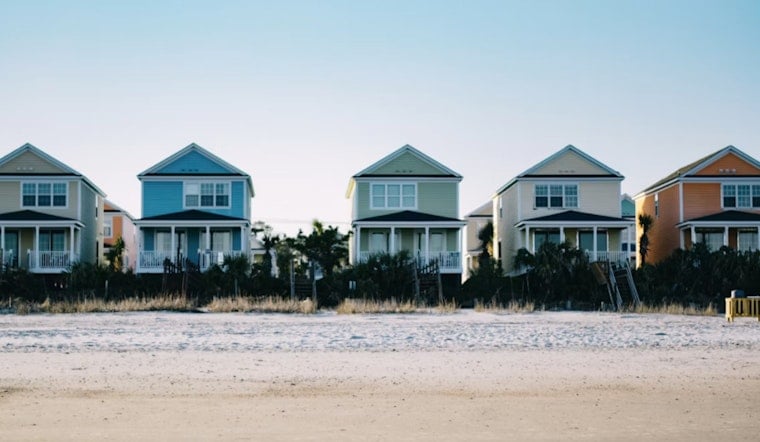
A proposal that would have stripped windstorm insurance coverage from roughly 53,620 secondary homes along the Texas coast is dead, at least for now, after a legislative committee voted it down 2-1 following weeks of fierce pushback from coastal officials and residents. The plan, floated inside the Texas Windstorm Insurance Association, would have carved out non-owner-occupied properties from the state-run insurer's residential policies — a move that touched everything from Galveston beach houses to South Padre Island rentals.
The Legislative and External Affairs Committee's vote effectively ends the idea for this legislative cycle, since proposals rejected at the committee level don't make it into TWIA's official biennial report to the Texas Legislature, according to TWIA meeting materials. Under Texas Insurance Code Section 2210.0025, the association's board must submit that report to state leadership by December 31 of every even-numbered year, laying out recommended statutory changes ahead of the next legislative session — meaning this fight is now shelved rather than settled permanently.
As chron.com reported, board member John Todd introduced the secondary-home limitation idea at the committee's June meeting, framing it as a way to keep long-term wind coverage costs down. He later said he had, in his words, unwittingly kicked a hornet's nest — a reaction he acknowledged after the volume and intensity of the opposition became clear. Todd maintained that TWIA's objective should be preserving reliable wind coverage for coastal workers and residents, and that the association needed to be financially prepared to pay claims after major storms.
Galveston and Nueces Counties Led the Charge
The numbers explain why opposition was so concentrated in two counties. Galveston County holds the state's highest concentration of secondary-home windstorm policies, with more than 18,000, and together with Nueces County accounts for nearly 60% of all TWIA secondary-home policies statewide, according to the outlet's reporting. Nueces County Judge Connie Scott publicly opposed the proposal, as did the mayors of Port Aransas and South Padre Island, per the same account.
Sally Bakko, the City of Galveston's director of policy and governmental relations, led the meeting's public-comment period alongside Representative Terri Leo Wilson and told the committee removing second homes from TWIA coverage would cripple Galveston's economy and dismantle its rental market. Bakko also warned the change would impede local hurricane recovery. Leo Wilson, who represents District 23 covering Galveston, told the committee the proposal would devastate her community and argued that secondary homes on the coast are the very reason TWIA exists in the first place.
Written Comments Ran Overwhelmingly Against the Plan
The scale of public input was lopsided: 295 people submitted written comments on the proposal, and only four supported it, per chron.com's reporting. Groups weighing in against the change included the South Padre Island Board of Realtors, the Coastal Windstorm Insurance Coalition, and the Galveston Short-Term Rental Alliance. Representative Todd Hunter, whose District 37 covers Aransas and Nueces counties, said the proposal affected financial institutions and mortgage lenders and threatened perceptions of insurance essential to financial stability. Hunter added that simply publicizing the idea had created panic, headaches, and problems for coastal communities.
The Dollars Behind the Debate
The financial stakes were substantial on both sides of the ledger. As of March 31, 2026, secondary homes made up 19% — 53,620 policies — of TWIA's total residential policies in force, representing $19 billion of the association's overall insured exposure, according to the TWIA committee materials. Primary homes, by comparison, accounted for 220,240 policies with average building limits of $384,710, compared with $307,572 for secondary properties.
TWIA staff had estimated that excluding secondary homes would have cut the association's required probable maximum loss funding from $4.305 billion to $3.395 billion — a 21% reduction — and lowered net reinsurance costs by roughly $60 million per year, according to committee documents cited by the League City Herald. Reinsurance purchases represent TWIA's single largest annual operating expense, which is what made Todd's original pitch financially appealing even as it proved politically toxic.
TWIA's Finances Have Already Turned a Corner
Part of what fueled the opposition was that TWIA no longer looks like an insurer in crisis. The association posted a $41.6 million financial surplus at the end of the first quarter of 2026, a sharp reversal from the $413.5 million deficit it recorded at the end of 2024, Insurance Business reported in June. TWIA also deposited $39.1 million into the Catastrophe Reserve Trust Fund in May 2026.
That turnaround coincided with the TWIA Board of Directors voting unanimously on August 4 to request a 0% rate change for 2027 residential and commercial policies, after a 2026 actuarial analysis found current rates were already adequate — by 9% for residential coverage and 4% for commercial — marking the first time in years TWIA rates were deemed sufficient without an increase. Much of that stability traces back to Texas House Bill 3689, passed during the 2025 legislative session, which overhauled TWIA's catastrophe funding by replacing costly public securities with up to $1 billion in state financing from the Economic Stabilization Fund and capped member company assessments at $1 billion per year starting in 2026, according to legislative records tracked by LegiScan.
Why TWIA Exists at All
The debate over who gets covered traces back more than five decades. The Texas Legislature created TWIA in 1971 as the Texas Catastrophe Property Insurance Association following Hurricane Celia in 1970, establishing it as an insurer of last resort after commercial carriers stopped writing coastal wind policies; the association was renamed the Texas Windstorm Insurance Association in 1997, according to the Houston Chronicle. Today TWIA's coverage territory spans all 14 first-tier coastal counties in Texas — including Galveston, Nueces, Aransas, and Cameron — plus designated portions of Harris County east of Highway 146, areas where standard homeowners policies routinely exclude wind and hail damage.
TWIA's footprint keeps expanding. The association reached 286,251 policies in force by the end of the first quarter of 2026, with total insured exposure climbing to $127.1 billion — a policy count that has grown by more than 37% since 2020, per Insurance Business. Galveston County alone accounts for roughly one-third of TWIA's total exposure, underscoring why local leaders there fought so hard to keep vacation and rental properties in the pool.
Committee members ultimately preferred rejecting the secondary-home proposal outright rather than tabling it for future reconsideration, according to chron.com's coverage of the meeting. Had it survived, the plan would have been folded into TWIA's biennial report to the Texas Legislature ahead of the 2027 session. For now, coastal second-home owners keep their coverage — but the underlying tension between reducing the state's catastrophic storm exposure and protecting coastal real estate markets remains unresolved heading into the next hurricane season.




