

























































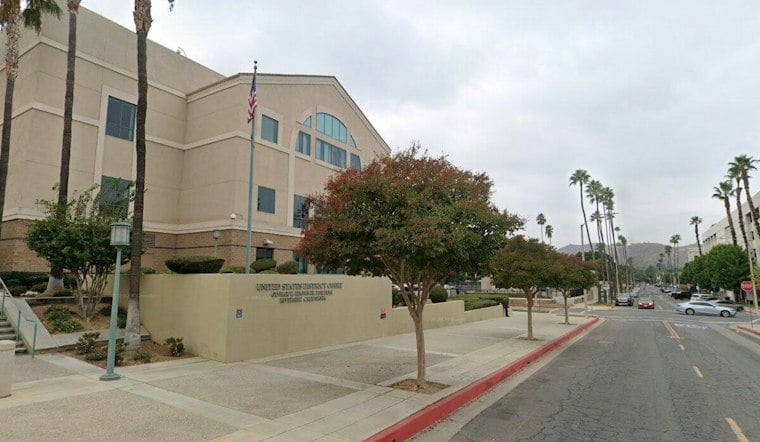
Three Southern California residents have pleaded guilty to wire fraud for their roles in a scheme that bilked the federal government's pandemic relief program out of roughly $3.5 million, prosecutors say. Daryl D. Knighten Jr., 34, of Perris, Vanessa M. Williams, 37, of Corona, and Denise Mata, 36, of Moreno Valley, admitted to submitting fraudulent Paycheck Protection Program loan applications for themselves, family members, close associates, and recruited applicants between March 2021 and August 2021.
Williams and Mata entered their guilty pleas on September 22, while Knighten followed two days later on September 24, according to KTLA. The United States Department of Justice also reported the guilty pleas. Sentencing is scheduled for January 14, 2027, and all three defendants face up to 20 years in federal prison.
The case traces back to a federal grand jury indictment that charged four Riverside County residents with multiple counts of wire fraud. When that indictment was unsealed on October 24, 2024, Williams and Mata were arrested in Riverside County while Knighten and a fourth defendant, Mikhail G. Hoalim, remained at large as fugitives — a detail Hoodline reported at the time in its coverage of the initial arrests. Knighten later pleaded guilty.
How the Scheme Worked
According to court documents, the loan applications submitted by the group falsely claimed applicants were self-employed and would use the funds for business purposes, and they included fake tax forms that deceived participating lenders into disbursing loan money. Lenders ultimately approved applications for more than 100 co-schemers, and once the loan funds landed in accounts belonging to the defendants and their associates, those associates paid kickbacks to the defendants within days of receiving the money.
Rather than using the funds for allowable payroll and business costs, court documents indicate that Knighten, Williams, Mata and their co-schemers spent the illicitly obtained money for personal benefit.
Individual Losses and What Comes Next
While prosecutors estimate the overall scheme caused about $3.5 million in losses, each of the three pleading defendants admitted to a smaller individual figure. Knighten admitted causing at least $145,550 in losses to the PPP loan program, Williams admitted to at least $187,497, and Mata admitted to at least $201,642. Mata was also charged in the original 2024 indictment with one count of aggravated identity theft for allegedly using another person's Social Security number without permission, an offense that carries a mandatory two-year prison sentence consecutive to any other term under federal law, per the Justice Department.
The fourth defendant, Mikhail G. Hoalim, 35, of Moreno Valley, has pleaded not guilty to nine counts of wire fraud and is scheduled to go to trial on November 9, 2026. Whether prosecutors will pursue formal restitution orders covering the full $3.5 million loss across all convicted co-conspirators remains an open question tied to that upcoming trial.
The Investigation Behind the Case
The investigation involved the Amtrak Office of Inspector General and Homeland Security Investigations. The committee was created under the CARES Act in March 2020 and comprises 20 federal Inspectors General, per Pandemic Oversight, and Congress has since granted it extended funding through 2034 to keep chasing unresolved pandemic loan fraud.
Under 18 U.S.C. § 1343, each wire fraud count carries a statutory maximum of 20 years in federal prison, typically three to five years of supervised release, mandatory victim restitution, and a fine of up to $250,000 or twice the gross monetary gain or loss, according to The Federal Criminal Attorneys; the guide also describes loss as an important sentencing factor alongside other factors.
This case is far from an isolated one in the region. Federal prosecutors in the Central District of California conducted a separate sweep in May 2025 in which 14 people were arrested and two criminal complaints named 18 defendants total, a case Hoodline also covered in its report on the Los Angeles relief fraud sweep. Federal authorities in the district continue pursuing both individual opportunists and organized fraud syndicates as pandemic relief cases work their way through the courts years after the money went out the door.





